



Immuno-Oncology
Latest News
Advertisement
Latest Videos


































































Advertisement
More News

Peter Black, MD, senior research scientist, Vancouver Prostate Centre, associate professor, Department of Urologic Sciences, University of British Columbia, discusses biomarker development in bladder cancer.

Oliver Sartor, MD, a medical oncologist at the Tulane University School of Medicine, discusses the next steps with sipuleucel-T (Provenge) for patients with prostate cancer.
Jared Weiss, MD, assistant professor, UNC Lineberger Comprehensive Cancer Center, discusses developments of immunotherapy trials for patients with head and neck cancer.
Anne Chiang, MD, PhD, professor and thoracic oncologist at Yale Cancer Center, discusses ipilimumab (Yervoy) plus nivolumab (Opdivo) in small cell lung cancer.
Ezra Cohen, MD, associate director, Moores Cancer Center at the University of California, San Diego, discusses challenges with immunotherapy in head and neck cancer.

Costas Lallas, MD, professor at Sidney Kimmel Medical College, Thomas Jefferson University Hospital, discusses ongoing trials investigating immunotherapy regimens for patients with genitourinary malignancies.
Simon Chowdhury, PhD, MA, MBBS, MRCP, consultant medical oncologist specializing in urological cancer, Sarah Cannon Research Institute, United Kingdom, discusses sequencing of immunotherapy regimens for patients with renal cell carcinoma (RCC).
Joel Neal, MD, discusses the latest therapeutic changes to the ALK-positive NSCLC armamentarium.

Peter Black, MD, senior research scientist, Vancouver Prostate Centre, associate professor, Department of Urologic Sciences, University of British Columbia, discusses immunotherapy biomarkers in bladder cancer.
Shilpa Gupta, MD, assistant professor, Hematology Oncology and Transplantation Division, University of Minnesota, discusses adjuvant immunotherapy in kidney cancer.

Barbara Burtness, MD, professor of medicine, Yale Cancer Center, discusses challenges regarding immunotherapy for patients with head and neck cancer.
Toni K. Choueiri, MD, director, Lank Center for Genitourinary Oncology, director, Kidney Cancer Center, senior physician, Dana-Farber Cancer Institute, discusses trials investigating combinations for patients with renal cell carcinoma (RCC).
Heather Wakelee, MD, discusses the latest developments with EGFR inhibitors and immunotherapy agents in non-small cell lung cancer.
Toni Choueiri, MD, reflects on avelumab/axitinib results and other emerging combos in RCC.
Brian I. Rini, MD, professor of medicine, Cleveland Clinic, discusses the efficacy of pembrolizumab (Keytruda) and axitinib (Inlyta) combined in patients with renal cell carcinoma (RCC).

Jonathan E. Rosenberg, MD, medical oncologist at Memorial Sloan Kettering Cancer Center, discusses immunotherapy in patients with non-metastatic muscle invasive bladder cancer.
Stephen M. Ansell, MD, PhD, chair of the Lymphoma Group at Mayo Clinic, discusses the possibility of blending immunotherapy agents with chimeric antigen receptor (CAR) T-cell therapy across lymphoma populations.
Joshua Bauml, MD, assistant professor, Perelman School of Medicine, University of Pennsylvania, discusses immunotherapy agents in head and neck cancer.
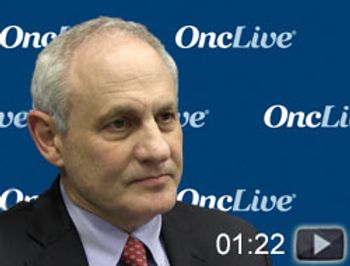
Michael B. Atkins, MD, deputy director, Georgetown-Lombardi Comprehensive Cancer Center, professor of oncology and medicine, Georgetown University School of Medicine, discusses sequencing of immunotherapy combination regimens for patients with renal cell carcinoma (RCC).
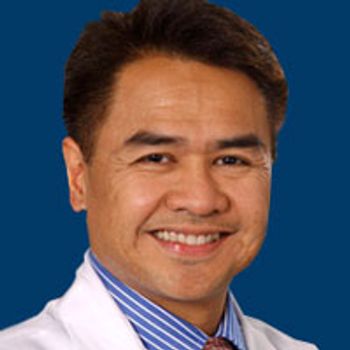
Primo N. Lara Jr, MD, discusses the KEYNOTE-037 pembrolizumab/epacadostat findings in patients with advanced RCC, and how the combination could change treatment in this population.

Arjun V. Balar, MD, assistant professor of medicine, Division of Hematology and Oncology, Perlmutter Cancer Center, NYU Langone Medical Center, discusses PD-L1 testing and the development of biomarkers for PD-L1 antibodies for patients with urothelial carcinoma.
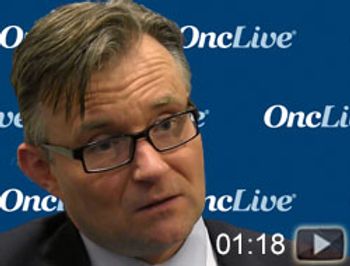
Grzegorz S. Nowakowski, MD, assistant professor of medicine at Mayo Clinic, discusses what potential immunotherapy agents have in the treatment landscape of mantle cell lymphoma (MCL).
The FDA has granted an accelerated approval to nivolumab for the treatment of adult and pediatric patients with microsatellite instability-high or mismatch repair deficient metastatic colorectal cancer that has progressed following treatment with a fluoropyrimidine, oxaliplatin, and irinotecan.

The therapeutic paradigm continues to evolve in advanced non-small cell lung cancer, with increased emphasis being placed on rational combinations and biomarkers in the next few years.

Despite the promise of immunotherapy for treating patients with advanced cancers, the success of using such therapies for progressive gastrointestinal malignancies such as colorectal liver metastases (CRLM) has been limited so far.
Advertisement
Advertisement
Trending on OncLive
1
FDA Approves Tucatinib Plus Trastuzumab/Pertuzumab as First-Line Maintenance in Advanced HER2+ Breast Cancer
2
FDA Grants Breakthrough Device Designation to Natera’s Multi-Cancer Early Detection Assay
3
Five Under 5: Top Oncology Videos for the Week of 10/5/2026
4
GI Cancer Monthly Rewind: Key News and Expert Insights You May Have Missed in September 2026
5