
Lung Cancer
Latest News
Advertisement
Latest Videos





































































Advertisement
More News
Roy S. Herbst, MD, PhD, Ensign Professor of Medicine and professor of pharmacology, chief of Medical Oncology, Yale Cancer Center and Smilow Cancer Hospital, discusses challenges with immunotherapy in non–small cell lung cancer.
Josephine Louella Feliciano, MD, assistant professor of oncology, Johns Hopkins Medicine, discusses the use of nivolumab (Opdivo) in patients with small cell lung cancer (SCLC).
Stephen Liu, MD, provided an enhanced understanding of oncogenic drivers such as EGFR and ALK in patients with NSCLC, sequencing strategies, and the potential application of immunotherapy in later lines of therapy.
Jarushka Naidoo, MBBCh, assistant professor of oncology, Johns Hopkins University, discusses managing immune-related adverse events (irAEs) in patients with non–small cell lung cancer (NSCLC).
Benjamin P. Levy, MD, assistant professor of oncology, clinical director of medical oncology, Johns Hopkins Sidney Kimmel Cancer Center, Johns Hopkins Medicine, discusses biomarkers of response to immunotherapy.
Ryan D. Gentzler, MD, highlights how chemotherapy remains a critical component of the metastatic non–small cell lung cancer treatment paradigm.
D. Ross Camidge, MD, PhD, professor, Division of Medical Oncology, Joyce Zeff Chair in Lung Cancer Research, School of Medicine, Division of Medical Oncology, University of Colorado, discusses implications of the KEYNOTE-024 trial in non–small cell lung cancer (NSCLC).
The Japanese Ministry of Health, Labour, and Welfare (MHLW) has approved osimertinib for the frontline treatment of patients with inoperable or recurrent EGFR-positive non–small cell lung cancer.
Richard D. Hall, MD, assistant professor, Hematology/Oncology, University of Virginia Health System, discusses combination approaches in advanced non–small cell lung cancer (NSCLC).
The China National Drug Administration has approved alectinib for the treatment of patients with ALK-positive, advanced non–small cell lung cancer.
Jose M. Pacheco, MD, assistant professor, Medicine/Medical Oncology, Colorado University School of Medicine, discusses second-line therapy for patients with ALK-positive non–small cell lung cancer (NSCLC).
Ryan D. Gentzler, MD, assistant professor, Division of Hematology/Oncology, University of Virginia Health System, discusses the role of chemotherapy in patients with metastatic non–small cell lung cancer (NSCLC).

Edward B. Garon, MD, discusseds early findings with pegilodecakin in non–small cell lung cancer.
David R. Gandara, MD, director, Thoracic Oncology Program, professor, senior advisor to director, UC Davis Comprehensive Cancer Center, treasurer, International Association for the Study of Lung Cancer, 2017 Giant of Cancer Care in Lung Cancer, discusses treatment options for patients with squamous cell non–small cell lung cancer.
The FDA has granted a full approval to frontline pembrolizumab for use in combination with standard chemotherapy for patients with metastatic nonsquamous non–small cell lung cancer.
Although checkpoint blocking immunotherapy has significantly improved outcomes for patients with advanced and metastatic disease, researchers believe the modality also may be effective in the neoadjuvant setting.
Hossein Borghaei, DO, MS, chief, Division of Thoracic Medical Oncology, director, Lung Cancer Risk Assessment, associate professor, Department of Hematology/Oncology, Fox Chase Cancer Center, discusses the FDA approval of nivolumab (Opdivo) for the treatment of patients with small cell lung cancer with disease progression following 2 or more lines of therapy.
The FDA has approved single-agent nivolumab for the treatment of patients with small cell lung cancer with disease progression following 2 or more lines of therapy.
Vassiliki Papadimitrakopoulou, MD, professor, Department of Thoracic/Head and Neck Medical Oncology, The University of Texas MD Anderson Cancer Center, discusses the need for more targeted therapies in non–small cell lung cancer.
Jose M. Pacheco, MD, discusses the preferred therapeutic strategies for treating patients with NSCLC whose tumors harbor genetic alterations in EGFR, ALK, and ROS1.
Alexander E. Drilon, MD, discusses the data with LOXO-292 thus far and the promise for this agent in patients with RET alterations.
Paul A. Bunn Jr, MD, distinguished professor, Division of Medical Oncology, James Dudley Chair in Lung Cancer Research, University of Colorado Denver, 2014 Giant of Cancer Care in Lung Cancer, discusses tumor mutational burden as a biomarker in small cell lung cancer.
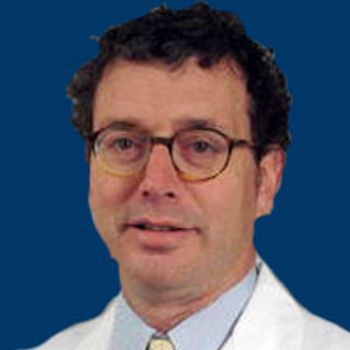
James Larner, MD, discusses the process by which radiation interacts with the immune system and how physicians are working to improve treatment responses for patients with non–small cell lung cancer.
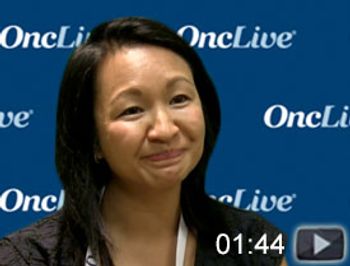
Josephine Louella Feliciano, MD, assistant professor of oncology, Johns Hopkins Medicine, discusses ROS1-targeted therapy in patients with non–small cell lung cancer (NSCLC).
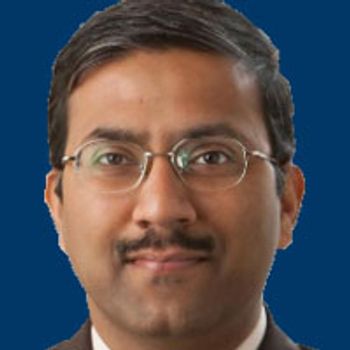
Apar Kishor Ganti, MD, discusses some of the most intriguing abstracts in lung cancer recently presented at medical meetings.
Advertisement
Advertisement
Trending on OncLive
1
FDA Approves Tucatinib Plus Trastuzumab/Pertuzumab as First-Line Maintenance in Advanced HER2+ Breast Cancer
2
Five Under 5: Top Oncology Videos for the Week of 10/5/2026
3
GI Cancer Monthly Rewind: Key News and Expert Insights You May Have Missed in September 2026
4
FDA Grants Fast Track Designation to PSV359 for Advanced FAP-Positive Solitary Fibrous Tumors
5