




Lung Cancer
Latest News
Advertisement
Latest Videos
































































Advertisement
More News





Nathan Pennell, MD, PhD, director, Lung Cancer Medical Oncology Program, Cleveland Clinic Taussig Cancer Institute, discusses the economic impact of next-generation sequencing.

Combining frontline atezolizumab with chemotherapy improved overall survival and progression-free survival compared with chemotherapy alone in patients with extensive-stage small cell lung cancer.

Sai-Hong Ignatius Ou, MD, PhD, discusses the current landscapes of ROS1-positive and BRAF-mutant non–small cell lung cancer.

The FDA has accepted a supplemental biologics license application for the combination of nivolumab plus ipilimumab for the frontline treatment of patients with advanced non–small cell lung cancer with tumor mutational burden ≥10 mutations per megabase.
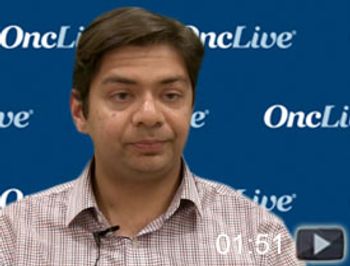
Hatim Husain, MD, assistant professor of Medicine, Moores Cancer Center, University of California, San Diego, discusses plasma-based testing in lung cancer.

Alice T. Shaw, MD, PhD, and D. Ross Camidge, MD, PhD, discuss the evolution of ALK-targeting therapies, the impact on the drug development paradigm, and the prospects for future advancements.
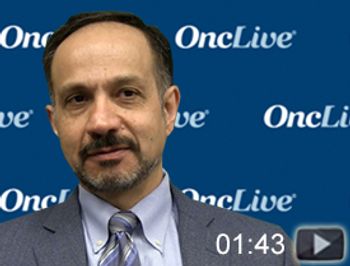
Hossein Borghaei, DO, MS, chief, Division of Thoracic Medical Oncology, director, Lung Cancer Risk Assessment, associate professor, Department of Hematology/Oncology, Fox Chase Cancer Center, discusses the results of the CheckMate-227 trial in non–small cell lung cancer.
Patients younger than 65 years experienced net cancer costs that were higher for breast, colorectal, lung, and prostate cancer compared with patients who were 65 years and older.

The European Commission has approved osimertinib (Tagrisso) as a frontline treatment for patients with EGFR-mutant locally-advanced or metastatic non–small cell lung cancer.

Suresh S. Ramalingam, MD, deputy director, Winship Cancer Institute of Emory University, discusses plasma EGFR mutations as a predictor of response to osimertinib (Tagrisso) in the AURA3 trial in non–small cell lung cancer.

Anne Chiang, MD, PhD, discusses recent developments with immunotherapy and the overall outlook for the treatment landscape of small cell lung cancer.

The combination of nivolumab and low-dose ipilimumab reduced the risk of progression or death by 52% compared with standard platinum doublet chemotherapy for patients with metastatic PD-L1–negative, tumor mutation burden-high non–small cell lung cancer.

The combination of bevacizumab (Avastin) and erlotinib (Tarceva) is superior to erlotinib alone as upfront treatment for non–small cell lung cancer harboring EGFR mutations.
The combination of atezolizumab, bevacizumab, carboplatin, and paclitaxel educed the risk of death by 22% compared with bevacizumab and chemotherapy in patients with advanced wild-type non-squamous non–small cell lung cancer.
Robert M. Jotte, MD, PhD, medical director and co-chair, USON Thoracic Committee, Rocky Mountain Cancer Centers, discusses the phase III findings of the IMpower131 trial, which looked at the addition of atezolizumab (Tecentriq) to frontline carboplatin and nab-paclitaxel (Abraxane) in patients with advanced squamous non

Combining pegilodecakin with nivolumab or pembrolizumab induced an overall response rate of 41% in patients with advanced non–small cell lung cancer.

Adding pembrolizumab to frontline carboplatin/paclitaxel or nab-paclitaxel reduced the risk of death by 36% compared with chemotherapy alone in patients with metastatic squamous non–small cell lung cancer.
Patients with non-small cell lung cancer treated with frontline pembrolizuma lived 4 to 8 months longer than those who received standard of care chemotherapy.
Advertisement
Advertisement
Trending on OncLive
1
FDA Approves Tucatinib Plus Trastuzumab/Pertuzumab as First-Line Maintenance in Advanced HER2+ Breast Cancer
2
GI Cancer Monthly Rewind: Key News and Expert Insights You May Have Missed in September 2026
3
Five Under 5: Top Oncology Videos for the Week of 10/5/2026
4
FDA Grants Fast Track Designation to PSV359 for Advanced FAP-Positive Solitary Fibrous Tumors
5