



Lung Cancer
Latest News
Advertisement
Latest Videos






























































Advertisement
More News

James Urbanic, MD, associate professor, Radiation Medicine and Applied Sciences, University of California, San Diego, discusses the role of radiotherapy in oligometastatic non–small cell lung cancer (NSCLC).

Edward B. Garon, MD, director of Thoracic Oncology at the Jonsson Comprehensive Cancer Center at University of California, Los Angeles, discusses immunotherapy combinations in non–small cell lung cancer.

The FDA has granted a priority review to a supplemental biologics license application for frontline pembrolizumab for use in combination with standard chemotherapy for patients with metastatic nonsquamous non–small cell lung cancer.

The European Medicines Agency’s Committee for Medicinal Products for Human Use has recommended approval of osimertinib as a first-line treatment for patients with non–small cell lung cancer (NSCLC) whose tumors harbor activating EGFR mutations.

Charles M. Rudin, MD, PhD, discusses ongoing developments with immunotherapy in patients with non–small cell lung cancer.
Mark G. Kris, MD, discusses the continued significance of chemotherapy in patients with NSCLC in the era of targeted agents and immunotherapy.
Charles M. Rudin, MD, PhD, chief, Thoracic Oncology Service, co-director, Druckenmiller Center for Lung Cancer Research, Sylvia Hassenfeld Chair in Lung Cancer Research, Memorial Sloan Kettering Cancer Center, discusses biomarkers for immunotherapy in lung cancer.

Dual immune checkpoint blockade with durvalumab (Imfinzi) and tremelimumab did not induce a statistically significant improvement in overall survival in heavily pretreated patients with locally-advanced or metastatic NSCLC.
Helena A. Yu, MD, medical oncologist, Memorial Sloan Kettering Cancer Center, discusses treatments for EGFR-mutant lung cancer.

Paul K. Paik, MD, discusses treatment advances and sequencing strategies for patients with ALK-positive NSCLC.

Helena A. Yu, MD, discusses sequencing strategies in EGFR-mutant NSCLC, the impact of osimertinib in the frontline setting, and the questions surrounding dacomitinib’s intriguing data in this landscape.
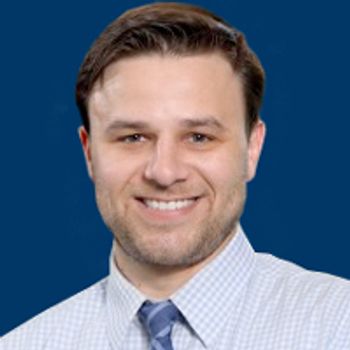
Matthew D. Hellmann, MD, discusses the expansion of biomarkers across single-agent and combination therapies in patients with non–small cell lung cancer.
H. Jack West, MD, thoracic oncologist, Swedish Cancer Institute of Swedish Medical Center, discusses the FDA approval of osimertinib (Tagrisso) in the frontline setting for patients with EGFR-mutation
Advertisement
Advertisement
Trending on OncLive
1
FDA Approves Tucatinib Plus Trastuzumab/Pertuzumab as First-Line Maintenance in Advanced HER2+ Breast Cancer
2
FDA Grants Breakthrough Device Designation to Natera’s Multi-Cancer Early Detection Assay
3
Iberdomide Plus Daratumumab/Dexamethasone Yields Significant PFS Benefit in R/R Myeloma
4
VIR-5500 Receives FDA Fast Track Designation in mCRPC
5