




Multiple Myeloma
Latest News
Advertisement
Latest Videos




CME Content

































Advertisement
More News

María-Victoria Mateos, MD, PhD, discusses the design of the ongoing phase 3 CANOVA trial in patients with relapsed/refractory t(11;14) multiple myeloma.

Meletios A. Dimopoulos, MD, discusses the evolution of selinexor in multiple myeloma.

Paul G. Richardson, MD, discusses the mechanism of action of CC-92480 in patients with multiple myeloma.

The European Commission has approved subcutaneous formulation of daratumumab for the treatment of patients with multiple myeloma.

Sagar Lonial, MD, FACP, discusses the benefits of early intervention in high-risk smoldering multiple myeloma.

Shaji K. Kumar, MD, discusses the rate of treatment discontinuation in the phase 3 ENDURANCE trial in newly diagnosed multiple myeloma.

The European Commission has approved isatuximab in combination with pomalidomide and dexamethasone for the treatment of adult patients with relapsed/refractory multiple myeloma who have received ≥2 prior therapies.
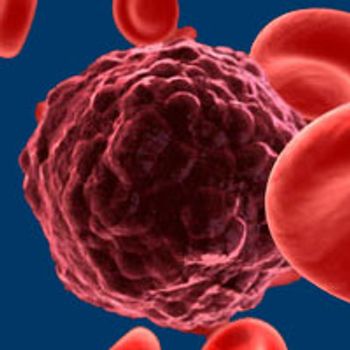
An update on the phase 3 OCEAN study of melflufen in relapsed/refractory multiple myeloma reported that patients stayed on treatment longer than had been previously estimated.

Paul G. Richardson, MD, discusses phase 1 data (NCT03374085) with CC-92480 in multiple myeloma.

Saad Usmani, MD, discusses research with teclistamab (JNJ-64007957) in relapsed/refractory multiple myeloma presented at the 2020 ASCO Virtual Scientific Program.

Teclistamab (JNJ-64007957) appeared to be a safe and efficacious treatment for patients with relapsed/refractory multiple myeloma.

An ongoing study of CC-92480 in combination with dexamethasone demonstrated favorable activity and safety data in patients with heavily pretreated relapsed or refractory multiple myeloma.

Idecabtagene vicleucel induced a response in nearly three-fourths of patients with heavily pretreated relapsed/refractory multiple myeloma, according to topline findings from the pivotal phase 2 KarMMA trial.

James Weitzman, MD, discusses reusing treatments in patients with relapsed/refractory multiple myeloma.

Jesus Berdeja, MD, discusses updated results from the ongoing phase 1b/2 CARTITUDE-1 trial (NCT03548207) in multiple myeloma.

When added to bortezomib and dexamethasone in patients with multiple myeloma, selinexor, an inhibitor of XPO1-mediated nuclear export, improves progression-free survival and overall response rate and reduces the incidence of peripheral neuropathy.

Belantamab mafodotin in combination with bortezomib (Velcade) and dexamethasone (B-Vd) demonstrated a high rate of clinical benefit and an acceptable safety profile in patients with relapsed or refractory multiple myeloma.

Single agent belantamab mafodotin sustained clinically meaningful deep responses and was well tolerated in patients with heavily pretreated relapsed or refractory multiple myeloma.

Nikhil C. Munshi, MD, discusses the role of CAR T-cell therapy in relapsed/refractory multiple myeloma.

Sagar Lonial, MD, FACP, discusses the results of the phase 2 DREAMM-2 trial in multiple myeloma.
The combination of next-generation proteasome inhibitor carfilzomib, lenalidomide, and dexamethasone did not show a superiority in progression-free survival in patients with newly diagnosed multiple myeloma when compared with the current standard of care triplet of bortezomib, lenalidomide and dexamethasone.

Betsy O'Donnell, MD, discusses transplant considerations in patients with multiple myeloma.

Andrew Branagan, MD, discusses the role of autologous stem cell transplantation in patients with high-risk multiple myeloma.
Gareth J. Morgan, MD, PhD, provides insight on determining treatment selection for patients with multiple myeloma.

In our exclusive interview, Maria-Victoria Mateos, MD, PhD, discusses the FDA approval of the subcutaneous daratumumab formulation in multiple myeloma.
Advertisement
Advertisement
Trending on OncLive
1
RELATIVITY-1093 Trial Aims to Advance Nivolumab Plus Relatlimab and Chemo in Nonsquamous NSCLC
2
Dostarlimab Monotherapy Elicits Durable cCRs in dMMR/MSI-H Locally Advanced Rectal Cancer
3
NEXERA-303 Trial Aims to Bring TGFβR2×PD-1 Bispecific Antibody INCA33890 Into First-Line MSS CRC
4
The OncFive: Top Oncology Articles for the Week of 10/25
5