




Myeloproliferative Neoplasms
Latest News
Advertisement
Latest Videos

































































Advertisement
More News

Treatment with avapritinib led to clinically meaningful and statistically significant improvements in patient-reported symptoms and objective measures of mast cell burden in patients with non-advanced systemic mastocytosis.

The FDA has accepted a new drug application for momelotinib for the treatment of patients with myelofibrosis.
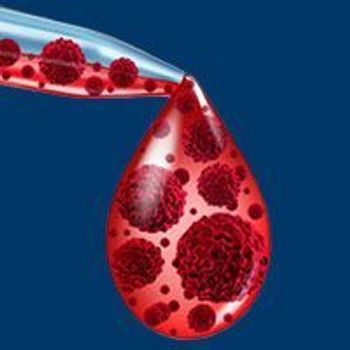
A combination regimen comprised of ruxolitinib and pomalidomide was found to be safe and feasible in a cohort of intermediate-2 and high-risk patients with primary or secondary myelofibrosis and anemia, according to data from the phase 1b/2 MPNSG-0212 trial.
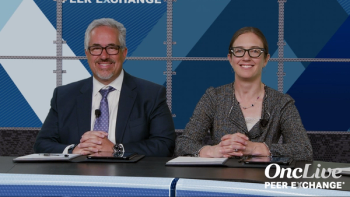
Drs Palmer and Mesa explain the challenges of treating accelerated phase myeloproliferative neoplasms.
The panel reviews other exciting novel agents under investigation for myelofibrosis treatment.
Ruben Mesa, MD, discusses updates on the novel agent momelotinib from an abstract he presented at ASCO 2022.
Jamile Shammo, MD, FACP, explains the efficacy and safety of the 3 approved therapies for myelofibrosis.
The combination of azacitidine and quizartinib produced preliminary responses in patients with myelodysplastic syndrome and myelodysplastic syndrome/myeloproliferative neoplasms whose tumors harbored FLT3 or CBL mutations, according to data from a phase 1/2 trial (NCT04493138).
Experts discuss data on the recently approved agents fedratinib and pacritinib for myelofibrosis treatment.
A review of data on the use of the JAK inhibitor ruxolitinib for patients with myelofibrosis.

Ropeginterferon alfa-2b produced durable complete hematologic responses without phlebotomy and showcased a consistent safety profile in Japanese patients with polycythemia vera, according to findings from a phase 2 study (NCT04182100) presented during the 2022 EHA Congress.
Single-agent bomedemstat was found to improve symptom scores, bone marrow fibrosis, spleen volumes, and anemia in patients with advanced myelofibrosis, according to findings from the phase 1/2 IMG-7289-CTP-102 trial (NCT03136185) presented during the 2022 EHA Congress.

A combination comprised of selinexor (Xpovio) and ruxolitinib (Jakafi) induced rapid spleen responses at week 12 and showcased a manageable toxicity profile in patients with treatment-naïve myelofibrosis.
The panel has a conversation on risk stratification for myelofibrosis and how it individualizes their treatment approaches.
Dr Jamile Shammo explains the process of diagnosing myelofibrosis and highlights the importance of bone marrow biopsies.
Eltanexor has been granted a fast track designation from the FDA and an orphan medicinal product designation from the European Commission for use as a potential therapeutic option in patients with myelodysplastic syndromes.
A discussion on assessing symptom burden and quality of life for patients with essential thrombocythemia or polycythemia vera.
Ruben Mesa, MD, details an abstract presented at ASCO 2022 on an investigational agent filling an unmet need in polycythemia vera.
Raajit K. Rampal, MD, PhD, discusses the potential utilization of navtemadlin in relapsed/refractory acute myeloid leukemia and patients with blast phase myeloproliferative neoplasm in a phase 1b/2 trial.
An overview of the treatment options for patients with polycythemia vera.
Jamile Shammo, MD, FACP, FASCP, defines polycythemia vera and explains the process for diagnosis and risk stratification.
Dr Gustavo Rivero comments on novel treatment combinations and potential new biomarkers in patients with MDS.
Dr Ruben Mesa describes how he treats patients with essential thrombocythemia and the available treatment options.
Jeanne Palmer, MD, explains essential thrombocythemia and how it’s diagnosed.
Gustavo Rivero, MD, comments on the ongoing SELECT-MDS-1 trial and as well as reviewing the adverse events of the potential combination of tamibarotene with azacitidine in patients with higher-risk MDS.
Advertisement
Advertisement
Trending on OncLive
1
Dr Fradley on Real-World Atrial Fibrillation and Cardiovascular Outcomes in CLL
2
Poll Results Highlight Breast Cancer Abstracts of Interest at ESMO 2026
3
FDA Grants Fast Track Designation to Opamtistomig for Advanced Biliary Tract Cancer
4
Dr Hansen on the Integration of CAR T-Cell Therapy Into Earlier Myeloma Treatment Lines
5