






































































Electronic health record systems’ design, usability, and interoperability issues can hinder integration and use.


Trilaciclib Plus Chemotherapy and Avelumab Maintenance Generates Comparable ORR in Advanced/Metastatic Urothelial Carcinoma
Electronic health record systems’ design, usability, and interoperability issues can hinder integration and use.

Tumor treating fields plus standard-of-care therapies led to a statistically significant and clinically meaningful improvement in overall survival vs SOC alone in patients with stage IV NSCLC who progressed while on or after platinum chemotherapy, meeting the primary end point of the LUNAR trial.

Patients with hepatocellular carcinoma with microvascular invasion who received FOLFOX through hepatic arterial infusion chemotherapy experienced improved disease-free survival rates compared with those who received no adjuvant treatment.

Ripretinib improved progression-free survival, objective response rate, and overall survival over sunitinib when given as second-line treatment to patients with gastrointestinal stromal tumor harboring mutations in KIT exon 11 and 17/18 only and who received prior imatinib.

Significant and durable transfusion independence was achieved with imetelstat vs placebo in patients with lower-risk myelodysplastic syndromes who were relapsed, refractory, or ineligible for erythropoiesis-stimulating agents, meeting the primary and a key secondary end point of the phase 3 IMerge trial.

A biologics license application has been submitted to the FDA seeking the approval of cosibelimab for the treatment of patients with metastatic cutaneous squamous cell carcinoma or locally advanced cutaneous squamous cell carcinoma who are not candidates for curative surgery or radiation.

The FDA has granted a breakthrough device designation to the OverC Multi-Cancer Detection Blood Test for the early detection of cancers including esophageal, liver, lung, ovarian, and pancreatic in adults aged to 50 to 75 years with average risk.

HPV status has broad applicability across head and neck cancers, whereas the clinical utility of PD-L1 expression remains a more nuanced question.
The FDA has granted breakthrough device designation for the TriNetra™-Glio blood test to help in the diagnosis of brain tumors.

The European Medicines Agency has validated an application for the use of trastuzumab deruxtecan for adults with previously treated unresectable or metastatic non–small cell lung cancer whose tumors have activating HER2 mutations.
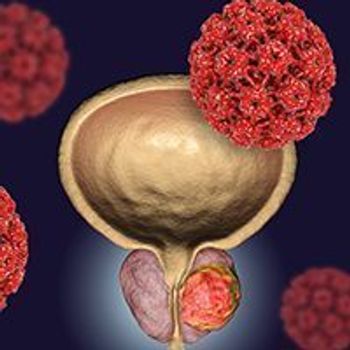
N-803, a novel IL-15 superagonist, in combination with intravesical Bacillus Calmette–Guérin induced an overall response in more than two-thirds of patients with non–muscle invasive bladder cancer.

The European Committee for Medicinal Products for Human Use has announced that it does not support the marketing authorization of omburtamab for the treatment of patients with central nervous system/leptomeningeal metastasis from neuroblastoma.

Ursula A. Matulonis, MD, discusses the novelty of mirvetuximab soravtansine in platinum-resistant ovarian cancer, and how it will expand options for a traditionally difficult-to-treat population.

Max S. Topp, MD, highlights the rationale for studying bispecific antibodies in newly diagnosed diffuse large B-cell lymphoma, how the safety profile of glofitamab plus R-CHOP contributes to its potential for outpatient administration, and where future directions with this research may lead.


Press Release
Findings from a recent prospective study show promising safety and patient outcomes data for locally advanced and borderline resectable pancreatic cancer treatment using ablative Stereotactic MRI-Guided On-table Adaptive Radiation Therapy, also known as SMART.

The FDA has not sent an action letter regarding the biologics license application for toripalimab in combination with chemotherapy as treatment for patients with recurrent or metastatic nasopharyngeal carcinoma.

Treatment with PDS0101 plus the tumor-targeting IL-12 fusion protein M9241 and bintrafusp alfa elicited encouraging overall survival data in patients with checkpoint inhibitor–naïve and –refractory advanced human papillomavirus–positive anal, cervical, head and neck, vaginal, and vulvar cancer.

Data concerning the long-term benefit of PARP inhibitors as maintenance therapy for select patients with ovarian cancer in later-line settings have come under fire in 2022 as several agents have failed to demonstrate improvements in OS outcomes.

David L. Saltman MD, PhD, discusses the unique features of the DetermaIO assay, noted the assay’s applications beyond lung cancer, and emphasized that biomarker combinations potentially have greater predictive benefits than single biomarkers.

The past decade has been a time of great progress in the research of Waldenström macroglobulinemia and the care of patients with the rare form of non-Hodgkin lymphoma.

Incidence of surgery refusal has increased by nearly 50% among Black and Hispanic women with potentially curable, nonmetastatic breast cancer over the past decade, according to findings from an analysis of Surveillance, Epidemiology, and End Results Program data.

Driven by his twin passions for music and science, Louis M. Staudt, MD, PhD, has made a career out of reading between the notes.

Neoadjuvant and adjuvant pertuzumab plus trastuzumab with docetaxel continued to show improvements in event-free survival, disease-free survival and overall survival vs trastuzumab/docetaxel and placebo in Asian patients with HER2-positive early or locally advanced breast cancer.

INT230-6 demonstrated direct tumor killing in soft tissue sarcoma and elicits an anti-cancer immune response within the injected tumor both alone and in combination with ipilimumab.