





































































Jaffer A. Ajani, MD, has an unyielding drive that has resulted in breakthroughs in a deadly, but often overlooked, disease.
Jaffer A. Ajani, MD, has an unyielding drive that has resulted in breakthroughs in a deadly, but often overlooked, disease.
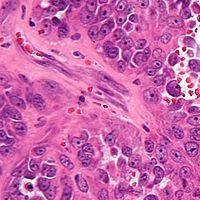
Investigators may have discovered a key detail about renal medullary carcinoma that could have significant ramifications for patients.

Treatment with INV-1120 was well tolerated and demonstrated preliminary signals of stable disease as a single agent in patients with advanced solid tumors.

Peter Dottino, MD, FACOG, discusses the need for more accurate early screening tests for ovarian cancer, why testing for early-stage endometrial cancer is also important, the process used to develop the screening test, and how it could be implemented into practice if it is approved by the FDA.

An unshakeable belief in the power of the immune system and a deep-seated desire to make the world a better place have guided Eric J. Small, MD, throughout his career.

Prior authorization on cancer treatments is delaying patient care, affecting outcomes, and diverting providers from patient care according to results of a survey conducted by the Association for Clinical Oncology.
Michael R. Harrison, MD, discusses the key long-term data of select doublet combinations in renal cell carcinoma, the early investigation of triplet therapy in the frontline setting, and more.
Konstantinos Leventakos, MD, PhD, discusses the emergence of immunotherapy and lurbinectedin as beneficial treatments in small cell lung cancer, where osimertinib fits into the non–small cell lung cancer treatment paradigm, and more.
During his career, David M. Gershenson, MD, has helped turn ovarian cancer treatment into an evidence-based field and built better therapies through an improved biological understanding of the disease.

Patient history and disease characteristics did not affect outcomes for patients with metastatic HER2-low breast cancer who received fam-trastuzumab deruxtecan-nxki in the DESTINY-Breast04 study.
LP-284 showed superior antitumor activity compared with LP-184 independent of PTGR1 expression levels in DNA damage repair–deficient mantle cell lymphoma cell lines.
Caroline Billingsley, MD, discusses the effect of mirvetuximab soravtansine’s approval on the treatment landscape in ovarian cancer and avenues for future research with antibody-drug conjugates and immunotherapy in this space.

A teenage injury cost him a career among the stars, so John F. DiPersio, MD, PhD, became a star hematologist/oncologist instead.
Robert Lawrence Randall, MD, FACS, discussed the role of biological reconstructions as well as factors that determine whether a patient would benefit more from the reconstructions or traditional prosthetics known as endoprosthetics.
Olverembatinib demonstrated sustained efficacy and reduced toxicity with longer follow-up in patients with TKI-resistant, T315I-mutant chronic myeloid leukemia in chronic phase and accelerated phase.
Guillermo Garcia-Manero, MD, discusses the exploration of these doublet therapies and what they could mean for the high-risk myelodysplastic syndromes treatment landscape, the difficulties in making strides for patients with relapsed/refractory disease, and the top highlights in myelodysplastic syndromes from the 2022 ASH Annual Meeting.
Michelle Shiller, DO, AP/CP, MGP, discusses the evolving role of HER2 as a biomarker for the treatment of patients with breast cancer and the impact of findings from the DESTINY-Breast02, DESTINY-Breast03, and DESTINY-Breast04 trials on the HER2 testing landscape.
Press Release
Florida Cancer Specialists & Research Institute, LLC takes exception to a recent study published in the New England Journal of Medicine suggesting that colonoscopies are not as effective at preventing colorectal cancer deaths as previously thought.
Richard D. Carvajal, MD, discusses the implications of the FDA approval of tebentafusp in uveal melanoma, the possibility of exploring tebentafusp in other HLA subtypes, and other areas of intriguing research in uveal melanoma.
Japan’s Ministry of Health, Labor and Welfare has approved axicabtagene ciloleucel for the initial treatment of patients with relapsed/refractory large B-cell lymphoma, including diffuse large B-cell lymphoma, primary mediastinal large B-cell lymphoma, transformed follicular lymphoma, and high-grade B-cell lymphoma.

Lisaftoclax alone or in combination with acalabrutinib or rituximab was active across a range of doses and displayed a tolerable safety profile in patients with relapsed/refractory and treatment-naïve chronic lymphocytic leukemia and small lymphocytic lymphoma.

The FDA has approved mosunetuzumab-axgb (Lunsumio) for the treatment of adult patients with relapsed or refractory follicular lymphoma after 2 or more lines of systemic therapy.

The combination of domvanalimab plus zimberelimab with or without etrumadenant generated an improvement in overall response rate and progression-free survival compared with zimberelimab alone in patients with PD-L1–high metastatic non–small cell lung cancer, according to findings from the phase 2 ARC-7 trial.
Lauren Ritterhouse, MD, PhD, discusses next-generation sequencing testing platforms and the importance of establishing processes for tissue collection in non–small cell lung cancer.
The FDA’s accelerated approval of adagrasib for adult patients with KRAS G12C–mutated locally advanced or metastatic non–small cell lung cancer who have received at least 1 prior systemic therapy has provided a second KRAS G12C inhibitor option for patients.