
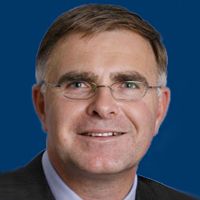






































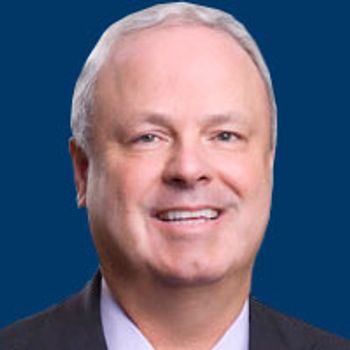
Howard A. “Skip” Burris III, MD, detailed the benefits of performing next-generation sequencing tests on patients with cancer at the 2017 Community Oncology Conference.

Howard A. “Skip” Burris III, MD, detailed the benefits of performing next-generation sequencing tests on patients with cancer at the 2017 Community Oncology Conference.
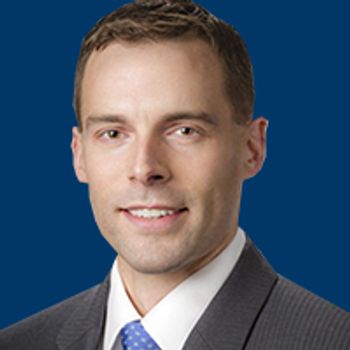
Josh Cox, PharmD, moderated a panel discussion on legislative initiatives to combat the rising power of Pharmacy Benefit Managers at the 2017 Community Oncology Conference. In the talk, he touched on the difficulties of monitoring therapy for patients receiving their drugs from outside pharmacies as well as murkiness off drug pricing and cash flow within the PBM systems.
The FDA has approved midostaurin (Rydapt) for the treatment of adult patients with newly diagnosed FLT3-positive acute myeloid leukemia in combination with standard cytarabine and daunorubicin induction and cytarabine consolidation. The drug has also been approved for the treatment of patients with advanced systemic mastocytosis (SM), including aggressive systemic mastocytosis, SM with associated hematological neoplasm, and mast cell leukemia.
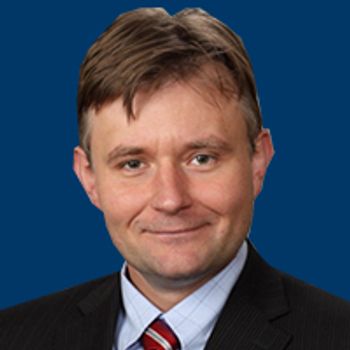
Grzegorz S. Nowakowski, MD, discusses the ever-changing landscape of mantle cell lymphoma, the intriguing combinations being studied, and the promise that immunotherapy could hold.

The FDA has granted a breakthrough therapy designation to lorlatinib for use in patients with ALK-positive metastatic NSCLC who have previously received 1 or more ALK inhibitors, according to Pfizer, the company developing the next-generation ALK/ROS1 TKI.
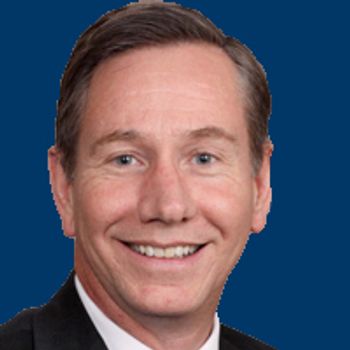
Stephen M. Ansell, MD, PhD, discusses the potential of immunotherapy agents in lymphoma, ongoing clinical trials, and where this blends in with chimeric antigen receptor (CAR) T-cell therapy.
The FDA has approved regorafenib (Stivarga) as a second-line treatment for patients with hepatocellular carcinoma (HCC) who have previously received sorafenib (Nexavar).
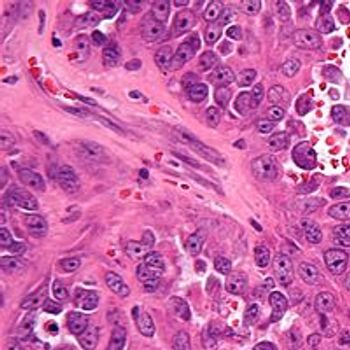
Researchers at MD Anderson Cancer Center believe that including clinical genomic profiling into sarcoma management could result in more precise diagnosis and subclassification of the disease.

The European Union has granted a full approval to osimertinib (Tagrisso) for the treatment of patients with locally advanced or metastatic EGFR T790M mutation-positive non–small cell lung cancer, regardless of prior treatment with an EGFR TKI.

Thomas Flaig, MD, discusses the study of abiraterone acetate in metastatic prostate cancer after hormone induction failure and its impact on future research in this setting.
Dana Chase, MD, discusses obstacles to progress and her hope for the future in advanced gynecologic cancers.
The European Commission has approved oral rolapitant tablets for the treatment of delayed chemotherapy-induced nausea and vomiting in adults.
Matthew Gubens, MD, discusses how far the field of NSCLC has come with molecular testing, the challenges still ahead, and what novel assays could be on the horizon.

Informed by new clinical evidence, ASCO has issued updated guidance on the use of second-line hormonal therapy for chemotherapy-naïve patients with castration-resistant prostate cancer.

Amit Singal, MD, discusses the recent successes in the hepatocellular carcinoma treatment landscape and the challenges that still remain.
Barbara Burtness, MD, discusses her presentation on the current and emerging role of immunotherapy for patients with head and neck cancer.
Stephen M. Ansell, MD, PhD, discusses emerging combinations being investigated in patients with mantle cell lymphoma, the possible role of immunotherapy, and challenges oncologists are still struggling with in this population.

Edward B. Garon, MD discusses the challenges researchers are currently facing with immunotherapy in NSCLC and what the future likely holds for the pivotal agents.

Adding abemaciclib to letrozole or anastrozole improved progression-free survival compared with either aromatase inhibitor alone in women with HR+/HER2-negative breast cancer enrolled in the phase III MONARCH 3 study, according to Eli Lilly and Company, the manufacturer of the CDK4/6 inhibitor.
Shana Wingo, MD, discusses the advancements being made in the field of surgery for patients with gynecologic cancers.
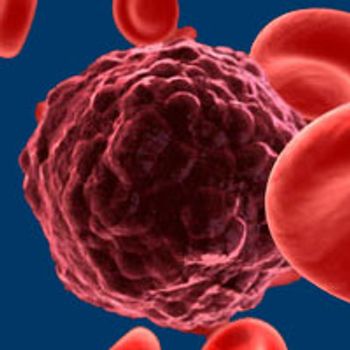
Achieving a complete response following ABVD chemotherapy offered the best chance for survival for patients with chronic lymphocytic leukemia who developed Hodgkin lymphoma following Richter transformation, according to a retrospective study published in the American Journal of Hematology.
Suzanne George, MD, discusses an exceptional responder to pembrolizumab in leiomyosarcoma and the significance of these findings for further immunotherapy advances in the field.
Leonard Gomella, MD, discusses the future of biomarkers in prostate cancer.
Results of a systematic literature search published online in Clinical Lymphoma, Myeloma & Leukemia showed that ibrutinib was associated with superior survival and fewer adverse events compared with bendamustine in patients with chronic lymphocytic leukemia.

Low disease burden prior to treatment with CD19-specific chimeric antigen receptor T-cell therapy appears to be a positive prognostic factor for long-term survival outcomes of patients with relapsed B-cell acute lymphoblastic leukemia.