






































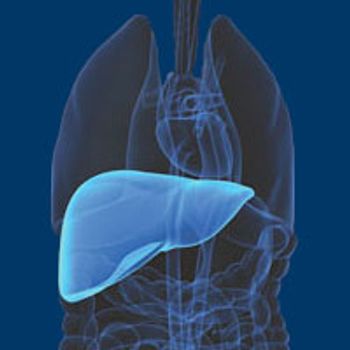
The FDA has granted a priority review designation to nivolumab (Opdivo) for use as a treatment for patients with hepatocellular carcinoma following prior sorafenib (Nexavar).

The FDA has granted a priority review designation to nivolumab (Opdivo) for use as a treatment for patients with hepatocellular carcinoma following prior sorafenib (Nexavar).
The FDA’s Oncologic Drugs Committee voted 14-1 to recommend approving a biologics license application for epoetin hospira (Retacrit), an epoetin alfa (Epogen/Procrit) biosimilar manufactured by Hospira.
Kari B. Wisinski, MD, discusses the evolving but challenging field of TNBC and what therapies are moving through the pipeline in TNBC and other breast cancer subtypes.

The FDA has granted a priority review to a supplemental Biologics License Application for pembrolizumab (Keytruda) for the treatment of patients who have undergone at least 2 courses of chemotherapy for recurrent or advanced gastric or gastroesophageal junction adenocarcinoma.
The FDA’s Oncologic Drugs Advisory Committee voted 12-4 recommending approval of neratinib (Nerlynx) for the extended adjuvant treatment of patients with early stage, HER2-positive breast cancer following postoperative trastuzumab.

The FDA has granted an accelerated approval to pembrolizumab (Keytruda) for the treatment of patients with unresectable or metastatic, microsatellite instability-high (MSI-H) or mismatch repair deficient (dMMR) solid tumors that have progressed after prior treatment and who have no satisfactory alternative treatment options, as well as for patients with MSI-H or dMMR colorectal cancer following progression on a fluoropyrimidine, oxaliplatin, and irinotecan.

Mark Burkard, MD, PhD, discusses the steps researchers are taking to address questions on genomics in breast cancer and what subtypes pose the greatest challenges.
Richard R. Furman, MD, discusses the continued evolution of the field of chronic lymphocytic leukemia and how physicians decide on the optimal treatment sequence for their patients.
Adam M. Brufsky, MD, PhD, discusses neratinib, overcoming resistance to HER2-targeted therapy, and the impact of newer agents in HER2-positive breast cancer.

In phase I results from China published in the Journal of Clinical Oncology, oral pyrotinib (HTI-1001) was well-tolerated and showed antitumor activity in women with HER2-positive breast cancer.
Daniel J. Landsburg, MD, discusses the management of patients with double-hit lymphoma who have achieved remission.

Amye J. Tevaarwerk, MD, discusses how physicians decide on extending endocrine therapy beyond 5 years for patients with ER-positive breast cancer, the tools she hopes will soon become available to help clarify this decision, and the clinical research in this population she is eagerly awaiting.

Arjun V. Balar, MD, discusses the impact of the approval of pembrolizumab and other immunotherapy agents in urothelial carcinoma, as well as the next steps with these treatments.

Researchers are hoping to build on the success of the KEYNOTE-012 and CheckMate-141 trials, which led to the approvals of pembrolizumab and nivolumab, respectively, by examining anti–PD-1/PD-L1 agents in the frontline and as a part of combination regimens for patients with head and neck cancer.

Ahead of this year's meeting, researchers are increasingly interested in the state of communication between patients and doctors on immunotherapy.

Ruth O’Regan, MD, provides insight on the evolving landscapes of ER-positive and HER2-positive breast cancers, and what regimens remain solid approaches for effective patient outcomes.

Kebede H. Begna, MD, discusses the diagnosis and treatment of patients with myeloproliferative neoplasms, including polycythemia vera, essential thrombocytopenia, and myelofibrosis.

Patients with proliferative or mesenchymal ovarian tumors treated with bevacizumab (Avastin) had superior progression-free survival and a trend toward improved overall survival compared with patients with immunoreactive or differentiated tumors.
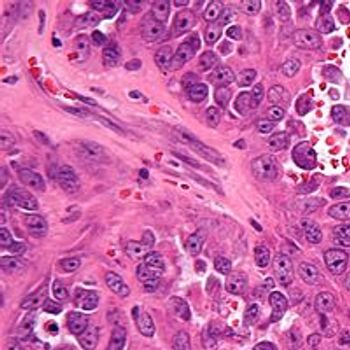
Adjuvant radiotherapy was associated with improved survival for patients with non-retroperitoneal abdominal soft tissue sarcomas (NRA-STS), but the addition of chemotherapy did not confer a similar survival benefit.

The EMA’s Committee for Medicinal Products for Human Use has recommended approval of ceritinib (Zykadia) for the treatment of patients with ALK-positive, metastatic non–small cell lung cancer, according to Novartis, the manufacturer of the second-generation ALK inhibitor.

Louise Davies, MD, discusses the experience of patients with incidentally identified thyroid cancer who choose to not receive treatment.

A team of Sidney Kimmel Cancer Center (SKCC) investigators from Thomas Jefferson University and Drexel University has recently published a new study in the journal Cancer Research that sheds light on a key mechanism of prostate cancer progression.
Two new studies from the laboratory of Dr. Alex Mazo at the Sidney Kimmel Cancer Center at Thomas Jefferson University, along with collaborators from SKCC, the Vickie and Jack Farber Institute for Neuroscience and other institutions, provide new insights into the structure of chromatin and its implications for cellular differentiation.
The FDA has granted pembrolizumab approvals in the frontline and second-line settings for urothelial carcinoma.
Researchers at Istanbul University Institute of Oncology have concluded that patients with high-risk extremity soft tissue sarcoma have similar 3-year outcomes whether they are assigned to neoadjuvant sequential chemoradiotherapy or radiation alone.