






Non-Hodgkin Lymphoma
Latest News
Advertisement
Latest Videos















































Advertisement
More News

Chidamide plus R-CHOP has received approval from China’s NMPA for the management of diffuse large B-cell lymphoma.

The FDA has mandated that the boxed warning for all approved CAR T-cell therapies be updated to include the serious risk of T-cell malignancies.

Itacitinib prophylaxis showed signals for reducing CRS and ICANS following treatment with axicabtagene ciloleucel in patients with B-cell lymphoma.

Nanatinostat plus valganciclovir generated antitumor activity in patients with EBV-positive PTCL in the NAVAL-1 trial.

Glofitamab plus chemotherapy generated an overall survival improvement vs rituximab plus chemotherapy in relapsed/refractory diffuse large B-cell lymphoma.

In case you missed it, these were the key regulatory decisions made by the FDA in March 2024.
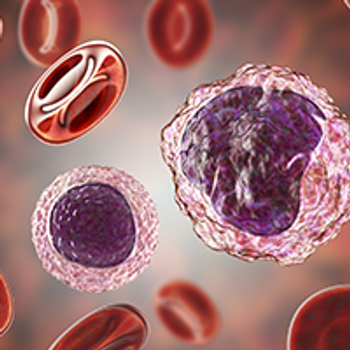
The novel CAR T-cell agent HR001 was effective, with durable responses and a favorable safety profile observed, in relapsed/refractory non-Hodgkin lymphoma.
The FDA issued complete response letters to the BLA for odronextamab in relapsed/refractory follicular lymphoma and diffuse large B-cell lymphoma.
The FDA has accepted the resubmission of the BLA seeking the approval of denileukin diftitox-cxdl for relapsed/refractory cutaneous T-cell lymphoma.

Brentuximab Vedotin Plus Lenalidomide and Rituximab Generates OS Benefit in Previously Treated DLBCL
Brentuximab vedotin/lenalidomide/rituximab led to an OS improvement vs lenalidomide/rituximab/placebo in relapsed/refractory diffuse large B-cell lymphoma.
The FDA has lifted a partial clinical hold on a phase 1 trial evaluating NX-2127 in relapsed/refractory B-cell malignancies
The FDA granted accelerated approval to zanubrutinib in combination with obinutuzumab for select patients with relapsed/refractory follicular lymphoma.

Muhamad Alhaj Moustafa, MD, MS, discusses the evolution of bispecific antibodies in diffuse large B-cell lymphoma.

Rahul Banerjee, MD, FACP, discusses the use of nivolumab in multiple myeloma or non-Hodgkin lymphoma after progression following CAR T-cell therapy.

Early data seen with acalabrutinib plus axi-cel indicate the combination’s feasibility as bridging therapy in relapsed/refractory B-cell lymphoma.

Brexu-cel showed efficacy in eliciting both CNS and systemic responses in patients with relapsed/refractory B-cell acute lymphoblastic leukemia.

Catherine C. Coombs, MD, spotlights the use of bispecific antibodies in diffuse large B-cell lymphoma and pirtobrutinib in mantle cell lymphoma.

Julie M. Vose, MD, MBA, discusses the mitigation of toxicities with epcoritamab in an optimization cohort of patients with relapsed/refractory DLBCL.

BRL-201 had a manageable safety profile and elicited early indications of efficacy in patients with relapsed/refractory non-Hodgkin lymphoma.
Sikander Ailawadhi, MD, discusses characteristics of myelofibrosis that influence decisions between JAK inhibitors, highlights differences between bispecific antibodies to consider when managing diffuse large B-cell lymphoma, and more.

Lori A. Leslie, MD, discusses the efficacy and safety of second-line axicabtagene ciloleucel in elderly patients with high-risk, relapsed/refractory large B-cell lymphoma.

The FDA has approved label updates for zanubrutinib to include data from the ALPINE trial in relapsed/refractory chronic lymphocytic leukemia, and axicabtagene ciloleucel to include findings from the primary overall survival analysis of the ZUMA-7 trial in relapsed/refractory large B-cell lymphoma.
Drs Lunning and Mehta-Shah highlight challenges that arise when diagnosing patients with peripheral T-cell lymphoma and how molecular testing results influence induction and consolidation treatment approaches for patients with ALK-negative anaplastic large cell lymphoma.

DZD8586 showcased antitumor activity and favorable safety with limited grade 3 or greater treatment-emergent adverse effects in patients with heavily pretreated B-cell non-Hodgkin lymphoma, according to preliminary findings from a pooled analysis of two ongoing phase 1 trials.

NX-2127 showcased early efficacy in the form of responses with an acceptable toxicity profile in patients with relapsed or refractory B-cell malignancies, according to data from the ongoing phase 1 NX-2127-001 trial.
Advertisement
Advertisement
Trending on OncLive
1
Ifinatamab Deruxtecan BLA Voluntarily Withdrawn in Previously Treated Extensive-Stage SCLC
2
Tegavivint Plus Osimertinib Shows Early Activity in First-Line EGFR-Mutated NSCLC
3
Etentamig Improves Response and PFS vs Standard Therapies in Triple-Class Exposed Relapsed/Refractory Myeloma
4
FDA Approves Lirafugratinib for Pretreated, Locally Advanced or Metastatic Cholangiocarcinoma
5