



Non-Hodgkin Lymphoma
Latest News
Advertisement
Latest Videos










































Advertisement
More News
The FDA has granted a fast track designation to the CAR T-cell therapy IMPT-314 for the treatment of patients with B-cell–mediated malignancies.
China’s National Medical Products Administration has approved 2 supplemental new drug applications of zanubrutinib for use in treatment-naïve adult patients with chronic lymphocytic leukemia or small lymphocytic lymphoma and Waldenström macroglobulinemia.
The FDA has approved polatuzumab vedotin-piiq (Polivy) plus rituximab (Rituxan), cyclophosphamide, doxorubicin, and prednisone for use in adult patients who have previously untreated diffuse large B-cell lymphoma, not otherwise specified or high-grade B-cell lymphoma and who have an International Prognostic Index score of two or greater.

The investigational tetravalent bispecific antibody AFM13 displayed clinical efficacy in heavily pretreated patients with CD30-positive relapsed/refractory peripheral T-cell lymphoma.

The FDA has placed a partial clinical hold on a phase 1 trial investigating MT-0169 in patients with relapsed/refractory multiple myeloma or non-Hodgkin lymphoma.
The European Medicines Agency’s Committee for Medicinal Products for Human Use has recommended the approval of lisocabtagene maraleucel for the treatment of select patients with large B-cell lymphoma who relapsed within 12 months from completion of or developed refractory disease to frontline chemoimmunotherapy.
Investigators identified a set of microbiome-based biomarkers that may be used to optimize patient selection or increase personalization of treatment for patients with B-cell lymphoma receiving CAR T-cell therapy.
Veronika Bachanova, MD, PhD, discusses findings from a spatial analysis of the tumor microenvironment in patients with non-Hodgkin lymphoma who received and responded to adoptive natural killer cell therapy.
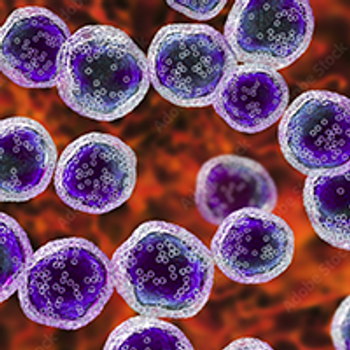
Axicabtagene ciloleucel produced a statistically significant improvement in overall survival compared with standard-of-caretherapy in patients with relapsed/refractory large B-cell lymphoma, according to data from the ZUMA-7 trial.
Eunice Wang, MD, discusses treatment options in unfit patients with acute myeloid leukemia.
Craig Sauter, MD, discusses where BTK inhibitors could fit into the frontline treatment landscape for patients with central nervous system lymphoma and research aiming to address other unmet needs for this patient population.
The FDA has approved nelarabine for injection for the treatment of patients with T-cell acute lymphoblastic leukemia and T-cell lymphoblastic lymphoma, according to an announcement from Shorla Oncology.
FDA Receives Type A Meeting Request for Synthetic Hypericin in Early-stage Cutaneous T-cell Lymphoma
Soligenix has submitted a Type A meeting request to the FDA to discuss the contents of a refusal to file letter from the regulatory agency regarding the new drug application for synthetic hypericin for the treatment of early-stage cutaneous T-cell lymphoma.
The FDA’s Oncologic Drugs Advisory Committee voted 11 to 2 that data from the phase 3 POLARIX trial support a favorable benefit-risk profile for polatuzumab vedotin-piiq in patients with previously untreated large B-cell lymphoma, including diffuse large B-cell lymphoma not otherwise specified.
Wrapping up their discussion, Loretta J. Nastoupil, MD, and Marc S. Hoffman, MD, look at the use of CAR T-cell therapy for patients with mantle cell lymphoma, a rare subtype of non-Hodgkin’s lymphoma.

ADI-001, a first-in-class, allogeneic gamma delta1 CAR T-cell therapy, elicited responses and demonstrated a favorable safety profile in patients with relapsed/refractory B-cell non-Hodgkin lymphoma.

Advances in the development of bispecific antibodies have demonstrated response rates close to or surpassing those of other agents in development, offering investigators an avenue to pursue phase 3 studies such as EPCORE DLBCL-1 to challenge standard of care with the CD3 × CD20 agent, epcoritamab in diffuse large B-cell lymphoma.
Akash Mukherjee, MD, discusses the importance of understanding disease biology when attempting to individualize treatment approaches in mantle cell lymphoma.

The combination of maveropepimut-S, pembrolizumab, and intermittent low-dose cyclophosphamide elicited responses in patients with relapsed or refractory diffuse large B-cell lymphoma, according to preliminary findings from the phase 2b VITALIZE trial.
A discussion on which patients with relapsed/refractory follicular lymphoma are good candidates for CAR T-cell therapy.
Dr Marc S Hoffman reviews the currently available treatment options for relapsed/refractory follicular lymphoma.
Yuliya Linhares, MD, discusses the trial design, methodology, and key efficacy and safety results from the phase 2 OUTREACH trial (NCT03744676) evaluating lisocabtagene maraleucel (liso-cel; Breyanzi) in relapsed/refractory large B-Cell lymphoma (LBCL).
Ariel Perez Perez, MD, discusses key results and clinical implications from a retrospective study of polatuzumab-vedotin plus rituximab with or without bendamustine in relapsed/refractory large B-cell lymphomas.

The selective small molecule MDM2 inhibitor milademetan administered at an intermittent dosing schedule was tolerable and showed early efficacy in patients with advanced cancers, according to findings from a phase 1 study.
Marc S. Hoffman, MD, explains how to select the appropriate CAR T-cell therapy for each patient, and the barriers patients with R/R LBCL face in receiving CAR T-cell therapy, despite its high efficacy rate.
Advertisement
Advertisement
Trending on OncLive
1
Ifinatamab Deruxtecan BLA Voluntarily Withdrawn in Previously Treated Extensive-Stage SCLC
2
Tegavivint Plus Osimertinib Shows Early Activity in First-Line EGFR-Mutated NSCLC
3
Etentamig Improves Response and PFS vs Standard Therapies in Triple-Class Exposed Relapsed/Refractory Myeloma
4
FDA Grants Priority Review to Perioperative Durvalumab Plus Neoadjuvant Enfortumab Vedotin in MIBC
5