


Non-Hodgkin Lymphoma
Latest News
Advertisement
Latest Videos










































Advertisement
More News
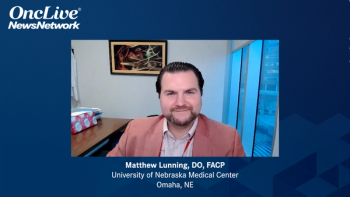
Dr Lunning, DO, FACP, shares his impressions on the toxicity profile of axi-cel and liso-cel, and how he approaches treatment decision making for patients with relapsed-refractory (R/R) large B-cell lymphoma (LBCL).
Matthew Lunning, DO, FACP, discusses the role of CAR T-cell therapy in the second-line treatment of large B-cell lymphoma (LBCL).
Loretta J. Nastoupil, MD, reviews data from the ZUMA-7 trial investigating the use of axicabtagene ciloleucel as a second-line therapy for large b-cell lymphoma.
The combination of magrolimab, rituximab, gemcitabine, and oxaliplatin produced deep, durable responses in patients with relapsed or refractory diffuse large B-cell lymphoma.
Experts provide their perspective on the treatment landscape for patients with relapsed-refractory (R/R) large B-cell lymphoma (LBCL).
In the context of CAR T-cell therapy, Manali Kamdar, MD, reviews TRANSFORM, ZUMA-7, and PILOT trials in the treatment of patients with relapsed-refractory (R/R) large B-cell lymphoma (LBCL).
Experts discuss Large B-Cell Lymphoma (LBCL) and treatment strategies for patients with LBCL.
Drs Loretta J. Nastoupil and Marc S Hoffman explain the available treatment options for relapsed/refractory diffuse large B-cell lymphoma and what to consider when selecting a therapy in the second-line setting.
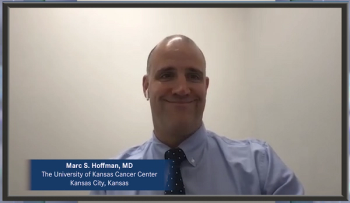
Marc S. Hoffman, MD, provides an overview of recent updates in the treatment of relapsed/refractory diffuse large B-cell lymphoma.

Craig Sauter, MD, discusses the rationale for investigating maintenance pembrolizumab following autologous stem cell transplant in patients with T-cell NHL and explained some of the potential challenges of investigating this regimen in a larger prospective trial in this patient population.
The Medicines and Healthcare Products Regulatory Agency has approved zanubrutinib in Great Britain for both the treatment of adult patients with chronic lymphocytic leukemia and the treatment of adult patients with marginal zone lymphoma who have received at least one prior anti-CD20–based therapy.

Axicabtagene ciloleucel continued to elicit improved progression-free survival and overall response rates in patients with relapsed/refractory indolent non-Hodgkin lymphoma.
Patients with B-cell malignancies who were intolerant to acalabrutinib experienced a longer treatment duration when subsequently receiving zanubrutinib.
The European Commission has issued an orphan drug designation to duvelisib for the treatment of adult patients with peripheral T-cell lymphoma.

The FDA has granted an orphan drug designation to LP-284, a novel small-molecule, next-generation acylfulvene, for the treatment of mantle cell lymphoma
Craig Sauter, MD, discusses important considerations regarding the use of pembrolizumab after autologous stem cell transplant in T-cell non-Hodgkin lymphoma.

Max S. Topp, MD, highlights the rationale for studying bispecific antibodies in newly diagnosed diffuse large B-cell lymphoma, how the safety profile of glofitamab plus R-CHOP contributes to its potential for outpatient administration, and where future directions with this research may lead.

The past decade has been a time of great progress in the research of Waldenström macroglobulinemia and the care of patients with the rare form of non-Hodgkin lymphoma.

Driven by his twin passions for music and science, Louis M. Staudt, MD, PhD, has made a career out of reading between the notes.

Japan’s Ministry of Health, Labor and Welfare has approved axicabtagene ciloleucel for the initial treatment of patients with relapsed/refractory large B-cell lymphoma, including diffuse large B-cell lymphoma, primary mediastinal large B-cell lymphoma, transformed follicular lymphoma, and high-grade B-cell lymphoma.

The FDA has approved mosunetuzumab-axgb (Lunsumio) for the treatment of adult patients with relapsed or refractory follicular lymphoma after 2 or more lines of systemic therapy.
The regimen of lenalidomide in combination with rituximab with bendamustine are effective therapies for relapsed/refractory follicular lymphoma, with high rates of overall and complete metabolic response by PET, according to data from the randomized phase 2 HOVON110/Rebel trial.
Glofitamab, an investigational CD20xCD3 T-cell engaging bispecific antibody, demonstrated promising results in patients with relapsed/refractory diffuse large B-cell lymphoma who received at least 2 prior lines of therapy.

John M. Burke, MD, discusses the underrepresentation of elderly patients in clinical trials for lymphoma.
Craig Sauter, MD, discusses the investigation of pembrolizumab given after stem cell transplant in T-cell non-Hodgkin lymphoma.
Advertisement
Advertisement
Trending on OncLive
1
Ifinatamab Deruxtecan BLA Voluntarily Withdrawn in Previously Treated Extensive-Stage SCLC
2
Tegavivint Plus Osimertinib Shows Early Activity in First-Line EGFR-Mutated NSCLC
3
Etentamig Improves Response and PFS vs Standard Therapies in Triple-Class Exposed Relapsed/Refractory Myeloma
4
FDA Grants Priority Review to Perioperative Durvalumab Plus Neoadjuvant Enfortumab Vedotin in MIBC
5