





Non-Hodgkin Lymphoma
Latest News
Advertisement
Latest Videos












































Advertisement
More News

Brentuximab vedotin plus nivolumab, doxorubicin, and dacarbazine was found to have efficacy and acceptable safety and tolerability when used as a frontline treatment in patients with previously untreated advanced, classical Hodgkin lymphoma.

Odronextamab produced durable responses and a generally manageable safety profile in patients with relapsed/refractory diffuse large B-cell lymphoma.
Autologous hematopoietic cell transplantation lowered relapse and progression rates and improved survival outcomes vs CAR T-cell therapy in patients with relapsed large B-cell lymphoma who experienced complete remission with interim treatment.

The administration of axicabtagene ciloleucel in the second-line setting improved overall survival and progression-free survival vs standard-of-care treatment in patients with relapsed/refractory large B-cell lymphoma who are at least 65 years of age.

Golidocitinib displayed antitumor activity and an acceptable safety profile in patients with refractory/relapsed peripheral T-cell lymphoma, according to data from the pivotal phase 2 JACKPOT8 study.

Michael R. Cook, MD, discusses real-world data associated with the utilization of bridging therapy prior to treatment with axicabtagene ciloleucel in patients with relapsed/refractory large B-cell lymphoma.

Although the use of bridging therapy prior to treatment with axicabtagene ciloleucel did not improve efficacy or safety outcomes for patients with relapsed/refractory large B-cell lymphoma, responses to bridging therapy may be prognostic of favorable outcomes after axi-cel administration.

The FDA has granted orphan drug designation to LP-284 for use in the treatment of patients with high-grade B-cell lymphoma harboring MYC and BCL2 rearrangements.

The European Medicines Agency has validated a type II application for the investigational T-cell engaging bispecific antibody epcoritamab-bysp for patients with relapsed/refractory follicular lymphoma following at least 2 prior lines of therapy

The National Medical Products Administration of China has approved sugemalimab for use in patients with relapsed or refractory extranodal natural killer/T-cell lymphoma.

The European Commission has granted marketing authorization to the combination of zanubrutinib and obinutuzumab for the treatment of adult patients with relapsed/refractory follicular lymphoma following at least 2 prior lines of systemic therapy.

The FDA has granted an orphan drug designation to SIRPant-M™ as a potential therapeutic option for patients with T-cell lymphoma.
Bayer has announced the intention to voluntarily withdraw the new drug application for copanlisib in adult patients with relapsed follicular lymphoma who have previously received at least 2 prior systemic treatments.

Gilles Salles, MD, PhD, expands on how data from recent clinical trials have helped shift the treatment paradigm for patients with diffuse large B-cell lymphoma.

The FDA has placed a partial clinical hold on the phase 1 NX-2127-001 trial investigating the novel BTK degrader NX-2127 in patients with relapsed/refractory B-cell malignancies.
The FDA has granted a fast track designation to SLS009 for the treatment of patients with relapsed/refractory peripheral T-cell lymphoma.
Lunning and Nastoupil Highlight Treatment Considerations and Ongoing Research in Follicular Lymphoma
Drs Lunning and Nastoupil discuss the ins and outs of diagnostic workups for patients with follicular lymphoma; how to discern which patients may benefit most from standard chemotherapy vs clinical trial regimens in the frontline setting; and ongoing follicular lymphoma research that may alter the treatment paradigm.

The United Kingdom’s Medicines and Healthcare Products Regulatory Agency has granted conditional marketing authorization to epcoritamab-bysp monotherapy for the treatment of adult patients with relapsed or refractory diffuse large B-cell lymphoma after 2 or more systemic therapy.
Bortezomib, rituximab, cyclophosphamide, doxorubicin hydrochloride, prednisone, and cytarabine hydrochloride generated robust responses with a tolerable safety profile when delivered as first-line therapy in patients with marginal zone lymphoma.
The combination of sobuzoxane and etoposide plus rituximab prolonged survival and showcased a tolerable safety profile in patients with previously untreated diffuse large B-cell lymphoma aged 80 years and older.
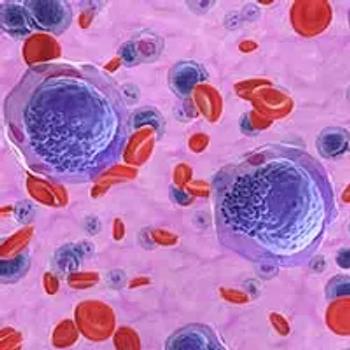
The novel CD20xCD3 bispecific antibody EX103 displayed a favorable safety profile and produced preliminary antitumor activity in heavily pretreated patients with relapsed/refractory B-cell non-Hodgkin lymphoma.

The European Medicines Agency’s Committee for Medicinal Products for Human Use has recommended the approval of zanubrutinib in combination with obinutuzumab for use in adult patients with relapsed or refractory follicular lymphoma who have previously received at least 2 lines of systemic treatment.
The FDA has granted priority review to the biologics license application seeking the approval of odronextamab for the treatment of adult patients with relapsed/refractory follicular lymphoma or relapsed/refractory diffuse large B-cell lymphoma who have progressed after at least 2 prior systemic therapies.
Stephen M. Ansell, MD, PhD, discusses the successes and challenges of utilizing immune therapy across the landscape of hematologic malignancies, the importance of increasing the understanding of how the immune system functions in patients with lymphoma, and ongoing research of immune therapy for this patient population.

Epcoritamab-bysp has been approved by the European Commission and Japan's Ministry of Health, Labour, and Welfare for the treatment of select patients with relapsed/refractory large B-cell lymphoma.
Advertisement
Advertisement
Trending on OncLive
1
Ifinatamab Deruxtecan BLA Voluntarily Withdrawn in Previously Treated Extensive-Stage SCLC
2
Tegavivint Plus Osimertinib Shows Early Activity in First-Line EGFR-Mutated NSCLC
3
Etentamig Improves Response and PFS vs Standard Therapies in Triple-Class Exposed Relapsed/Refractory Myeloma
4
FDA Grants Priority Review to Perioperative Durvalumab Plus Neoadjuvant Enfortumab Vedotin in MIBC
5