




Non-Hodgkin Lymphoma
Latest News
Advertisement
Latest Videos





CME Content











































Advertisement
More News

Caron Jacobson, MD, discusses the design of the phase 2 ZUMA-5 trial in patients with relapsed/refractory indolent non-Hodgkin lymphoma.

The FDA has approved tazemetostat for the treatment of patients with relapsed/refractory follicular lymphoma whose tumors are EZH2 positive as detected by an FDA-approved test and who have received at least 2 prior systemic therapies, as well as those with relapsed/refractory disease who have no other available satisfactory treatment options.

Treatment with the CAR T-cell product lisocabtagene maraleucel led to high response rates, with durable complete responses, in transplant-ineligible patients with relapsed/refractory aggressive B-cell non-Hodgkin lymphoma who had poor prognostic features.

The FDA has granted a Fast Track designation to CLR 131 for use as a treatment for patients with lymphoplasmacytic lymphoma/Waldenstrom macroglobulinemia.

Sonali M. Smith, MD, sheds light on some of the recent advances in follicular lymphoma and mantle cell lymphoma, as well as the challenges that remain overall in non-Hodgkin lymphoma.
The FDA has extended the review period for a biologics license application for lisocabtagene maraleucel for the treatment of adult patients with relapsed/refractory large B-cell lymphoma.

Ariela Noy, MD, discusses the rationale and design of the phase 2 study of devimistat in patients with aggressive lymphoma.
Rajat Bannerji, MD, PhD, discusses the clinical activity of the bispecific antibody REGN1979 in patients with non-Hodgkin lymphoma.
Brad S. Kahl, MD, outlines the available treatment options in indolent non-Hodgkin lymphoma, factors that may influence treatment selection, and promising agents on the horizon.

Although considerable progress has been made in treating diffuse large B-cell lymphoma since the advent of chemoimmunotherapy, approximately 33% of patients still develop relapsed/refractory disease, which is associated with considerable morbidity and mortality.
The FDA has granted ME-401 Fast Track Designation for the treatment of adult patients with relapsed or refractory follicular lymphoma who have received at least 2 prior systemic therapies.
The FDA has placed a partial clinical hold on a phase I trial assessing the autologous T-cell therapy ACTR707 in combination with rituximab for patients with CD20-positive, B-cell non-Hodgkin lymphoma due to a safety concern.
The FDA has granted an orphan drug designation to umbralisib for the treatment of patients with follicular lymphoma.

Investigators propose that a PI3K-δ,γ inhibitor currently indicated for the treatment of 3 hematologic malignancies may be a key to boosting response rates in peripheral T-cell lymphoma, a disease setting defined by poor prognoses.
Michael L. Grossbard, MD, discusses recent changes to the follicular lymphoma paradigm and therapeutic approaches on the horizon.
The FDA has granted a Fast Track Designation to tipifarnib for the treatment of adult patients with relapsed/refractory angioimmunoblastic T-cell lymphoma, follicular T-cell lymphoma, and nodal peripheral T-cell lymphoma with T follicular help phenotype.

Aaron Goodman, MD, hematologist/oncologist and assistant professor of medicine at the University of California, San Diego, discusses the role of transplant in patients with T-cell lymphomas.
The FDA has granted a priority review designation to a biologics license application for the combination of tafasitamab and lenalidomide for the treatment of patients with relapsed/refractory diffuse large B-cell lymphoma.
Sonali M. Smith, MD, discusses the prognosis of patients with indolent non-Hodgkin lymphomas.

Praveen Ramakrishnan, MD, assistant professor, Department of Internal Medicine, UT Southwestern Medical Center, discusses updates in diffuse large B-cell lymphoma (DLBCL) that were presented at the 2019 ASH Annual Meeting.
Benjamin Heyman, MD, assistant clinical professor of medicine, University of California, San Diego, discusses the use of maintenance rituximab (Rituxan) in patients with follicular lymphoma.

Despite advances made in the treatment of patients with diffuse large B-cell lymphoma, investigators are on a quest to move more novel agents through the pipeline, says Craig Moskowitz, MD, in a presentation during the 24th Annual International Congress on Hematologic Malignancies®: Focus on Leukemias, Lymphomas, and Myeloma.

Aaron Goodman, MD, discusses factors that have contributed to the lack of treatment development in peripheral T-cell lymphoma.
The United Kingdom’s National Institute for Health and Care Excellence has recommended the combination of lenalidomide and rituximab as a treatment option for adult patients with grade 1 to 3A previously treated follicular lymphoma.
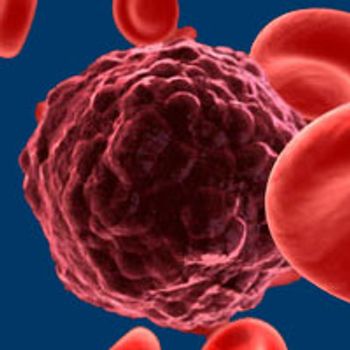
The United Kingdom’s National Institute for Health and Care Excellence has chosen not to recommend polatuzumab vedotin plus rituximab and bendamustine for use in adult patients with relapsed/refractory diffuse large B-cell lymphoma who cannot undergo hematopoietic stem cell transplant.
Advertisement
Advertisement
Trending on OncLive
1
First-Line Niraparib Maintenance Yields Longer PFS in HRD-Positive vs HRD-Negative Optimally Debulked Ovarian Cancer
2
LITESPARK-022 PRO Data Further Support Adjuvant Belzutifan Plus Pembrolizumab in ccRCC
3
Sonrotoclax-Based Regimens Elicit Responses in Relapsed/Refractory MCL
4
Dr Borgen on Matching Treatment to HER2 Biology in Early-Stage HER2-Positive Breast Cancer
5