


Prostate Cancer
Latest News
Advertisement
Latest Videos





























































Advertisement
More News
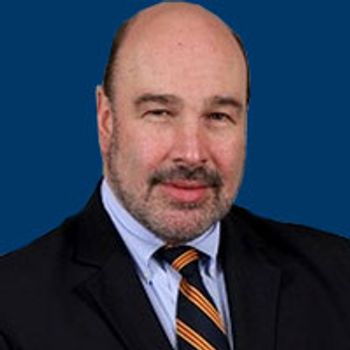
David Albala, MD, discusses some of the benefits of robotic surgery and the impact it has had on the field of prostate cancer, as well as methods that larger urology groups can use to better achieve compliance.
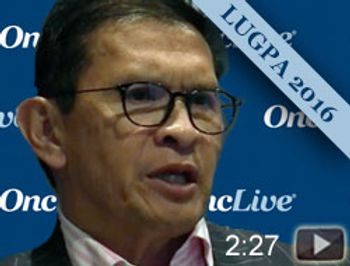
Raoul Concepcion, MD, director, Comprehensive Prostate Center, discusses the use of Eligard in the treatment of prostate cancer with OncLive during the LUGPA Annual Meeting.
Philip J. Buffington, MD, Chief Medical Officer, The Urology Group, discussed the use of fusion MRI in prostate cancer with OncLive during the LUGPA Annual Meeting.
Rahul Tendulkar, MD, associate staff, radiation oncology, Cleveland Clinic, discusses the side effects of a radical prostatectomy for men with prostate cancer.
The life expectancy of patients with metastatic castrate-resistant prostate cancer has doubled in recent years thanks to a multitude of new therapies, and there are still many more advancements to come.
Richard Harris, MD, of UroPartners, says there are many exciting advancements currently happening in the field of prostate cancer. Harris shared his insights during an interview with OncLive at the 2016 LUGPA Annual Meeting.
Gary Kirsh, MD, President of The Urology Group and the Large Urology Group Practice Association (LUGPA), discusses this exciting phase in prostate cancer care. Kirsh shared his insights during an interview with OncLive at the 2016 LUGPA Annual Meeting.
Bertram Yuh, MD, an assistant clinical professor of Urologic Oncology and a urologic oncology surgeon at City of Hope, compares the outcomes with surgery and radiation treatment in patients with localized prostate cancer. Yuh shared this insight in an interview during the 2016 OncLive State of the Science Summit on GU Cancer.
Clayton S. Lau, MD, director, Urologic Oncology, director, Robotic Surgery, Prostate Cancer Surgery, interim chair of Urology, City of Hope, discusses the controversies surrounding prostate cancer screening. Lau spoke on this in an interview during the 2016 OncLive State of the Science Summit on GU Cancer.
Surgery and radiation therapy are standard treatment options for localized prostate cancer, but are not comparative to one another.
Gregory Zagaja, MD, professor of Surgery, director of the Prostate Cancer Center at the University of Chicago Medicine, discusses the benefits of radical prostatectomy for patients with prostate cancer. Zagaja shared this insight during an interview at the 2016 OncLive State of the Science Summit on GU and Prostate Cancer.

Robert B. Den, MD, associate professor of Radiation Oncology, Jefferson Health, discusses the use of radiation therapy as a treatment for patients with prostate cancer.

Scott Eggener, MD, associate professor of Surgery, Urologic Oncology, at the University of Chicago Medicine, discusses his views on PSA-based screening and how to appropriately use it for patients with early-stage prostate cancer. Eggier shared these thoughts during the 2016 OncLive State of the Science Summit on GU and Prostate Cancer.
Before undergoing surgery, radiation therapy, or a systemic treatment, Clayton S. Lau, MD, advises that the active surveillance approach for some patients with early prostate cancer is likely a more effective approach—but they should be better educated on it.
Kosj Yamoah, MD, a radiation oncologist at Moffit Cancer Center, discusses reasons for understanding the racial disparities in patients with prostate cancer. Yamoah shared this insight during an interview at the 2016 OncLive State of the Science Summit on Genitourinary Cancers.
Neeraj Agarwal, MD associate professor in the Division of Oncology, Department of Medicine, director of the Genitourinary Medical Oncology Program, Huntsman Cancer Institute at the University of Utah, discusses the pox viral vaccine rilimogene galvacirepvec/rilimogene glafolivec (PROSTVAC) and the future of immunotherapy in prostate cancer.

Several recent trials have supported the use of chemotherapy in the frontline setting for patients with hormone-sensitive metastatic prostate cancer.
Radiation therapy can be effectively delivered in more focused, intensive, and shorter-course treatment regimens that offer patients at least equivalent—and in some cases superior—outcomes in several tumor types, thus helping to mitigate challenging adverse effects of standard approaches.

Winald Gerritsen, MD, PhD, professor and medical oncologist, Radboud Medical Center, discusses some of the recent shortcomings seen with immunotherapy agents in the treatment of patients with castration-resistant prostate cancer.

The FDA has updated the label for enzalutamide in metastatic castration-resistant prostate cancer to include new data from the phase II TERRAIN study.

Luke Nordquist, MD, a urologic medical oncologist and CEO of the Urology Cancer Center and GU Research Network, discusses which patients may benefit from radium-223, those who should not receive the drug, and combinations that are being considered.

Men with bone-metastatic castration-resistant prostate cancer appeared to derive additional benefits from treatment with radium-223 with concomitant bone-targeted therapies, according to data from an extended-access program.
Daniel Eidelberg Spratt, MD, assistant professor, radiation oncology, University of Michigan Health System, discusses challenges regarding the classification of risk groups in prostate cancer.
Przemyslaw W. Twardowski, MD, director, Prostate Oncology Strategic Program, director, Genitourinary Program, clinical professor, Department of Medical Oncology and Therapeutics Research, medical oncologist, discusses the challenge with sequencing therapies for patients with metastatic castration-resistant prostate cancer (mCRPC).
Advertisement
Advertisement
Trending on OncLive
1
Savolitinib Plus Osimertinib NDA Submitted to FDA for MET-Driven, EGFR-Mutated NSCLC After EGFR TKI
2
Calculating the Real Cost of False Positive Findings in Cancer Screening
3
FDA Grants Priority Review to Elinzanetant for Endocrine Therapy–Associated Vasomotor Symptoms in HR+ Breast Cancer
4
Cilta-Cel Shows Long-Term Treatment-Free Remissions in Lenalidomide-Refractory Myeloma
5