






Prostate Cancer
Latest News
Advertisement
Latest Videos































































Advertisement
More News

Jake Micallef, PhD, chief scientific officer, VolitionRX, discusses a study that examined the efficacy of the NuQ biomarker assay as a detection tool for early-stage prostate cancer.

The combination of radium-223 dichloride (Xofigo) and abiraterone acetate (Zytiga) was associated with significant reductions in bone pain, as well as improvements in quality of life, in patients with metastatic castration-resistant prostate cancer.

Major health policy implications follow findings from the landmark Prostate, Lung, Colorectal, and Ovary screening trial, after it was found that 80% of the control group reported at least one PSA test during the trial.

Abiraterone acetate, alone or in combination with low-dose steroids, has been intensely investigated in recent years for the treatment of progressive CRPC in patients who have received prior chemotherapy or who were treatment-naïve.

Fred Schumacher, PhD, MPH, associate professor, Case Western Reserve University, discusses a study that led to the identification of genetic risk factors of prostate cancer.

Enzalutamide (Xtandi) pricing heightens the likelihood of pre-authorization requirements and cost-sharing arrangements that may be financially burdensome, ruinous, or simply impossible to meet.

Bone metastases in metastatic castration-resistant prostate cancer can invade a range of sites in the skeleton where they precipitate a spectrum of pathological processes that increase morbidity, negatively affect quality of life, and decrease survival.

Jong Chul Park, MD, discusses the potential synergy of radium-223 and sipuleucel-T, which is being investigated in a clinical trial as a potential treatment for patients with metastatic castration-resistant prostate cancer.

Researchers evaluate the role of magnetic-resonance imaging in the clinical staging of prostate cancer in the definitive and salvage settings, and to identify changes in treatment recommendations.
Real-world data obtained from large retrospective studies can also deliver useful insights into the clinical challenges associated with newer therapies in prostate cancer, such as medication adherence and cognitive adverse events.
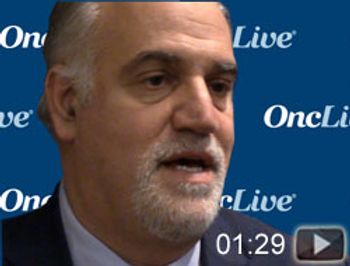
Richard G. Stock, MD, senior faculty, Radiation Oncology, Mount Sinai Hospital, discusses the optimal use of radium-223 dichloride (Xofigo) for the treatment of patients with metastatic castration-resistant prostate cancer.

Although abiraterone acetate (Zytiga) and enzalutamide (Xtandi) have demonstrated improved survival outcomes, the optimal sequencing of these therapies has not been established, and most patients exhibit some degree of cross-resistance.

Oliver Sartor, MD, discusses the combination regimens being explored with radium-223, its unique mechanism of action, and the associated risks and benefits.

E. David Crawford, MD, and Leonard G. Gomella, MD, provide insight into current best practices and strategies that are on the horizon in metastatic castration-resistant prostate cancer.

Clinicians must consider and evaluate the unique characteristics and treatment options for older men with prostate cancer, who are more likely to be diagnosed with advanced disease, and tend to have higher mortality rates and poorer prognosis.

James Mohler, MD, chair, Department of Urology, associate director, Translational Research, Roswell Park Cancer Institute, discusses the use of androgen-deprivation therapy (ADT) for patients with prostate cancer and how the use is reflected in the NCCN guidelines.
Leonard Gomella, MD, physician, professor, and chair of the Department of Urology at Thomas Jefferson University and director of the Kimmel Cancer Center Network, discusses the current perspectives on screening for prostate cancer.

Leonard Gomella, MD, discusses the optimal patient population to receive radium-223 for prostate cancer and how oncologists should best use it.

Targeting androgen receptor signaling with recently approved agents has improved outcomes for men with metastatic castration-resistant prostate cancer but significant questions linger about how to tackle resistance to the therapies.
E. David Crawford, MD, discusses the history of radium-223 dichloride (Xofigo) and how it could be used in the future.

Robert Dreicer, MD, professor, Department of Medicine, Division of Hematology/Oncology, University of Virginia Health System, discusses the optimal use of radium-223 dichloride (Xofigo) for patients with metastatic castration-resistant prostate cancer.

Stacy Loeb, MD, discusses how screening tests for prostate cancer work, what their benefits are, and what urological specialists need to know in order to best utilize them.

Treatment with abiraterone acetate plus prednisone demonstrated an 11.8-month improvement in overall survival compared with prednisone and placebo for men with less advanced, chemotherapy-naïve metastatic castration-resistant prostate cancer.

Men with low-risk prostate cancer who chose active surveillance (AS) reported a higher quality of life than men who chose direct active treatment such as surgery or radiation.

Men with prostate cancer treated with radiotherapy were at higher risk for developing second malignancies in the bladder, colon, and rectum compared with men who were not exposed to radiotherapy.
Advertisement
Advertisement
Trending on OncLive
1
Savolitinib Plus Osimertinib NDA Submitted to FDA for MET-Driven, EGFR-Mutated NSCLC After EGFR TKI
2
FDA Grants Priority Review to Elinzanetant for Endocrine Therapy–Associated Vasomotor Symptoms in HR+ Breast Cancer
3
Calculating the Real Cost of False Positive Findings in Cancer Screening
4
Cilta-Cel Shows Long-Term Treatment-Free Remissions in Lenalidomide-Refractory Myeloma
5