






Prostate Cancer
Latest News
Advertisement
Latest Videos


































































Advertisement
More News

Jingsong Zhang, MD, PhD, discusses the advancements for patients with metastatic castration-resistant prostate cancer (mCRPC) that have occurred over the last decade.

Tanya Dorff, MD, assistant professor of Clinical Medicine, Keck Medicine of University of Southern California, discusses the role of chemotherapy in patients with metastatic castration-resistant prostate cancer and pivotal clinical trials that have explored this.

Study results that examined patient-reported outcomes and quality of life measures demonstrate that hypofractionated radiotherapy is a viable, safe, and value-added alternative to patients with low-risk prostate cancer.

Jake Micallef, PhD, chief scientific officer, VolitionRX, discusses the science of the NuQ biomarker assay as a detection tool for early-stage prostate cancer.

Stereotactic ablative radiosurgery, which is administered in far fewer but larger doses than conventional radiotherapy, has the potential to benefit a substantial proportion of patients with low-, intermediate-, and potentially even high-risk prostate cancers.

Treatment options for men with localized prostate cancer include active surveillance, radical prostatectomy, or external-beam radiotherapy, but in the Prostate Testing for Cancer and Treatment trial each therapy was associated with a low prostate-specific mortality rate of about 1%.

Men with positive needle biopsy for prostate cancer who underwent active surveillance exhibited no difference in quality-of-life compared with men who had a negative prostate needle biopsy.

Conor Lynch, PhD, an associate professor of Tumor Biology at Moffitt Cancer Center, discusses the biology of bone metastases in patients with castration-resistant prostate cancer.

A treatment recommendation based on reduced prostate-specific antigen failure observed from early results of randomized controlled trials is not likely to prolong survival in men with moderate-to-severe comorbidities.

Luke Nordquist, MD, a urologic medical oncologist and CEO of the Urology Cancer Center and GU Research Network, discusses a prospective study looking at the impact of an additional 6 doses of radium-223 dichloride in patients with metastatic castration-resistant prostate cancer (mCRPC) with bone metastases.

Stanley Liauw, MD, associate professor at the University of Chicago Medicine, discusses the advancements in radiation therapy (RT) over the last several years, and how he has seen the treatment affect his patients.

Mark A. Rubin, MD, is an expert in prostate cancer genomics and pathology who has led key discoveries in the distinction between indolent and aggressive types of the malignancy.
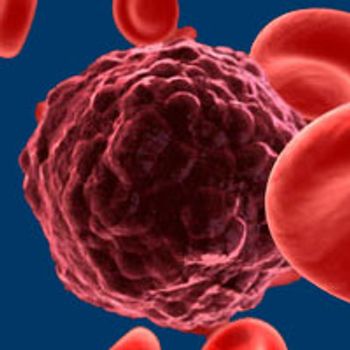
Prostate cancer is slow-growing and readily curable in many cases, but the propensity for some tumors to develop into an aggressive, metastatic form that becomes resistant to androgen-targeting therapies continues to present a significant obstacle.

After updated findings from the landmark Prostate, Lung, Colorectal, and Ovary screening trial were presented earlier this year, members of the oncology community strongly suggested that the United States Preventative Services Task Force revise its views on prostate-specific antigen screening for patients with prostate cancer.

Heather S. Jim, PhD, associate member in the Health Outcomes and Behavioral Department, Moffitt Cancer Center, discusses the effects of testosterone-lowering drugs used as a treatment for patients with prostate cancer.

Robert Dreicer, MD, Division of Hematology/Oncology, Department of Medicine, University of Virginia Health System, discusses resistance to antiandrogen therapy in prostate cancer.

Richard M. Levine, MD, medical director, Moffitt International Plaza, Moffitt Cancer Center, discusses the available agents and their benefits for patients with metastatic castration-resistant prostate cancer.
Peter A. Johnstone, MD, vice chair, Department of Radiation Oncology, Moffitt Cancer Center, discusses immediate salvage therapy for patients with prostate cancer and the most common physician questions surrounding the treatment.

Richard Levine, MD, discusses the selection of therapies available for patients with metastatic castration-resistant prostate cancer and the next steps in the field.

Kosj Yamoah, MD, discusses health disparities in prostate cancer and unanswered questions researchers still need to tackle.

Julio Pow-Sang, MD, discusses the significance of assessing risk status, options for patients with prostate cancer whose risk status falls in a "grey-zone," and how technology is helping oncologists more accurately characterize risk.

Jingsong Zhang, MD, PhD, discusses his vision for treating patients with metastatic castration-resistant prostate cancer.

Conor Lynch, PhD, sheds light on the biology of bone metastases as well as the mechanism of action for bone-directed therapies for patients with metastatic castration-resistant prostate cancer.

Pfizer has announced plans to acquire the biopharmaceutical company Medivation, which is the developer of the androgen receptor inhibitor enzalutamide (Xtandi).

Heather Jim, MD, describes the psychological impacts of testosterone-lowering drugs for patients with prostate cancer—and what oncologists should do to help.
Advertisement
Advertisement
Trending on OncLive
1
Savolitinib Plus Osimertinib NDA Submitted to FDA for MET-Driven, EGFR-Mutated NSCLC After EGFR TKI
2
Calculating the Real Cost of False Positive Findings in Cancer Screening
3
FDA Grants Priority Review to Elinzanetant for Endocrine Therapy–Associated Vasomotor Symptoms in HR+ Breast Cancer
4
Cilta-Cel Shows Long-Term Treatment-Free Remissions in Lenalidomide-Refractory Myeloma
5