





Prostate Cancer
Latest News
Advertisement
Latest Videos




























































Advertisement
More News

Although androgen deprivation therapy has a survival benefit for patients with high-risk and locally advanced prostate cancer, it is associated with substantial safety concerns, and mixed data exist regarding whether it causes clinically significant depression.

Despite limited data comparing stereotactic body radiation therapy to standard or hypofractionated radiotherapy with regards to long-term clinical outcomes and toxicity profiles, the data are promising and appropriately selected patients can be offered such an approach off-protocol.

Researchers are hoping the results of a late-stage efficacy and safety study of apalutamide in patients with high-risk, localized, or locally advanced prostate cancer who are receiving primary radiation therapy will demonstrate an improvement in metastasis-free survival.

A combination regimen involving abiraterone acetate (Zytiga) and low-dose prednisone demonstrated a median time to radiographic progression of 41.4 months, as well as a median time to prostate-specific antigen progression of 28.7 months, in men with nonmetastatic castration-resistant prostate cancer.
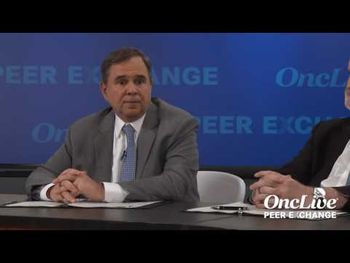


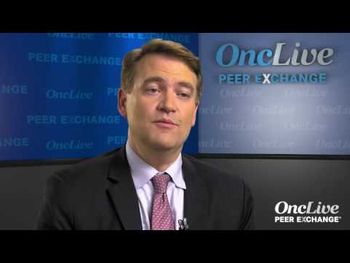


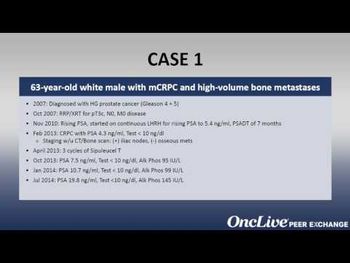
Christopher E. Barbieri, MD, PhD, surgeon, researcher in prostate cancer genomics, Sandra and Edward Meyer Cancer Center at Weill Cornell Medicine and New-York Presbyterian, discusses the implications of SPOP mutations in patients with prostate cancer.

The radioactive imaging agent, fluciclovine F18 (Axumin), was approved by the FDA for use in positron emission tomography scans in men with suspected recurrence of prostate cancer whose prostate-specific antigen levels rise following prior treatment.

Using the Decipher Prostate Cancer Classifier assay to predict which patients might respond to hormonal therapy has resulted in the discovery and validation of an adjuvant androgen-deprivation therapy resistance signature.
Advertisement
Advertisement
Trending on OncLive
1
Savolitinib Plus Osimertinib NDA Submitted to FDA for MET-Driven, EGFR-Mutated NSCLC After EGFR TKI
2
Calculating the Real Cost of False Positive Findings in Cancer Screening
3
FDA Grants Priority Review to Elinzanetant for Endocrine Therapy–Associated Vasomotor Symptoms in HR+ Breast Cancer
4
Cilta-Cel Shows Long-Term Treatment-Free Remissions in Lenalidomide-Refractory Myeloma
5