


Sarcomas
Latest News

Advertisement
Latest Videos






























































Advertisement
More News

Pediatric patients with TRK fusion–positive sarcomas may be able to safely discontinue larotrectinib and resume treatment if needed without sacrificing response.

Findings from the safety review of SON-1010 plus trabectedin in patients with advanced leiomyosarcoma or liposarcoma were positive.

Nivolumab plus sunitinib displayed early-phase efficacy in advanced bone sarcoma.
R. Lor Randall, MD, FACS, discusses the application of a bioengineered bone marrow matrix as a three-dimensional model to analyze osteosarcoma cell behavior under varying oxygen tensions.

A real-world study showed OS outcomes with eribulin similar to those with trabectedin in doxorubicin-pretreated patients with advanced liposarcoma.
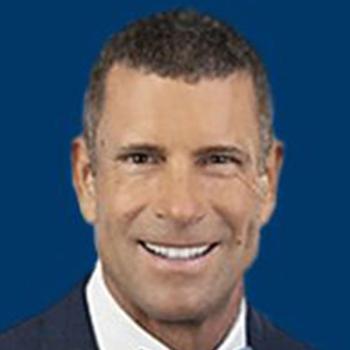
Bioengineered Bone Marrow Model Reveals Potential New Strategies for Osteosarcoma Metastasis Control
R. Lor Randall, MD, FACS, discusses the development of a bone marrow matrix to study osteosarcoma and the model’s mechanisms of metastasis control.

The top 5 OncLive videos of the week cover insights in TGCT, NSCLC, TNBC, AML, and MDS.
R. Lor Randall, MD, FACS, discusses the significance of the FDA approval of vimseltinib for patients with symptomatic TGCT.

SON-1010 is being investigated for its potential to improve outcomes in solid tumors.
Here is your snapshot for all therapeutic options that were approved by the FDA in February 2025 spanning tumor types.

OH2 monotherapy was safe and treatment with the agent led to responses in combination with HX008 in locally advanced or metastatic sarcoma.
The long-acting IL-7 agent efineptakin alfa was tolerable and led to responses in patients with Kaposi sarcoma, including in HIV-associated disease.
R. Lor Randall, MD, FACS, discusses the enrollment criteria for a trial investigating surgical outcomes in patients with proximal femur metastases.

Neeta Somaiah, MD, highlights the evolving sarcoma treatment paradigm within the past 5 years, including the FDA approval of afamitresgene autoleucel.

Mirdametinib is approved in select plexiform neurofibromas, experts preview top ASCO GU abstracts, NCCN updates ctDNA stance in several tumors, and more.

The FDA has approved vimseltinib for the treatment of patients with tenosynovial giant cell tumor.
John Andrew Livingston, MD, MS, discusses responses with gemcitabine, docetaxel, and hydroxychloroquine in advanced, metastatic osteosarcoma.
A panelist discusses how although liquid biopsy offers potential advantages in terms of convenience and repeatability, tissue biopsy remains the current standard for MAGE-A4 testing because of the need for accurate protein expression assessment and established validation protocols, though ongoing research may eventually support complementary use of liquid biopsy approaches.
A panelist discusses how the main challenges in MAGE-A4 testing include optimizing the timing of both human leukocyte antigen (HLA) and MAGE-A4 expression testing, establishing standardized testing protocols across institutions, and ensuring adequate tissue availability for testing, while recommending early screening at diagnosis or first relapse to allow sufficient time for treatment planning if patients become eligible.

R. Lor Randall, MD, FACS, discusses the utility of routine intraoperative frozen section in soft tissue sarcomas and the impact of added costs.
A panelist discusses how key barriers to broad afamitresgene autoleucel (afami-cel) adoption include manufacturing turnaround times, the need for specialized cell therapy centers, testing requirements, and coordination of lymphodepletion timing, though these challenges are being actively addressed through improved processes and infrastructure development.
A panelist discusses how afamitresgene autoleucel (afami-cel) therapy could be optimally sequenced after first- or second-line standard treatments while patients maintain good functional status, though the exact positioning would depend on individual patient factors, such as MAGE-A4 expression levels, prior therapy responses, and overall clinical condition.
A panelist discusses how afamitresgene autoleucel (afami-cel) therapy should be considered early in the treatment journey after initial standard of care when patients still have good performance status and adequate organ function to maximize the potential benefit of this cellular therapy approach.
A panelist discusses how T-cell receptor (TCR) therapy offers potential advantages over chimeric antigen receptor (CAR) T therapy in solid tumors due to its ability to recognize intracellular antigens through human leukocyte antigen (HLA) presentation and its generally better safety profile with lower cytokine release syndrome rates, though TCR therapy faces its own challenges, including HLA restriction and potential cross-reactivity risks.
Yvonne Mowery, MD, PhD, discusses the SU2C-SARC032 trial of pembrolizumab plus radiotherapy followed by surgery in soft tissue sarcoma.
Advertisement
Advertisement
Trending on OncLive
1
FDA Approves Nogapendekin Alfa Inbakicept Plus BCG for High-Grade, Papillary-Only BCG-Unresponsive NMIBC
2
SurVaxM Cancer Vaccine Shows Clinically Meaningful OS Signal in Newly Diagnosed Glioblastoma
3
VS-7375 Elicits Responses in KRAS G12D–Mutated Pancreatic Cancer
4
FDA Accepts BLA Resubmission for Tabelecleucel in EBV+ Post-Transplant Lymphoproliferative Disease
5