




Urothelial Cancer
Latest News

Advertisement
Latest Videos

































































Advertisement
More News

Following its approval in high-risk BCG-unresponsive NMIBC with CIS, nadofaragene firadenovec is being assessed in intermediate-risk disease in ABLE-32.
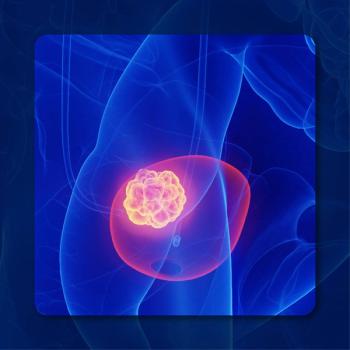
Detalimogene voraplasmid generated complete responses in BCG-unresponsive non–muscle-invasive bladder cancer with carcinoma in situ.
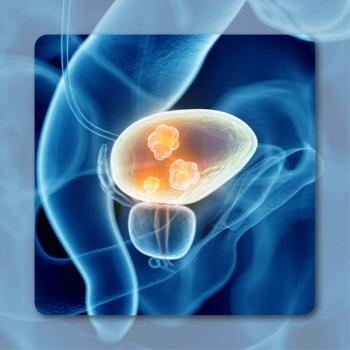
Neoadjuvant chemotherapy and concurrent chemoradiation could represent a safe, effective bladder-sparing approach in MIBC.

Shilpa Gupta, MD, discusses updated data with enfortumab vedotin plus pembrolizumab in previously untreated urothelial carcinoma.
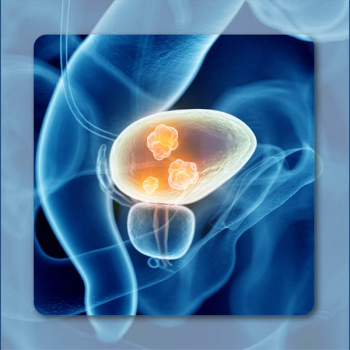
Data spotlighted that the addition of perioperative durvalumab to radical cystectomy and adjuvant chemotherapy improved outcomes in MIBC.

Dato-DXd generated durable responses and produced no new safety signals in patients with heavily pretreated, locally advanced/metastatic urothelial cancer.

Mirdametinib is approved in select plexiform neurofibromas, experts preview top ASCO GU abstracts, NCCN updates ctDNA stance in several tumors, and more.

UGN-102 generated robust, durable responses in patients with low-grade, intermediate-risk NMIBC, in analyses of the phase 3 ENVISION and ATLAS studies.
Enfortumab vedotin, both as monotherapy and in combination with pembrolizumab, demonstrated clinical activity in patients with UTUC lesions.
Enfortumab vedotin significantly improved outcomes for patients with unresectable or metastatic urothelial carcinoma, according to real-world data.
See this full list of regulatory decisions from 2024 regarding withdrawn agents, label updates, and new drug formulations.

Experts highlight the top presentations to watch for at the 2025 Genitourinary Cancers Symposium.

Vikram M. Narayan, MD, details updates in the bladder cancer field, including effects of the BCG shortage and upcoming therapies/tools of interest.
The EMA has accepted for review an MAA seeking the approval of nogapendekin alfa inbakicept plus BCG for BCG-unresponsive NMIBC with CIS.
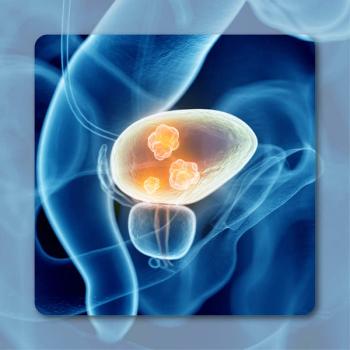
Durable responses with UGN-102 signal its viability as a nonsurgical alternative to TURBT in low-grade, intermediate-risk NMIBC.

Rohan Garje, MD, discusses the unmet needs for patients with small cell bladder cancer.

John K. Lee, MD, PhD, discusses the EV-302 trial of frontline enfortumab vedotin plus pembrolizumab in locally advanced or metastatic urothelial cancer.
An NDA has been submitted to the FDA seeking the approval of TAR-200 for BCG-unresponsive high-risk NMIBC with CIS, with or without papillary tumors.
First-line nivolumab plus chemotherapy numerically improved survival vs chemotherapy alone in Asian patients with unresectable/metastatic urothelial cancer.

Neal Shore, MD, FACS, discusses implications of data for sasanlimab plus BCG in BCG-naive, high-risk non–muscle-invasive bladder cancer.
Sasanlimab plus BCG improved event-free survival in BCG-naive, high-risk non–muscle-invasive bladder cancer.

Yair Lotan, MD, discusses the benefits and complications associated with radical cystectomy for patients with BCG-unresponsive NMIBC.
Yair Lotan, MD, discusses the evolving treatment paradigm for Bacillus Calmette-Guérin–unresponsive non–muscle-invasive bladder cancer.

Durvalumab plus vaccine therapy demonstrated evidence of preliminary antitumor activity without substantial additive toxicity in BCG-unresponsive NMIBC.
Advertisement
Advertisement
Trending on OncLive
1
INBRX-106 Plus Pembrolizumab Improves Responses and PFS in First-Line PD-L1–Positive HNSCC
2
FDA Approves Pirtobrutinib for Previously Untreated CLL/SLL
3
Five Under 5: Top Oncology Videos for the Week of 9/27
4
AUA Releases Guideline Amendment for NMIBC
5