


Urothelial Cancer
Latest News

Dr Li on Safety Data Derived From the CORE-001 Trial in BCG-Unresponsive NMIBC
By Roger Li, MD

Dr Li on Cretostimogene Grenadenorepvec Plus Pembrolizumab in BCG-Unresponsive NMIBC
By Roger Li, MD
Advertisement
Latest Videos


































































Advertisement
More News
Joshua Linscott, MD, PhD, discusses a study evaluating a utDNA assay for minimal residual disease detection in patients with high-risk NMIBC.

Erdafitinib was approved by the European Commission for pretreated unresectable or metastatic urothelial carcinoma harboring FGFR3 alterations.
Rashad Nawfal, MD, discusses radiological tumor burden as an independent prognostic factor for survival in metastatic clear cell renal cell carcinoma.

Enfortumab vedotin plus pembrolizumab has been approved by Health Canada for use in unresectable locally advanced or metastatic urothelial cancer.

Roger Li, MD, discusses the implications of a post hoc analysis of the KEYNOTE-057 trial in BCG-unresponsive, high-risk non–muscle-invasive bladder cancer.

Karl Semaan, MD, MSc, discusses the clinical advantages of liquid biopsy over tissue biopsies in detecting sarcomatoid renal cell carcinoma.

China’s National Medical Products Administration has approved enfortumab vedotin for adult patients with locally advanced or metastatic urothelial cancer.

Bradley McGregor, MD, discusses the clinical implications of the DAD-IO trial in patients with metastatic urothelial carcinoma.

Neil J. Shah, MBBS, discusses treatment patterns and clinical outcomes in metastatic renal cell carcinoma after an immuno-oncology/TKI combination.
A new drug application has been submitted to the FDA for UGN-102 inlow-grade, intermediate-risk non–muscle-invasive bladder cancer.

Roger Li, MD, details a post hoc analysis of patients with BCG-unresponsive non–muscle-invasive bladder cancer who did not respond to pembrolizumab.
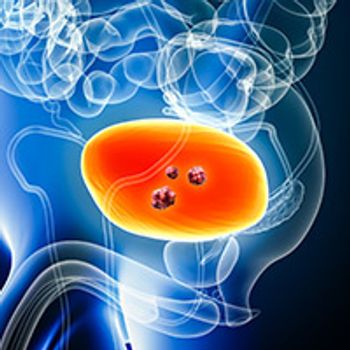
The Nectin-4–directed antibody-drug conjugate 9MW2821 has received breakthrough therapy designation in China for pretreated, advanced urothelial carcinoma.
Enfortumab vedotin plus pembrolizumab improved survival vs chemotherapy with no QOL detriment in previously untreated metastatic urothelial cancer.
Joshua Linscott, MD, PhD, discusses a study investigating the use of utDNA to predict MRD prior to rTURBT in NMIBC.

Drs Park and Grivas discuss bladder cancer treatment updates, including results from the SunRISe-1 trial of TAR-200 plus cetrelimab in NMIBC.

Valisha Shah, MS, discusses the observed association between clonal hematopoiesis and RCC with cardiovascular diseases.

Roger Li, MD, discusses the efficacy of bladder-sparing therapy after progression on pembrolizumab in patients with BCG-unresponsive, high-risk NMIBC.

First-line avelumab maintenance demonstrated efficacy and manageable toxicity in patients with low tumor burden advanced urothelial carcinoma.
Rashad Nawfal, MD, discusses radiological tumor burden as an independent prognostic factor for survival in metastatic clear cell renal cell carcinoma.

The CHMP has recommended pembrolizumab plus enfortumab vedotin-ejfv in frontline unresectable or metastatic urothelial carcinoma.
Renee Saliby, MD, MSc discusses the relationship between intermediate end points and overall survival in metastatic renal cell carcinoma.
Drs Park and Sonpavde discuss findings from the phase 1 DAD trial, as well as a schema for the frontline management of metastatic urothelial carcinoma.

IDE937 produced responses in patients with advanced urothelial cancer or non–small cell lung cancer harboring MTAP deletions.

Antonio Cigliola, MD, discusses the evaluation of neoadjuvant sacituzumab govitecan in patients with muscle-invasive bladder cancer.
Advertisement
Advertisement
Trending on OncLive
1
INBRX-106 Plus Pembrolizumab Improves Responses and PFS in First-Line PD-L1–Positive HNSCC
2
FDA Approves Pirtobrutinib for Previously Untreated CLL/SLL
3
Five Under 5: Top Oncology Videos for the Week of 9/27
4
AUA Releases Guideline Amendment for NMIBC
5