




Urothelial Cancer
Latest News

Advertisement
Latest Videos





























































Advertisement
More News

As investigators parse out the mechanism of action of nadofaragene firadenovec, additional gene therapies are under development in BCG-unresponsive NMIBC.

Petros Grivas, MD, PhD, discusses the significance of the phase 3 JAVELIN Bladder 100, EV-302, and CheckMate 901 trials in urothelial cancer.

Joaquim Bellmunt, MD, PhD, discusses the impact of enfortumab vedotin plus pembrolizumab on the treatment paradigm in first-line urothelial cancer.

No significant difference in time to treatment was found between White and Black patients with bladder cancer, but there remained a difference in treatment outcomes.

TAR-210 was safe and showed promising clinical activity in patients with FGFR-altered high- and intermediate-risk non–muscle-invasive bladder cancer.
Nadofaragene firadenovec led to durable antitumor activity in BCG-unresponsive NMIBC either with CIS or papillary disease, according to 5-year data from the phase 3 Study CS-003.

UGN-102 with/without TURBT displayed meaningful and similar DFS and DOR rates in newly diagnosed and recurrent low-grade intermediate-risk NMIBC.

Concurrent radical cystectomy and extended lymph node dissection did not show benefit vs standard lymph node dissection in muscle invasive urothelial cancer.

TAR-200 displayed a high complete response rate in Bacillus Calmette–Guérin-unresponsive high-risk non–muscle-invasive bladder cancer.
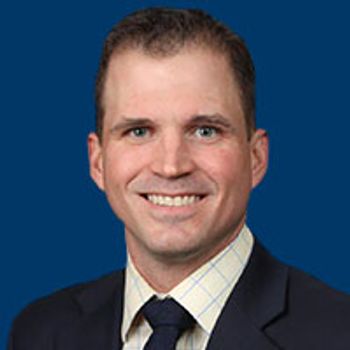
Cretostimogene grenadenorepvec elicited durable responses in high-risk BCG-unresponsive non–muscle-invasive bladder cancer with carcinoma in situ.
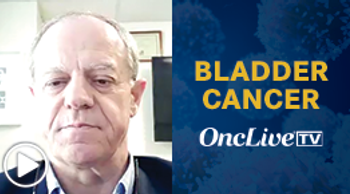
Joaquim Bellmunt, MD, PhD, discusses how the FDA approval of enfortumab vedotin plus pembrolizumab impacts the urothelial cancer treatment paradigm.
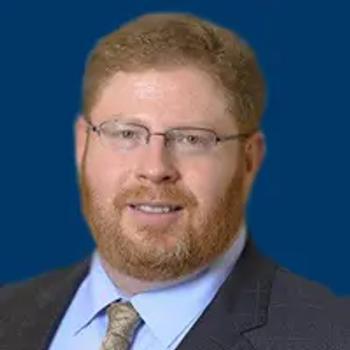
Jonathan E. Rosenberg, MD, discusses how recent FDA approvals have revolutionized the treatment paradigm for locally advanced or metastatic bladder cancer.

Karim Chamie, MD, discusses the significance of the FDA approval of N-803 plus BCG in BCG-unresponsive non–muscle invasive bladder cancer.

Frontline nivolumab plus chemotherapy has been recommended for approval in unresectable or metastatic urothelial carcinoma.
Karim Chamie, MD, discusses the FDA approval of nogapendekin alfa plus BCG for patients with BCG-unresponsive non–muscle invasive bladder cancer.
Vikram Narayan, MD, discusses the mechanism of action of nadofaragene firadenovec in patients with high-risk non–muscle invasive bladder cancer.

The FDA has approved nogapendekin alfa inbakicept-pmln plus BCG for BCG-unresponsive non–muscle-invasive bladder cancer with carcinoma in situ with or without papillary tumors.
Vikram Narayan, MD, details the mechanism of action of the nadofaragene firadenovec and how the agent is impacting care for patients with BCG-unresponsive non–muscle invasive bladder cancer.
Scott T. Tagawa, MD, MS, FACP, FASCO, discusses the rationale for evaluating nivolumab plus cisplatin-based chemotherapy in first-line urothelial cancer.

Experts highlight clinical trial updates in muscle-invasive bladder cancer, frontline treatment options in metastatic urothelial carcinoma, and more.

Serial testing of ctDNA could improve risk stratification for determining adjuvant treatment in patients with high-risk muscle-invasive bladder cancer.

Adjuvant nivolumab extended DFS, NUTRFS, and DMFS vs placebo and showed for the first time an improvement in OS in patients with high-risk muscle-invasive urothelial cancer.
In case you missed it, these were the key regulatory decisions made by the FDA in March 2024.

The intravesical gene therapy elicited durable remissions in a high percentage of patients with high-risk, BCG-unresponsive non–muscle invasive bladder cancer.
Jason Efstathiou, MD, DPhil, discusses the utility of trimodal therapy in patients with muscle-invasive bladder cancer.
Advertisement
Advertisement
Trending on OncLive
1
INBRX-106 Plus Pembrolizumab Improves Responses and PFS in First-Line PD-L1–Positive HNSCC
2
FDA Approves Pirtobrutinib for Previously Untreated CLL/SLL
3
Five Under 5: Top Oncology Videos for the Week of 9/27
4
AUA Releases Guideline Amendment for NMIBC
5