


Urothelial Cancer
Latest News
Advertisement
Latest Videos
































































Advertisement
More News
Drs Park and Koshkin explore the clinical implications of the phase 3 NIAGARA trial for patients with resectable bladder cancer.
Drs Park and Koshkin discuss sequencing antibody-drug conjugates for bladder cancer and the potential future role of sacituzimab govitecan in this disease.

Belzupacap sarotalocan demonstrated a favorable safety profile and early signs of biological activity in patients with NMIBC.
Here is your Q2 2025 preview spotlighting 7 FDA decisions to watch, including upcoming PDUFAs for nivolumab/ipilimumab, belzutifan, UGN-102, avutometinib/defactinib, and more.
Drs Park and Koshkin discuss the benefits of enfortumab vedotin in bladder cancer and the potential for more ADCs to join the treatment paradigm.
Here is your snapshot for all therapeutic options that were approved by the FDA in March 2025 spanning tumor types.

Dr Bowman discusses immune-related and TKI-specific toxicities when combining immunotherapy and TKIs in non–clear cell RCC.

The top 5 OncLive videos of the week cover insights in multiple myeloma, HER2+ breast cancer, non¬–muscle-invasive bladder cancer, and ovarian cancer.
The FDA cleared therapeutic options in pNETs/epNETs, MIBC, and mCRPC; experts highlight top abstracts ahead of 2025 EBMT; and more from OncLive.

Matthew Galsky, MD, discusses the FDA approval of perioperative durvalumab plus chemotherapy for patients with muscle-invasive bladder cancer.
The FDA approved perioperative durvalumab plus chemotherapy for muscle-invasive bladder cancer.
Guru P. Sonpavde, MD, discusses the INTerpath-005 study evaluating adjuvant V940 plus pembrolizumab in resected high-risk MIBC.
Mark D. Tyson, II, MD, MPH, discusses challenges choosing between nadofaragene firadenovec, nogapendekin alfa, and pembrolizumab in BCG-unresponsive NMIBC.
The top 5 OncLive videos of the week cover insights in gynecologic cancer, multiple myeloma, urothelial cancer, MPNs, and prostate cancer.
Shilpa Gupta, MD, discusses OS outcomes with first-line maintenance avelumab plus BSC in advanced urothelial carcinoma based on diabetes mellitus.
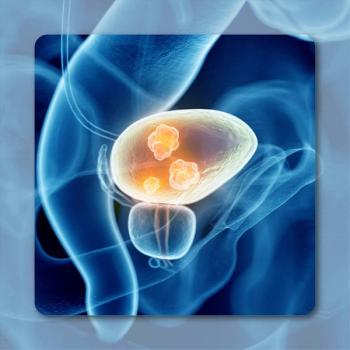
Real-world data showed that atezolizumab provided a benefit and was safe in patients with platinum-ineligible mUC and high comorbidities/functional status.

Jacob Moyer, BS, discusses early, real-world efficacy and safety data with nadofaragene firadenovec in BCG-unresponsive non–muscle-invasive bladder cancer.
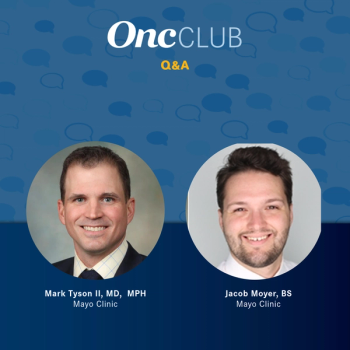
Mark Tyson II, MD, MPH, and Jacob Moyer, BS, detail findings from the first real-world study of nadofaragene firadenovec in BCG-unresponsive NMIBC.
Neal D. Shore, MD, FACS, discusses the evaluation of nadofaragene firadenovec in intermediate-risk NMIBC and its potential effect on treatment strategies.
Koral Shah, MD, details the rationale of evaluating worldwide disparities in bladder cancer clinical trial availability.
Clinicians parse through the impacts of tumor-agnostic FDA approvals, examining T-DXd and repotrectinib's 2024 approvals in particular.
Evangelia Vlachou, MD, discusses response rates with enfortumab vedotin alone or with pembrolizumab in patients with upper tract urothelial cancer.

A retrospective study revealed that enfortumab vedotin did not produce excessive toxicity in older patients with urothelial carcinoma.

HRQOL results were evaluated in rural patients with bladder cancer and prostate cancer following ADT treatment and postoperative radiotherapy.
The intravesical therapy nadofaragene firadenovec yielded a 79% 3-month CR rate in patients with CIS with or without papillary disease in a real-world study.
Advertisement
Advertisement
Trending on OncLive
1
INBRX-106 Plus Pembrolizumab Improves Responses and PFS in First-Line PD-L1–Positive HNSCC
2
FDA Approves Pirtobrutinib for Previously Untreated CLL/SLL
3
Five Under 5: Top Oncology Videos for the Week of 9/27
4
AUA Releases Guideline Amendment for NMIBC
5