




Urothelial Cancer
Latest News
Advertisement
Latest Videos































































Advertisement
More News

Alberto Martini, MD discusses how systemic treatment approaches and key trials have refined care for patients with BCG-unresponsive NMIBC.

Alpha1H met all primary and secondary end points in a phase 2 study in non–muscle-invasive bladder cancer.
Thomas Powles, MBBS, MRCP, MD, discusses how future clinical trials could leverage the CREST trial as a basis for BCG-naive NMIBC treatment development.

Alberto Martini, MD, discusses the current optimal role of nadofaragene firadenovec in the BCG-unresponsive NMIBC treatment paradigm.

Thomas Powles, MD, MBBS, MRCP, discusses challenges in identifying a predictive biomarker of response for sasanlimab in high-risk, BCG-naive NMIBC.

Jue Wang, MD, discusses the challenge of treatment discontinuation in older patients with metastatic castration-resistant prostate cancer.

JAVELIN Bladder Medley data show PFS improvement with avelumab plus sacituzumab govitecan as first-line maintenance vs avelumab alone in urothelial cancer.

Adjuvant atezolizumab improved DFS and OS after a positive Signatera MRD test in muscle-invasive bladder cancer.

Vepdegestrant NDA under FDA review in ESR1-mutated breast cancer, Oncomine Dx Target Test gets greenlit as zongertinib companion diagnostic in NSCLC.
Jens Bedke, MD, discusses the safety of enfortumab vedotin and pembrolizumab in previously untreated locally advanced or metastatic urothelial carcinoma.
Perioperative enfortumab vedotin plus pembrolizumab significantly extended survival vs surgery alone in MIBC.
Jens Bedke, MD, discusses findings from subgroup analyses of the phase 3 EV-302/KEYNOTE-A39 trial in untreated metastatic urothelial cancer.
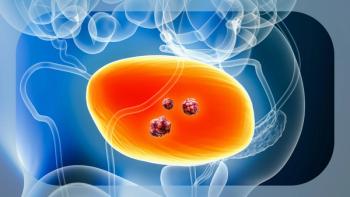
China’s NMPA has accepted the sNDA for first-line toripalimab plus disitamab vedotin in HER2-expressing locally advanced or metastatic urothelial carcinoma.

Waddah Arafat, MD, discusses the future clinical implications of the ongoing KEYNOTE-B15/EV-304 trial and the safety profile of the NIAGARA trial regimen.
Intravesical mitomycin produced a 24-month DOR rate of 72.2% in recurrent low-grade, intermediate-risk NMIBC.
Waddah Arafat, MD, discusses the treatment paradigm for MIBC and questions regarding the benefit seen with neoadjuvant chemoimmunotherapy in this setting.

Joseph Jacob, MD, MCR, discusses how TAR‑200 could represent a new treatment avenue in BCG‑unresponsive, high-risk NMIBC.
Guru P. Sonpavde, MD, details overall survival data with ipilimumab/nivolumab vs gemcitabine/platinum in previously untreated, advanced urothelial cancer.

Dickon Hayne, MD, FRCS, MBBS, discusses the rationale for evaluating the addition of mitomycin to BCG in non–muscle-invasive bladder cancer.

Guru P. Sonpavde, MD, discusses the role of ipilimumab/nivolumab after negative trial results in managing advanced urothelial cancer.
The top 5 OncLive videos of the week cover insights in ovarian cancer, RCC, melanoma, non–small cell lung cancer, and non–muscle-invasive bladder cancer.

The FDA has granted priority review to TAR-200 for BCG-unresponsive, high-risk NMIBC with CIS, with or without papillary tumors.
The top 5 OncLive videos of the week cover insights in ovarian cancer, RCC, melanoma, non–small cell lung cancer, and non–muscle-invasive bladder cancer.
Dickon Hayne, MD, FRCS, MBBS, discusses mitomycin in combination with BCG in patients with high-risk non–muscle-invasive bladder cancer.
Thomas Powles, MD, MBBS, MRCP, discusses the implications of data from sasanlimab plus BCG in patients with BCG-naive, high-risk NMIBC.
Advertisement
Advertisement
Trending on OncLive
1
INBRX-106 Plus Pembrolizumab Improves Responses and PFS in First-Line PD-L1–Positive HNSCC
2
FDA Approves Pirtobrutinib for Previously Untreated CLL/SLL
3
Five Under 5: Top Oncology Videos for the Week of 9/27
4
AUA Releases Guideline Amendment for NMIBC
5