

Urothelial Cancer
Latest News
Advertisement
Latest Videos


Shorts

4:10
OncLive News Roundup for the Week of 5/10
5 months ago
by
Chris Ryan(+1 more)
1:10
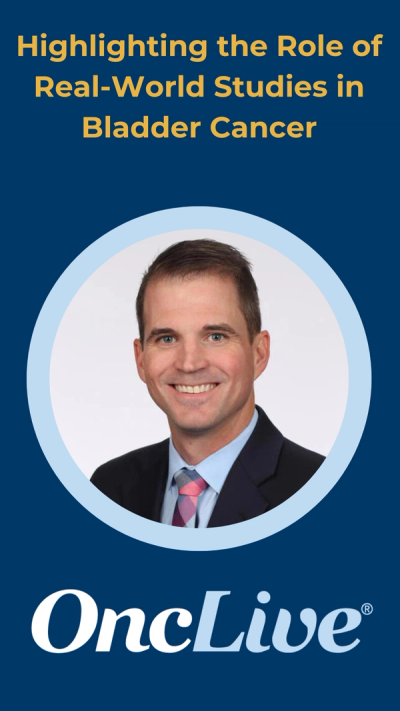
Highlighting the Role of Real-World Studies in Bladder Cancer
5 months ago
by
Mark D. Tyson, II, MD, MPH
0:30
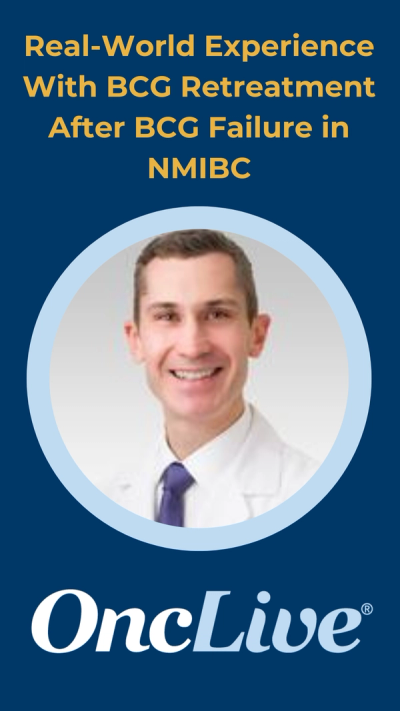
Real-World Experience With BCG Retreatment After BCG Failure in NMIBC
5 months ago
by
Joshua J. Meeks, MD, PhD

1:16
Highlighting the Importance of Raising Bladder Cancer Awareness
5 months ago
by
Matthew D. Galsky, MD

1:54
Examining the Treatment Landscape of Muscle-Invasive Bladder Cancer
5 months ago
by
Matthew D. Galsky, MD

4:03
OncLive News Roundup for the Week of 4/19
5 months ago
by
Chris Ryan
0:36
Elucidating the Next Steps After EV-Pembro in Urothelial Carcinoma
6 months ago
by
Georges Gebrael, MD

0:44
Unpacking the KEYNOTE-B15 Data
7 months ago
by
Matthew D. Galsky, MD

0:52
Exploring the Mechanism of Action of FX909
7 months ago
by
Joaquim Bellmunt, MD, PhD
0:24
Characterization of Responders to EV Plus Pembrolizumab in mUC
7 months ago
by
Shilpa Gupta, MD, Cleveland Clinic
Podcasts





























































Advertisement
More News

Check out some of the top oncology news and trends of the week.

Matthew Galsky, MD, discusses the emergence of ICIs the neoadjuvant setting of bladder cancer.

Matthew Galsky, MD, discusses the standing of immune checkpoint inhibitors in bladder cancer.
Matthew Galsky, MD, disusses how the treatment paradigm of bladder cancer has shifted over time.
OncLive spoke with urothelial cancer experts during Bladder Cancer Awareness Month to understand the current and future treatment landscape.

Durvalumab plus BCG maintained overall survival and quality of life in high-risk NMIBC at 5 years.
Updated EV-302 Data Reinforce Enfortumab Vedotin Combo’s Durability in Urothelial Carcinoma at ASCO 2026
Published: | Updated:
At the 2026 ASCO Annual Meeting, 3.5-year follow-up findings from the phase 3 EV-302/KEYNOTE-A39 study have been presented.

LY4052031 demonstrated promising clinical activity after disease progression on enfortumab vedotin in metastatic urothelial carcinoma.
Did you catch all of this week's top oncology news? Test your knowledge with OncLive's Weekly News Quiz.

The FDA has approved durvalumab in combination with BCG for the treatment of adult patients with BCG-naive, high-risk NMIBC.
OncLive spoke with experts in the field of GU oncology to gain their insights on the most notable presentations from the 2026 AUA Annual Meeting.
The CHMP granted a positive opinion to perioperative pembrolizumab/enfortumab vedotin as well as pembrolizumab and berahyaluronidase alfa in MIBC.
The FDA approved Dato-DXd for PD-1/PD-L1–ineligible triple-negative breast cancer, granted priority review to sevabertinib in HER2-mutant NSCLC, and more.
Did you catch all of this week's top oncology news? Test your knowledge with OncLive's Weekly News Quiz.
A supplemental BLA for nogapendekin alfa inbakicept plus BCG for BCG-unresponsive NMIBC with papillary-only disease is under review by the FDA.

Matthew Galsky, MD, discusses the present and future treatment landscape of MIBC during Bladder Cancer Awareness Month.

In an indirect comparison, NAI+BCG showed numerically higher, significantly longer responses and a trend toward greater bladder preservation vs nadofaragene.

The top 5 OncLive TV videos of the week cover insights in breast cancer, acute myeloid leukemia, bladder cancer, multiple myeloma, and melanoma.
The FDA approved T-DXd in early HER2+ breast cancer, adjuvant atezolizumab in MRD+ MIBC, and more.

Preoperative Intravesical Mitomycin-C Before TURBT Cuts Recurrence Risk by 77% in NMIBC Over 5 Years
Two doses of intravesical mitomycin-C administered before TURBT produced a 77% reduction in the risk of recurrence or death vs TURBT alone in NMIBC.
A biomarker analysis of SunRISe-4 found that high baseline TMB, GBD, and PD-L1 expression were associated with pathologic overall response to the regimen.
Durvalumab Plus BCG Reduces High-Risk NMIBC Recurrence or Death Risk by 32% in Phase 3 POTOMAC Trial
Durvalumab plus BCG induction and maintenance yielded an HR of 0.68 vs BCG alone for DFS in BCG-naive, high-risk non–muscle-invasive bladder cancer.
Did you catch all of this week's top oncology news? Test your knowledge with OncLive's Weekly News Quiz.
Pembrolizumab plus BCG achieved a 92% 6-month complete response rate in very high-risk T1 bladder cancer with no progression to muscle-invasive disease.
The FDA approved adjuvant atezolizumab for muscle-invasive bladder cancer with circulating tumor DNA molecular residual disease.
Advertisement
Advertisement
Trending on OncLive
1
INBRX-106 Plus Pembrolizumab Improves Responses and PFS in First-Line PD-L1–Positive HNSCC
2
FDA Approves Pirtobrutinib for Previously Untreated CLL/SLL
3
Five Under 5: Top Oncology Videos for the Week of 9/27
4
AUA Releases Guideline Amendment for NMIBC
5