




Urothelial Cancer
Latest News

Advertisement
Latest Videos

































































Advertisement
More News
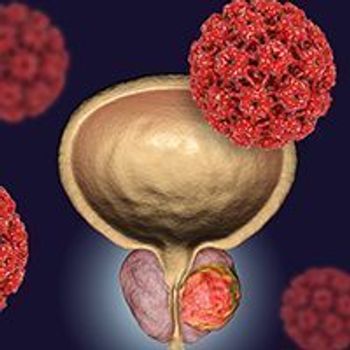
Treatment with soluble EphB4-human serum albumin plus pembrolizumab elicited synergistic activity and an improved overall survival and objective response rate compared with historical data for PD-1/PD-L1 monotherapy in patients with platinum-refractory metastatic urothelial carcinoma.

Pedro C. Barata, MD, MSc, discusses the role of maintenance avelumab in advanced urothelial cancer.

Neil Desai, MD, discusses the ideal patient for bladder preservation in urothelial cancer.

Neil Desai, MD, discusses the evolving standard of care in urothelial cancer.

Maintenance therapy with rucaparib following platinum-based chemotherapy prolonged progression-free survival compared with placebo in patients with DNA repair–deficient-positive, metastatic urothelial cancer.

The FDA has accepted for review a biologics license application for the IL-15 superagonist N-803 for the treatment of patients with Bacillus Calmette-Guérin–unresponsive non–muscle invasive bladder cancer carcinoma in situ.
Enfortumab vedotin-ejfv plus pembrolizumab induced encouraging responses when used in the frontline treatment of patients with unresectable locally advanced or metastatic urothelial cancer who are not eligible to receive cisplatin-based chemotherapy.
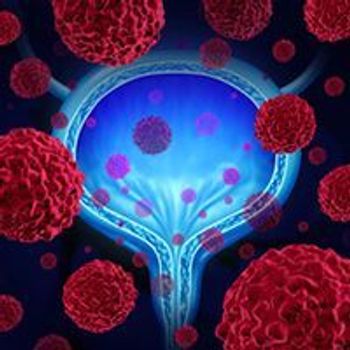
The clinical development of Vicineum for use as a potential therapeutic option in patients with high-risk, Bacillus Calmette-Guérin–unresponsive non–muscle invasive bladder cancer.

Neil Desai, MD, discusses the variety of options available for patients with localized urothelial cancer who are ineligible for cisplatin-based chemoradiation.

Benjamin Garmezy, MD, discussed the positive trajectory of antibody-drug conjugates and immunotherapy in urothelial carcinoma, highlighting the importance of considering individual patient eligibility for treatments like first-line chemotherapy.

Pedro C. Barata, MD, MSc, discusses challenges associated with treating advanced urothelial carcinoma.

The FDA has granted a fast track designation to belzupacap sarotalocan for the treatment of patients with non–muscle invasive bladder cancer, representing the first virus-like drug conjugate candidate therapy from Aura Biosciences, Inc., the drug developer.
The addition of tislelizumab to nab-paclitaxel demonstrated efficacy and safety in patients with high-risk non–muscle invasive bladder cancer.
Enfortumab vedotin extended overall survival by 3.97 months compared with chemotherapy for patients with locally advanced or metastatic urothelial carcinoma.
Disitamab vedotin demonstrated promising efficacy with a tolerable safety profile in patients with HER2-negative metastatic urothelial carcinoma.

Shilpa Gupta, MD, discusses the results of the PARADIGM study in locally advanced or metastatic urothelial cancer.

Tian Zhang, MD, discusses the benefits of multidisciplinary collaboration, how to select the best agents for each patient, and how treatments such as radiation in RCC and bladder-sparing chemoradiation in urothelial cancer fit into the overall treatment paradigms for these diseases.

Shilpa Gupta, MD, discusses the methodologies utilized in the PARADIGM study in locally advanced or metastatic urothelial cancer.
Shilpa Gupta, MD, discusses the design of the PARADIGM study in locally advanced or metastatic urothelial cancer.

Vignesh Packiam, MD, discusses the adverse effects associated with cabazitaxel and gemcitabine with pembrolizumab in patients who are unresponsive to docetaxel with non-muscle invasive urothelial carcinoma.

The addition of maintenance avelumab to best supportive care demonstrated improved outcomes for patients with advanced urothelial carcinoma including those who went on to receive second-line therapy.
Tumor mutational burden served as a prognostic indicator of the efficacy of toripalimab among Chinese patients with urothelial carcinoma.

Cabozantinib plus atezolizumab demonstrated promising clinical activity and a suitable safety profile as first-line therapy in patients with cisplatin- eligible and -ineligible, inoperable locally advanced or metastatic urothelial cancer and as second- or later-line therapy in those who received a prior immune checkpoint inhibitor, according to findings from the phase 1b COSMIC-021 trial.

Results of the ATLANTIS study do not support further investigation of cabozantinib alone as a maintenance therapy after platinum-based chemotherapy in unselected patients with advanced urothelial cancer.
Matthew Galsky, MD, discusses the design and findings of the phase 3 CheckMate 274 trial in urothelial cancer.
Advertisement
Advertisement
Trending on OncLive
1
INBRX-106 Plus Pembrolizumab Improves Responses and PFS in First-Line PD-L1–Positive HNSCC
2
FDA Approves Pirtobrutinib for Previously Untreated CLL/SLL
3
Five Under 5: Top Oncology Videos for the Week of 9/27
4
AUA Releases Guideline Amendment for NMIBC
5