



Urothelial Cancer
Latest News

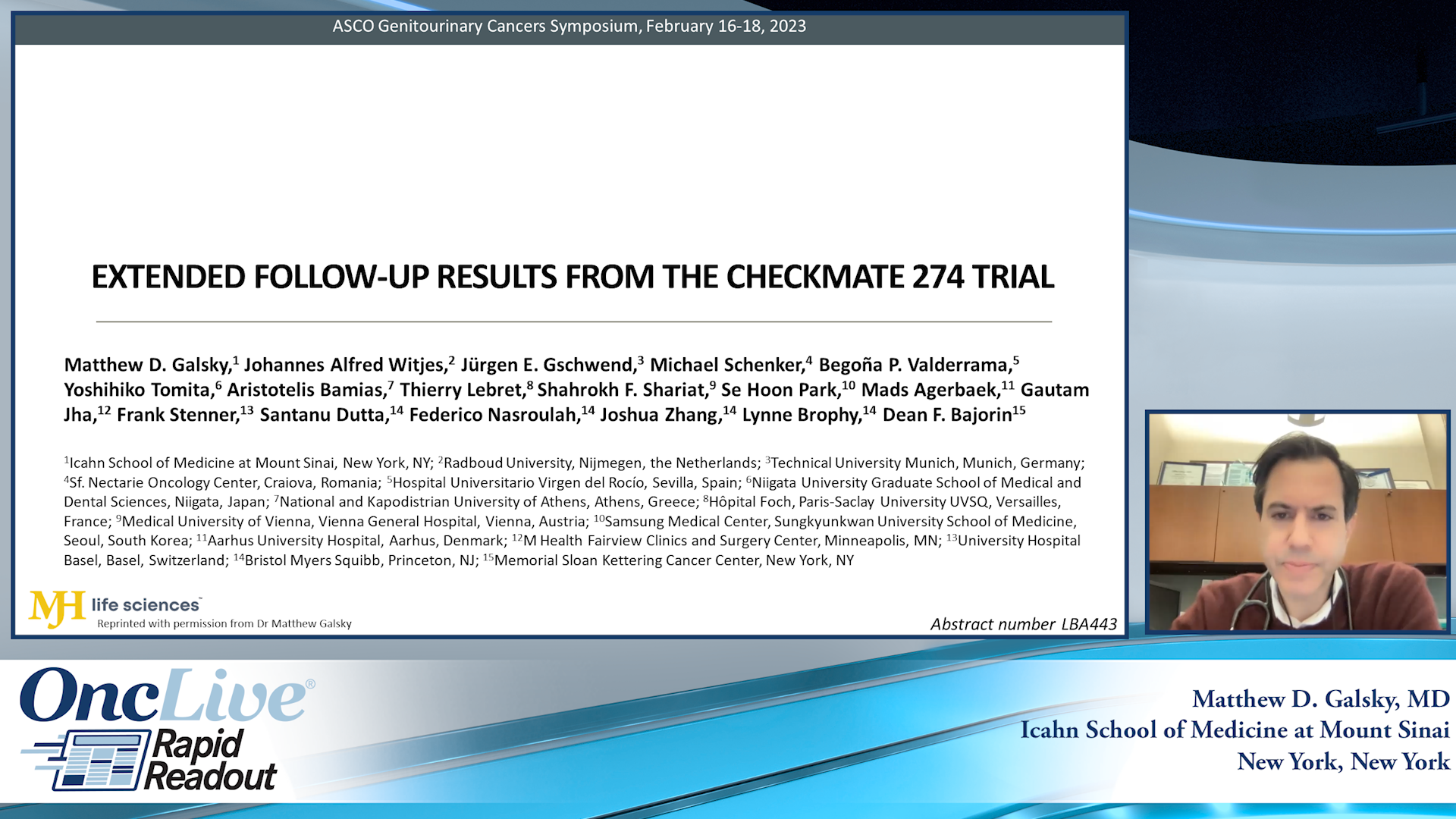
Updated CheckMate 274 Data Reaffirm Benefit of Adjuvant Nivolumab in Muscle-Invasive Urothelial Carcinoma
By Ryan Scott
Advertisement
Latest Videos


































































Advertisement
More News

The efficacy profile for avelumab in patients with locally advanced or metastatic urothelial carcinoma was consistent in a real-world setting with what had been reported in the phase 3 JAVELIN Bladder 100 trial.

First-line atezolizumab plus platinum-based chemotherapy and gemcitabine trended toward improved overall survival compared with placebo plus chemotherapy in patients with locally advanced or metastatic urothelial carcinoma.

At extended follow-up, nivolumab monotherapy showed improved disease-free survival, non-urothelial tract recurrence-free survival, and disease-specific survival vs placebo in patients with resected, high-risk muscle-invasive urothelial carcinoma.

Atezolizumab monotherapy failed to show an improvement in overall survival compared with placebo plus platinum-based chemotherapy and gemcitabine in patients with untreated locally advanced or metastatic urothelial cancer.

Matthew Galsky, MD, discusses the key findings from extended follow-up of the phase 3 CheckMate-274 trial in urothelial cancer.
Stephanie A. Berg, DO, discusses key ongoing trials in metastatic urothelial carcinoma.

Vikas Kumar Singh, MD, discusses the potential benefit of the combination of enfortumab vedotin plus pembrolizumab for the treatment of patients with locally advanced or metastatic urothelial cancer who are not eligible to receive cisplatin-containing chemotherapy.

Vikas Kumar Singh, MD, discusses findings from the phase 3 GETUG-AFU V05 VESPER (NCT01812369) and JAVELIN Bladder 100 (NCT02603432) trials in patients with bladder cancer.
Stephanie A. Berg, DO, discusses the promise of key updates in urothelial cancer, as well as highlights how these updates continue to affect treatment decisions for patients.

The RaDaR assay successfully identified the patients with locoregionally advanced urothelial cancer most likely to benefit from treatment with ipilimumab and nivolumab in findings from the second cohort of the phase 1b/2a NABUCCO trial.

Petros Grivas, MD, PhD, discusses the investigation of enfortumab vedotin and pembrolizumab in metastatic urothelial carcinoma.

Stephanie A. Berg, DO, highlights ongoing urothelial cancer clinical trials; the role of single-agent immunotherapy and combinations in this disease; and the importance of future research that prioritizes and guides individualized patient care.

IK-175 was found to be well tolerated in patients with advanced solid tumors and to elicit responses in those with urothelial cancer when used alone or in combination with nivolumab, according to initial data from an ongoing phase 1a/b study.

Tian Zhang, MD, discusses the investigation of the combination of enfortumab vedotin plus pembrolizumab in the phase 3 EV-302 trial in the frontline setting for metastatic urothelial cancer.

Jeanny B. Aragon-Ching, MD, FACP, discusses the use of maintenance avelumab as the standard-of-care treatment for patients with locally advanced or metastatic urothelial carcinoma.

The FDA has granted a fast track designation to BT8009 for use as a monotherapy in adult patients with previously treated locally advanced or metastatic urothelial cancer.

Adding the CDK4/6 inhibitor trilaciclib to platinum-based chemotherapy and avelumab maintenance produced an overall response rate comparable to chemotherapy and maintenance avelumab alone in patients with previously untreated locally advanced or metastatic urothelial carcinoma.
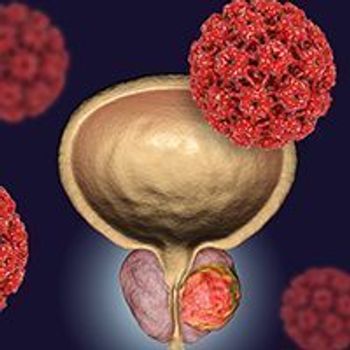
N-803, a novel IL-15 superagonist, in combination with intravesical Bacillus Calmette–Guérin induced an overall response in more than two-thirds of patients with non–muscle invasive bladder cancer.
The FDA has granted a priority review to a supplemental biologics license applications for enfortumab vedotin and pembrolizumab used in combination for the treatment of patients with locally advanced or metastatic urothelial cancer who are not eligible to receive cisplatin-containing chemotherapy.
The FDA has approved nadofaragene firadenovec-vncg (Adstiladrin) for the treatment of adult patients with high-risk Bacillus Calmette-Guérin–unresponsive non–muscle invasive bladder cancer with carcinoma in situ with or without papillary tumors.
The addition of budigalimab to ABBV-151 was well tolerated and significantly enhanced responses in patients with locally advanced or metastatic solid tumors.
Sebastian C. Schmid, MD, discusses the future of the phase 2 RACE IT trial in urothelial carcinoma.

The oncolytic vaccine CG0070 plus pembrolizumab demonstrated encouraging response rates and a tolerable safety profile in patients with non–muscle invasive bladder cancer unresponsive to Bacillus Calmette-Guérin.

Roche is voluntarily withdrawing the United States indication for atezolizumab for the treatment of adults with locally advanced or metastatic urothelial carcinoma who are not eligible for cisplatin-containing chemotherapy.
Sebastian C. Schmid, MD, discusses the rationale for the phase 2 RACE IT trial in urothelial carcinoma.
Advertisement
Advertisement
Trending on OncLive
1
INBRX-106 Plus Pembrolizumab Improves Responses and PFS in First-Line PD-L1–Positive HNSCC
2
FDA Approves Pirtobrutinib for Previously Untreated CLL/SLL
3
Five Under 5: Top Oncology Videos for the Week of 9/27
4
AUA Releases Guideline Amendment for NMIBC
5