



Urothelial Cancer
Latest News

Advertisement
Latest Videos





























































Advertisement
More News
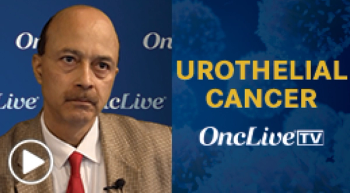
Guru P. Sonpavde, MD, discusses the investigation of enfortumab vedotin-ejfv with or without pembrolizumab in urothelial cancer.
Srikala Sridhar, MD, MSc, FRCPC, and Jeanny B. Aragon-Ching, MD, FACP, wrap up their review of updates in urothelial carcinoma by highlighting exciting data presented at ESMO 2022.
Key opinion leaders discuss the best treatment approaches for urothelial carcinoma after avelumab failure.
Jeanny B. Aragon-Ching, MD, FACP, discusses the future implications of the phase 3 JAVELIN Bladder 100 trial in urothelial cancer.
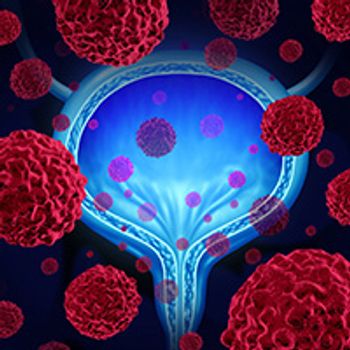
Chemoresection with mitomycin C, a nonsurgical treatment modality, significantly reduced the need for transurethral resection of bladder tumors or office biopsy and tumor fulguration following recurrence in patients with recurrent nonmuscle invasive bladder cancer.

Rogaratinib induced an objective response rate similar to that of chemotherapy in patients with FGFR1/3 mRNA–positive locally advanced or metastatic urothelial carcinoma who have received at least 1 prior platinum-containing chemotherapy.
Jeanny B. Aragon-Ching, MD, FACP, describes the outcomes of the JAVELIN Bladder 100 study that she presented at ESMO 2022.
Drs Aragon-Ching and Sridhar review the available treatment options for patients with frontline metastatic urothelial carcinoma and explain the design of an exciting clinical trial.
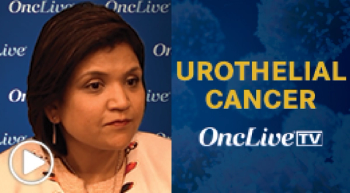
Shilpa Gupta, MD, discusses the addition of cabozantinib to avelumab in locally advanced or metastatic urothelial cancer.
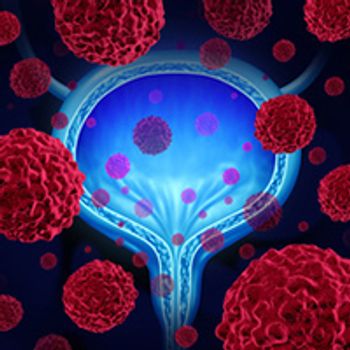
The past decade has seen a change in the tide for patients with bladder cancer with the introduction of checkpoint blockade and molecular profiling.

Shilpa Gupta, MD, discussed potential therapies for patients with cisplatin-ineligible metastatic urothelial carcinoma, the benefits of sacituzumab govitecan and erdafitinib in later-line urothelial carcinoma, and treatment options for nonmetastatic castration-resistant prostate cancer.
Dr Jeanny B. Aragon-Ching starts a conversation on negative trial data in the high-risk urothelial carcinoma treatment setting for neoadjuvant chemotherapy.
Experts discuss trial data from CHECKMATE-274 on the use of neoadjuvant chemotherapy for high-risk urothelial carcinoma treatment.
Jeanny B. Aragon-Ching, MD, FACP, discusses the results of the subgroup analysis in patients with urothelial carcinoma who received frontline avelumab maintenance for at least 12 months on the phase 3 JAVELIN Bladder 100 trial.
Sebastian C. Schmid, MD, discusses the results of the RACE IT trial, what the data mean for patients with locally advanced urothelial carcinoma, and the next steps for researching neoadjuvant radioimmunotherapy in this patient population.
Guru P. Sonpavde, MD, provides commentary on several studies in urothelial carcinoma and how data presented at ESMO may affect clinical practice.
Neil Desai, MD, discusses the investigation of immune checkpoint inhibitors with chemoradiation in urothelial cancer.
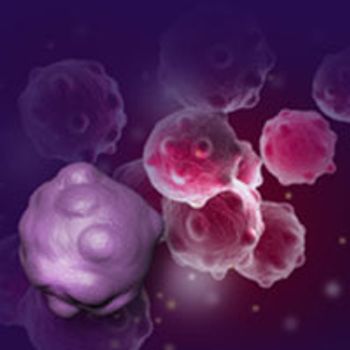
Response to pembrolizumab monotherapy was observed regardless of prior response to chemotherapy in patients with advanced urothelial cancer.
Srikala Sridhar, MD, MSc, FRCPC, explains the importance of neoadjuvant cisplatin-based chemotherapy and why bladder-sparing treatments should be considered for all patient populations.
Jeanny B. Aragon-Ching, MD, FACP, provides an overview of urothelial cancers and the process of diagnosis.
Tian Zhang, MD, discusses the utilization of multidisciplinary approaches in urothelial cancers.
The combination of camrelizumab and nab-paclitaxel produced encouraging responses in patients with platinum-resistant, unresectable locally advanced or metastatic urothelial carcinoma.
Moshe Ornstein, MD, MA, discusses the use of the antibody-drug conjugate enfortumab vedotin in patients with advanced urothelial carcinoma that is refractory to chemotherapy and immunotherapy.
Sebastian C. Schmid, MD, discusses the use of preoperative radiation therapy plus immunotherapy in urothelial carcinoma.
Pedro C. Barata, MD, MSc, discusses the evolving treatment landscape of urothelial cancer.
Advertisement
Advertisement
Trending on OncLive
1
INBRX-106 Plus Pembrolizumab Improves Responses and PFS in First-Line PD-L1–Positive HNSCC
2
FDA Approves Pirtobrutinib for Previously Untreated CLL/SLL
3
Five Under 5: Top Oncology Videos for the Week of 9/27
4
AUA Releases Guideline Amendment for NMIBC
5