

Urothelial Cancer
Latest News


UGN-101 Induction Produces Durable Responses in Low-Grade Upper Tract Urothelial Carcinoma
By Kristi Rosa
Advertisement
Latest Videos































































Advertisement
More News

Steven Kaplan, MD, discusses real-world surgical retreatment rates in patients with lower urinary tract symptoms/benign prostatic hyperplasia.

Stephen B. Williams, MD, discusses the rationale for the phase 3 SunRISE-2 trial in muscle-invasive bladder cancer.

Nadofaragene firadenovec, a novel intravesical gene therapy for patients with bacillus Calmette-Guérin unresponsive non–muscle invasive bladder cancer, demonstrated sustained durability according to findings from 2 cohorts of a phase 3 study.

The combination of durvalumab and Vicineum was found to be well tolerated and to elicit complete responses in patients with Bacillus-Calmette Guérin–unresponsive non–muscle invasive bladder cancer.
TAR-200 plus cetrelimab may offer a superior treatment option for patients with muscle-invasive bladder cancer, and to answer this questions, investigators have initiated the randomized, phase 3 SunRISe-2 trial.
Bacille Calmette-Guérin (BCG) plus N-803 yielded promising responses and an encouraging safety profile in patients with BCG-unresponsive, non-muscle invasive bladder cancer carcinoma in situ.
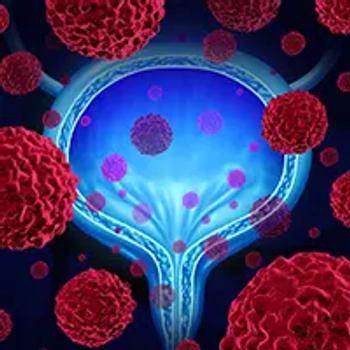
Antibody titers and fold changes may prove to be a prognostic marker for the efficacy of nadofaragene firadenovec for the treatment of patients with bacillus Calmette-Guérun unresponsive non-muscle invasive bladder cancer.
The FDA has granted a full approval to pembrolizumab for the treatment of patients with locally advanced or metastatic urothelial carcinoma who are not eligible for any platinum-containing chemotherapy.

The addition of berzosertib to standard cisplatin/gemcitabine did not improve progression-free survival compared with chemotherapy alone in patients with metastatic urothelial cancer.
Robert Dreicer, MD, discusses the clinical implications of the phase 3 JAVELIN Bladder 100 trial in locally advanced or metastatic urothelial cancer.
Dr. Tagawa discusses the FDA approval of sacituzumab govitecan in urothelial cancer, key efficacy and safety data from the pivotal TROPHY-U-01 trial, and expectations for the confirmatory TROPiCS-04 trial.
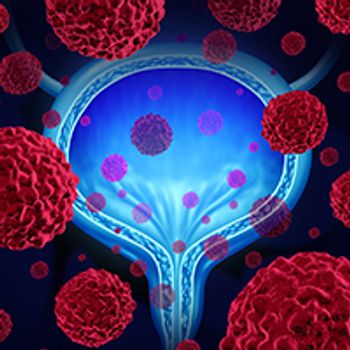
A Late-Cycle Meeting was held to discuss the biologics license application for Vicineum as a potential option for patients with Bacillus Calmette-Guérin–unresponsive non-muscle invasive bladder cancer.
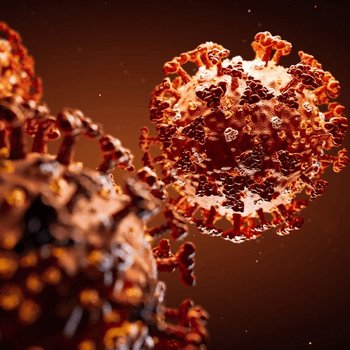
Patients with a urological cancer who were also infected with COVID-19 and undergoing elective surgery for their disease, were found to have a significantly higher likelihood of experiencing respiratory complications and mortality than those without the virus.
LiPax, a precision-targeted, locally-delivered taxane, was found to induce a recurrence-free survival rate of 83% in patients with non–muscle invasive bladder cancer who had undergone transurethral resection of bladder tumor.
Adjuvant nivolumab led to a significant improvement in disease-free survival compared with placebo in patients with high-risk muscle-invasive urothelial carcinoma following radical surgery, irrespective of PD-L1 expression level.

Combining transurethral resection of the bladder tumor with nivolumab and chemotherapy showed promise as a bladder-sparing treatment strategy in patients with muscle-invasive bladder cancer.
Pembrolizumab in combination with gemcitabine and concurrent hypofractionated radiotherapy appears to be a promising and efficacious, bladder-sparing regimen for patients with muscle-invasive bladder cancer.

Vineet Talwar, DM, FRCP, DNB, FICP, FIMSA, MNAMS, discusses the utility of immunotherapy in metastatic urothelial carcinoma.
Drs Grivas and Wright discussed the goals of the Seattle Cancer Care Alliance Bladder Cancer Multidisciplinary Clinic, data that support the use of a multidisciplinary approach in bladder cancer, and the lingering effects of the COVID-19 pandemic on collaboration across health care specialties.
Guru P. Sonpavde, MD, discusses anticipated data in bladder cancer.
The FDA has granted a priority review designation to a supplemental biologics license application for nivolumab for use as an adjuvant treatment in patients with surgically resected, high-risk, muscle-invasive urothelial carcinoma.
Michael E. Devitt, MD, further underscored the importance of early genomic testing in patients with urothelial carcinoma, shared advice on factors to consider when choosing among second-line and later options, and highlighted enfortumab vedotin combination regimens that are under exploration.

The FDA has granted priority review to 2 supplemental biologics license applications for enfortumab vedotin-ejfv for the treatment of select patients with locally advanced or metastatic urothelial cancer.
Dr. Sonpavde discusses key data presented during the 2021 Genitourinary Cancers Symposium in urothelial carcinoma and anticipated research directions with immunotherapy, chemotherapy, and antibody-drug conjugates.
Scott T. Tagawa, MD, MS, FACP, discusses the FDA approval of sacituzumab govitecan-hziy in advanced urothelial carcinoma.
Advertisement
Advertisement
Trending on OncLive
1
INBRX-106 Plus Pembrolizumab Improves Responses and PFS in First-Line PD-L1–Positive HNSCC
2
FDA Approves Pirtobrutinib for Previously Untreated CLL/SLL
3
Five Under 5: Top Oncology Videos for the Week of 9/27
4
AUA Releases Guideline Amendment for NMIBC
5