
Debu Tripathy, MD, professor of medicine, chair, department of breast medical oncology, The University of Texas MD Anderson Cancer Center, discusses the possibility of one day being able to cure metastatic breast cancer.

Your AI-Trained Oncology Knowledge Connection!
Debu Tripathy, MD, professor of medicine, chair, department of breast medical oncology, The University of Texas MD Anderson Cancer Center, discusses the possibility of one day being able to cure metastatic breast cancer.
Deanna J. Attai, MD, breast surgeon, assistant clinical professor of surgery, David Geffen School of Medicine, University of California, Los Angeles, explains how social media can help physicians.

The landscape of breast cancer care is shifting rapidly, but that doesn't worry the organizers of the 32nd Annual Miami Breast Cancer Conference.
With the evolution of treatment under way, OncLive interviewed three world-renowned experts in the field: Joanne L. Blum, MD, PhD, Adam M. Brufsky, MD, PhD, and Harold J. Burstein, MD, PhD.
Judith A. Salerno, MD, MS, president, CEO, Susan G. Komen, discusses federal funding for research and the importance of gaining funds though private philanthropy to support clinical researchers.

New models have emerged for examining novel breast cancer treatments in the neoadjuvant setting that avoid the lengthy process of standard, large adjuvant trials.

In the last decade, there have been tremendous improvements in the treatment of HER2-positive breast cancer with new HER2-targeted agents improving survival in both the adjuvant and metastatic settings.

The first-line combination of trastuzumab and eribulin mesylate demonstrated an ORR of 71.2% with a median PFS of 11.6 months in patients with HER2-positive advanced breast cancer.
Ellen T. Matloff, MS, CGC, director, Yale Cancer Genetic Counseling Program at the Yale School of Medicine/Yale Cancer Center, discusses the proper age for a carrier of the BRCA1 or BRCA2 mutation to undergo oophorectomy.
Sunil Verma, MD, MSEd, FRCPC, associate professor, University of Toronto, chair, Breast Medical Oncology, Sunnybrook Odette Cancer Centre, provides an outlook on the treatment of HER2-positive breast cancer.

Success rates for lumpectomies or mastectomies are high with respect to survival, with up to 98% long-term survival rates for surgery and/or radiotherapy, but what if similar results could be achieved by substituting targeted medications for therapy?

The US Supreme Court's landmark decision last June, mandating that an individual's genes cannot be patented, transformed the genetic testing landscape and opened the marketplace to a host of new and complicated testing options.
The most promising novel therapeutics in development for patients with breast cancer focus primarily on targeting activating mutations in combinations that are based on findings from next-generation sequencing.
Debu Tripathy, MD, co-leader, Women's Cancer Program, University of Southern California Norris Comprehensive Cancer Center, discusses using adjuvant bisphosphonates as a treatment option for patients with breast cancer.
Judy C. Boughey, MD, associate professor of surgery, director, Breast Surgical Oncology Training Program, Mayo Clinic, discusses surgical resection of the primary breast tumor in patients with stage IV breast cancer.

Since its approval in 1998 to treat metastatic breast cancer, the anti-HER2 monoclonal antibody trastuzumab has dramatically expanded life expectancy and improved quality of life for women diagnosed with HER2-positive disease.

Over the past few decades, the optimal margin width for minimizing recurrence after breast-conserving surgery (BCS; lumpectomy) has been a topic of much debate

The large Canadian study that has caused a stir by indicating that mammograms are of no use in women aged 40 to 59 years, and in fact can lead to over-diagnosis of breast cancer, is flawed and misleading
Melvin J. Silverstein, MD, FACS, director, Breast Program Hoag Memorial Hospital, professor of surgery, Keck School of Medicine, University of Southern California, describes oncoplastic surgery.

Hyman B. Muss, MD, discusses optimizing the administration of endocrine therapies with or without mTOR inhibitors for patients with HR-positive metastatic breast cancer
Mark D. Pegram, MD, from the Stanford Cancer Institute, describes research into the antibody-drug conjugate T-DM1, following its FDA approval in February as a treatment for HER2-positive metastatic breast cancer.
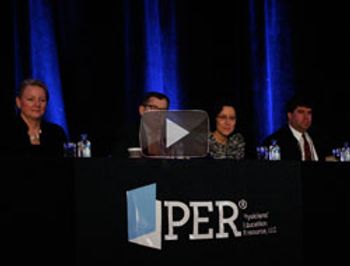
This year marks the 30th Annual Miami Breast Cancer Conference, a milestone for Daniel A. Osman, MD, and his wife Lois, who together launched the gathering in 1983 with fewer than 100 attendees and a focus on the then relatively new domain of lumpectomies in breast cancer treatment.

Hyman B. Muss, MD, Professor of Medicine, Director of Geriatric Oncology, Lineberger Comprehensive Cancer Center at the University of North Carolina at Chapel Hill School of Medicine, on the need for geriatric assessments.

Anees Chagpar, MD, MSc, MA, MPH, Associate Professor of Surgery (Oncology), Director, The Breast Center at Smilow Cancer Hospital at Yale-New Haven, discusses the need for repeat biopsy in patients with breast cancer.
Donna Shalala, PhD, President, University of Miami, discusses the new healthcare reform in the U.S.

Physicians wondering how the Affordable Care Act (ACA) will impact their practices heard a robust defense of the new law from Donna E. Shalala, PhD, on Saturday.

Martine Piccart, MD, PhD, discusses the implications of the HERA trial, which looked at two years compared with one year of trastuzumab after adjuvant chemotherapy in women with HER2-positive breast cancer.

As the genomic era in oncology unfolds, the development of new therapeutics increasingly will involve targeting a range of mutations simultaneously, requiring a "next-generation clinical trials system" to match the advances that technology is delivering.

Two large clinical trials are expected to define the impact that employing genomic tests in treatment decisions has on survival outcomes, according to Martine J. Piccart, MD, PhD.
Oncology leaders are bracing for a host of changes in the healthcare system, not only as a result of the recently upheld insurance reform legislation but also because of continued pressure to control the ever-rising cost of cancer care.