
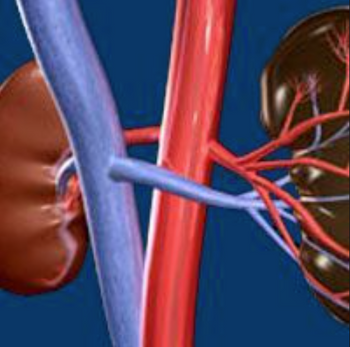
The first-line combination of lenvatinib and everolimus elicited clinical activity in patients with advanced non-clear cell renal cell carcinoma.
The first-line combination of lenvatinib and everolimus elicited clinical activity in patients with advanced non-clear cell renal cell carcinoma.
Toni K. Choueiri, MD, discusses key findings from the CheckMate-9ER trial in advanced RCC, as well as ongoing trials with the potential to shift the paradigm even further.
Norman E. “Ned” Sharpless, MD, discusses the efforts that The National Cancer Institute has made to combat the coronavirus disease 2019 pandemic.
Clifford A. Hudis, MD, CEO highlights cancer mortality and how it has steadily declined in the United States since 1975.
Targeted agents have restructured the treatment paradigm for patients with advanced hepatocellular carcinoma. The present challenge is to identify the patients most likely to benefit from frontline treatment regimens.

Ursula Matulonis, MD, highlights immunotherapy agents have demonstrated moderate clinical activity for patients with gynecologic cancers, however they fail to yield significant response rates in both the newly-diagnosed and recurrent settings.

Komal Jhaveri, MD, FACP, discusses the importance of outlining the first-line treatment course for patients with HER2-positive breast cancer.

There is still a great deal to learn about the optimal use of BRAF-targeted therapy, as well as immunotherapy, in the adjuvant setting for patients with melanoma.
PARP inhibitors have emerged as a promising therapeutic target in prostate cancer at the 38th Annual CFS® virtual conference.
An explosion of therapeutic options for chronic lymphocytic leukemia has resulted in challenging questions about sequencing therapies for patients who progress after frontline treatment with little data to guide optimal therapy selection.

Frontline treatment decisions for patients with follicular lymphoma can be guided by a general framework; the choice of therapy is often based on several factors such as indications of therapy, bulk of disease, comorbidities, and toxicity.
The treatment landscape for multiple myeloma is poised to enter a new era of innovation with the development of therapies that target B-cell maturation antigen, which is highly expressed on plasma and MM cells.

With an estimated 5-year survival rate of 50% and an ongoing issue of resistance, next steps with immunotherapy in melanoma will focus on stratifying patients, personalizing therapy, and refining localized regimens.
The addition of anti–PD-1/PD-L1 to combination BRAF and MEK inhibition has been shown to improve progression-free survival and duration of response in patients with BRAF-mutated melanoma, suggesting potential to overcome resistance to targeted approaches.
Jason J. Luke, MD, FACP, discusses the importance of BRAF in melanoma.
Jeffrey S. Weber, MD, PhD, discusses the results of the phase 3 COMBI-AD trial with dabrafenib plus trametinib in patients with resected, stage III BRAF V600E/K–mutant melanoma.
XmAb18087 demonstrated a disease control rate of 43% across dose levels in patients with neuroendocrine tumors and a favorable safety profile.
The novel somatostatin analog for the Targeted Alpha-emitter Therapy 212Pb-DOTAMTATE has demonstrated early efficacy and a tolerable safety profile in a small cohort of patients with metastatic somatostatin receptor–expressing neuroendocrine tumors irrespective of location of the primary tumor.
Aman Chauhan, MD, a medical oncologist at the University of Kentucky, discusses key recent advances in therapeutics for patients with neuroendocrine tumors, and points to the future with ongoing combination studies.
Increasing the dosage of lanreotide autogel from every 28 days to every 14 days led to encouraging progression-free survival outcomes in patients with progressive pancreatic and midgut neuroendocrine tumors.

Jonathan Strosberg, MD, discusses retreatment with Lutathera in advanced neuroendocrine tumors.
Aman Chauhan, MD, a medical oncologist at the University of Kentucky, discusses the role of Lutathera in neuroendocrine tumors.

Marianne Pavel, MD, discusses the progression-free survival of patients with pancreatic and midgut neuroendocrine tumors who are treated with lanreotide autogel in the phase 2 CLARINET FORTE trial.
Investigators are evaluating the combination of telotristat ethyl and Lutathera with a goal to improve progression-free survival in patients with well-differentiated neuroendocrine tumors in a randomized, phase 2 study that was highlighted during the 2020 NANETs Virtual Symposium.

Longer-term data demonstrated that treatment with the radiopharmaceutical Lutathera continued to show low rates of toxicity among patients with somatostatin receptor–positive neuroendocrine tumors.
Brigatinib demonstrated sustained improvements in overall and intracranial progression-free survival and health-related quality of life compared with crizotinib in patients with ALK-positive advanced non–small cell lung cancer.
Plinabulin was found to be a more favorable option for the prevention of chemotherapy-induced neutropenia compared with pegfilgrastim during the coronavirus disease 2019 pandemic.
Daniel P. Petrylak, MD, discusses the pivotal trials that have led to the regulatory approvals of the PARP inhibitors olaparib and rucaparib in patients with metastatic castration-resistant prostate cancer and DNA repair mutations.
Benjamin P. Levy, MD, discusses the role of the combination of dabrafenib and trametinib in BRAF V600E-mutant non–small cell lung cancer.
Andre Goy, MD, MS, discusses how matching the right treatment with the right patient resides at the heart of precision medicine, but with continued interest in pursuing the molecular milieu of cancers, precision medicine has the potential to better inform pre- and post-cancer interventions as well.