

Osimertinib reduced the risk for central nervous system death or progression by 82% in patients with early-stage EGFR mutated non–small cell lung cancer following complete tumor resection.
Osimertinib reduced the risk for central nervous system death or progression by 82% in patients with early-stage EGFR mutated non–small cell lung cancer following complete tumor resection.

Frontline pembrolizumab plus chemotherapy significantly improved overall survival, progression-free survival, and objective response rates compared with chemotherapy alone in patients with locally advanced unresectable or metastatic esophageal cancer.

Lenvatinib plus pembrolizumab showed early antitumor activity and tolerability in previously treated patients with advanced solid tumors.

Ipatasertib combined with abiraterone acetate plus prednisone led to a significantly superior radiographic progression-free survival and antitumor activity compared with placebo plus abiraterone/prednisone in patients with metastatic castration-resistant prostate cancer with PTEN loss.

Long-term follow-up of patients with locally advanced or metastatic urothelial carcinoma treated with enfortumab vedotin monotherapy showed encouraging results, with half of patients still alive at 12 months and approximately one-third alive at 18 months.

BLU-945, an investigational precision therapy, elicited robust antitumor activity in multiple preclinical models of triple-mutated EGFR-positive non–small cell lung cancer .
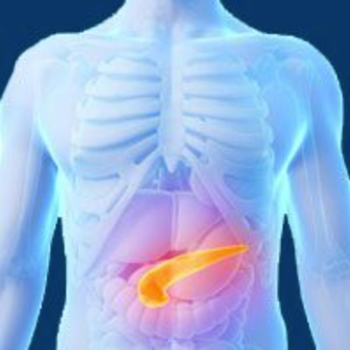
The novel VEGFR, FGFR, and CSF-1R inhibitor surufatinib yielded a statistically significant and clinically meaningful progression-free survival benefit compared with placebo in patients with advanced pancreatic neuroendocrine tumors.

Zarnie Lwin, MBBS, FRACP, discusses the results of the LEAP-005 trial in advanced solid tumors.

Stephen Johnston, MA, PhD, FRCP, discusses the results of the phase 3 monarchE study examining the addition of abemaciclib to endocrine therapy in patients with high-risk early hormone receptor–positive, HER2-negative breast cancer.
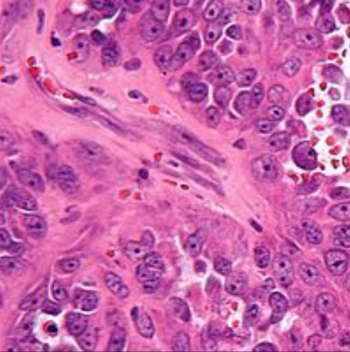
Regorafenib extended progression-free survival at 24 weeks compared with placebo for patients with Ewing sarcoma in the phase 2 REGOBONE study. However, the oral multi-kinase inhibitor failed to meet the study’s primary endpoint of non-progression at 8 weeks.

Olaparib induced a significantly longer duration of overall survival, compared with enzalutamide or abiraterone plus prednisone, in men with metastatic castration-resistant prostate cancer who had tumors with at least 1 alteration in BRCA1, BRCA2, or ATM and whose disease had progressed during previous treatment with a next-generation hormonal agent.

Potent and durable clinical activity was shown with pralsetinib as treatment of patients with RET-mutant advanced medullary thyroid cancer, regardless of the line of therapy.

The combination of amivantamab and lazertinib demonstrated high response rates and was well tolerated in treatment-naïve and osimertinib-resistant patients with advanced EGFR-mutant non–small cell lung cancer.
Dual inhibition of both VEGFR and EGFR with the combination of apatinib and gefitinib in the first-line treatment of patients with advanced EGFR-mutant non–small cell lung cancer demonstrated superior progression-free survival.

An acceptable safety profile coupled with pharmacokinetic and pharmacodynamic data for the DART molecule MGD019 were reported during the European Society for Medical Oncology Virtual Congress 2020 from results of a first-in-human study.

Entrectinib demonstrated durable intracranial activity in a small subset of patients with NTRK fusion–positive solid tumors and baseline central nervous system metastases.

The combination of osimertinib and bevacizumab did not prolong progression-free survival in patients with advanced adenocarcinoma who had EGFR T790M mutations compared with osimertinib alone

Overall survival benefits of frontline maintenance treatment with avelumab in patients with advanced urothelial cancer were found to be positively associated with biomarkers of immune activity and negativity linked with biomarkers of tumor homeostasis and chronic inflammation.

Quality of life according to patient-reported outcomes was not reduced despite treatment toxicities in those with ovarian, primary peritoneal, or fallopian tube cancer treated with niraparib versus placebo in the PRIMA/ENGOT-OV26/GOG-3012 trial.

The addition of abemaciclib to endocrine therapy led to a significant reduction in the risk of invasive disease versus endocrine therapy alone in patients with high-risk early hormone receptor–positive, HER2-negative breast cancer.
Post-operative radiotherapy was linked with a nonstatistically significant increase in disease-free survival in patients with completely resected stage IIIAN2 non–small cell lung cancer and thus cannot be recommended as a standard of care for this population.

Neoadjuvant chemotherapy with intense dose-dense epirubicin, paclitaxel, and cyclophosphamide demonstrated significant benefit in the treatment of patients with HR+/HER2- breast cancer.

The addition of neoadjuvant atezolizumab to nab-paclitaxel plus doxorubicin and cyclophosphamide significantly improved pathologic complete responses in patients with stage 2 or stage 3 triple-negative breast cancer, compared with placebo plus chemotherapy.
John Zalcberg, PhD, OAM, discusses updated results from the phase 3 INVICTUS trial in advanced gastrointestinal stromal tumor.

Benjamin Solomon, MBBS, PhD, FRACP, discusses interim findings from the phase 3 CROWN study in ALK-positive non–small cell lung cancer.

Dostarlimab showcased durable antitumor activity in patients with advanced or recurrent DNA mismatch repair deficient and proficient endometrial cancer, with a notable disease control rate and a promising safety profile.

Treatment with sacituzumab govitecan led to a 59% reduction in the risk of disease progression or death compared with physician’s choice of single-agent chemotherapy in patients with previously treated metastatic triple-negative breast cancer.

Sacituzumab govitecan-hziy continued to showcase significant activity with favorable tolerability in heavily pretreated patients with metastatic urothelial carcinoma who progressed on both platinum-based chemotherapy and checkpoint inhibition.

Spartalizumab plus dabrafenib did not significantly improve progression-free survival over dabrafenib/trametinib in patients with untreated BRAF V600-mutant unresectable or metastatic melanoma.

The novel broad-spectrum KIT and PDGFRα inhibitor ripretinib continued to demonstrate clinically meaningful benefit as a fourth- or later-line treatment for patients with advanced gastrointestinal stromal tumors.