
Axi-cel led to durable responses and manageable safety in patients with relapsed/refractory follicular lymphoma.
Axi-cel led to durable responses and manageable safety in patients with relapsed/refractory follicular lymphoma.
Manali Kamdar, MD, discusses the long-term efficacy findings with lisocabtagene maraleucel in patients with relapsed/refractory large B-cell lymphoma.
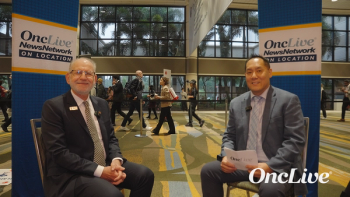
Amandeep Salhotra, MD, and Robert Negrin, MD, sit down with Chandler Park, MD, FACP, to discuss the latest abstracts in graft-vs-host disease presented during the 2025 ASH Annual Meeting & Exposition.
Pelabresib plus ruxolitinib improved primary and secondary efficacy end points vs ruxolitinib alone in JAK inhibitor-naive myelofibrosis.
Anne Vincent-Salomon, PR, MD, PhD, HDR, highlights persistent gaps that continue to challenge reproducibility and clinical interpretation in the diagnostic classification of invasive lobular carcinoma.

Long-term follow-up data from the AGAVE-201 trial showed that safety and survival outcomes with axatilimab were maintained in patients with chronic GVHD.
The in vivo, BCMA-directed CAR T-cell therapy produced initial MRD-negative responses and persistent CAR T-cell expansion in 4 patients with relapsed/refractory myeloma.
GC012F/AZD0120 produced responses in high-risk, transplant-eligible multiple myeloma, as well as transplant-ineligible, newly diagnosed disease.

Early teclistamab discontinuation after deep response showed PFS comparable to continuous therapy in relapsed/refractory myeloma in the LimiTEC trial.
Teclistamab/daratumumab improved survival outcomes and led to deep MRD-negative responses vs daratumumab-based regimens in relapsed/refractory myeloma.

Pitrobrutinib monotherapy showed significant efficacy improvements in first-line CLL/SLL compared with BR treatments.

Zanubrutinib plus venetoclax maintained a 36-month PFS rate of 87% (95% CI, 78.6%–92.4%) in treatment-naive CLL/SLL.
GLPG5101 produced responses and had a manageable safety profile in relapsed/refractory non-Hodgkin lymphoma, including mantle cell lymphoma.
The safety profile associated with MK-1045 administration was manageable with dose interruption and standard medical care.
Zanubrutinib shows sustained 6-year efficacy and safety in treatment-naive CLL/SLL, outperforming BR with durable PFS and high response rates.
Lori A. Leslie, MD, discusses 3-year efficacy findings with epcoritamab plus rituximab and lenalidomide in previously untreated follicular lymphoma.
Fadi Haddad, MD, discusses the efficacy of asciminib in patients with newly diagnosed chronic myeloid leukemia as seen in a phase 2 trial.
Triplet therapy with tagraxofusp/azacitidine/venetoclax led to high remission rates and had a safety profile similar to that of tagraxofusp alone in BPDCN.
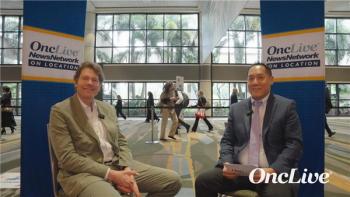
Robert Emmons, MD, FACP, Joshua Brody, MD, and Javier Pinilla, MD, PhD, sit down with Chandler Park, MD, FACP, to discuss the latest abstracts in chronic lymphocytic leukemia and lymphoma presented during the 2025 ASH Annual Meeting & Exposition.
The microbiota-based therapy had a favorable safety profile and demonstrated response-driven prolongation of survival in this patient population.
Ziftomenib plus venetoclax and azacitidine was safe and effective in patients with relapsed/refractory AML harboring NPM1 mutations or KMT2A rearrangements.

The 600-mg RP2D of Ziftomenib in combination with venetoclax/azacitidine displayed high response rates in NPM1-mutated AML.

Acalabrutinib plus rituximab followed by brexu-cel was safe and delivered responses in previously untreated, high-risk mantle cell lymphoma.
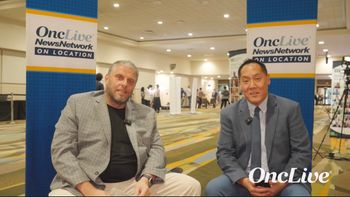
Gerhard Hildebrandt, MD, FACP, and Muhamed Baljevic, MD, sit down with Chandler Park, MD, FACP, to discuss the latest abstracts in acute leukemia and multiple myeloma presented during the 2025 ASH Annual Meeting & Exposition.
Talquetamab plus teclistamab produced a high ORR and CR or better rate in relapsed/refracotry multiple myeloma with true extramedullary disease.

Linvoseltamab monotherapy produced responses and was safe in newly diagnosed multiple myeloma.
AZD0120 CAR T therapy shows rapid, deep responses and manageable safety in R/R myeloma, with ultra-fast manufacturing and strong early durability.
Subcutaneous cevostamab demonstrated activity and safety in patients with multiple myeloma who had received a median of 5 prior lines of therapy.
Leading clinicians preview anticipated HR+ and TNBC studies at SABCS 2025.
Jean-Marie Michot, MD, discusses the OLYMPIA-3 study investigating odronextamab plus CHOP in previously untreated diffuse large B-cell lymphoma.