

Gedatolisib regimens showed PFS benefits irrespective of prior treatment duration in HR-positive, HER2-negative PIK3CA wild-type advanced breast cancer.
Gedatolisib regimens showed PFS benefits irrespective of prior treatment duration in HR-positive, HER2-negative PIK3CA wild-type advanced breast cancer.


Experts reflect on pivotal data from the 2025 ASH Annual Meeting that are set to change practice in AML, MZL, FL, and multiple myeloma.

An adjusted OS analysis showed no OS difference with the addition of adjuvant palbociclib in HR-positive/HER2-negative breast cancer.

Camizestrant plus continued CDK4/6 inhibition led to clinically meaningful improvements in PFS, PFS2, TTFST, TTSSS, and chemotherapy/ADC-free survival vs SOC.
Elacestrant plus abemaciclib or everolimus was safe and showed preliminary efficacy in ER-positive, HER2-negative advanced breast cancer.
Alpelisib plus fulvestrant improved PFS vs fulvestrant alone in PIK3CA-mutated, hormone receptor–positive/HER2-negative advanced breast cancer.
Circulating tumor DNA could represent a minimally invasive approach for detecting AKT pathway alterations in hormone receptor–positive breast cancer.

Axillary RFS at 3 years was noninferior with less vs more invasive staging procedures in node-negative breast cancer after neoadjuvant chemotherapy.

Oral azacitidine demonstrated a similar pharmacokinetic and safety profile to the subcutaneous formulation in MDS or CMML.

Kevin Punie, MD, discusses PRO data from the phase 3 ASCENT-03 trial.

Hope S. Rugo, MD, discusses an open-label umbrella study evaluating elacestrant in combination with everolimus or abemaciclib in ER-positive/HER2-negative advanced breast cancer.
Locoregional recurrence-free rates were similar in newly diagnosed breast cancer, irrespective of resection of MRI-detected disease.
Patients with early breast cancer who received pembrolizumab plus radiation therapy experienced significant improvements in T-Cell infiltration and promising pCR rates.
T-DXd yielded iDFS improvements in HER2-positive early breast cancer with residual invasive disease, irrespective of HER2 expression of neoadjuvant chemotherapy type.
Tucatinib plus HP improved median investigator-assessed PFS by 8.6 months as first-line maintenance vs HP alone in HER2-positive metastatic breast cancer.

Samer Alkassis, MD, PhD, discusses how cathepsin protease expression may correlate with survival outcomes to trastuzumab deruxtecan in metastatic breast cancer.

Frontline treatment with T-DXd plus pertuzumab improved QOL vs THP in patients with HER2-positive advanced or metastatic breast cancer.

Nuvisertib demonstrated clinical activity as both a single agent and in combination with momelotinib for patients with relapsed/refractory myelofibrosis.

Erika P. Hamilton, MD, discusses data from HER2CLIMB-05 evaluating tucatinib plus trastuzumab/pertuzumab first-line maintenance in HER2-positive breast cancer.
PRO data from ASCENT-03 showed that the mean change in physical functioning from baseline to week 25 favored sacituzumab govitecan over chemotherapy.
Abemaciclib monotherapy displayed a clinical benefit in some patients with HR+/HER2– breast cancer after CDK4/6 inhibitor therapy.
The multimodal ICM+ model was prognostic for long-term recurrence following treatment in early breast cancer.
Sankalp Arora, MD, discusses the efficacy of azacitidine/venetoclax/gilteritinib in newly diagnosed, adverse-risk, FLT3 wild-type acute myeloid leukemia.
Giredestrant improved invasive disease-free survival vs endocrine therapy in ER-positive, HER2-negative, medium- and high-risk early breast cancer.
Adjuvant AI therapy improved DFS and TTDR vs a SERM in patients with hormone receptor–positive, HER2-positive early breast cancer.

David Rimm, MD, PhD, discusses key conceptual considerations and discrepancies regarding the mechanisms of action of ADCs in breast cancer treatment.
Axi-cel led to durable responses and manageable safety in patients with relapsed/refractory follicular lymphoma.
Manali Kamdar, MD, discusses the long-term efficacy findings with lisocabtagene maraleucel in patients with relapsed/refractory large B-cell lymphoma.
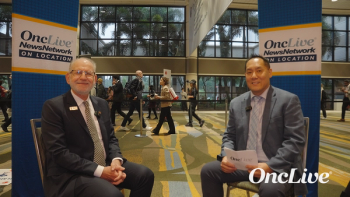
Amandeep Salhotra, MD, and Robert Negrin, MD, sit down with Chandler Park, MD, FACP, to discuss the latest abstracts in graft-vs-host disease presented during the 2025 ASH Annual Meeting & Exposition.