

Rebecca C. Arend, MD, discussed novel combinations being investigated for the treatment of patients with ovarian cancer.

Your AI-Trained Oncology Knowledge Connection!
Rebecca C. Arend, MD, discussed novel combinations being investigated for the treatment of patients with ovarian cancer.
David O'Malley, MD, discusses the excitement surrounding PARP inhibitors for patients with ovarian cancer.

Two-year follow-up data showed sustained improvements in overall survival with pembrolizumab over chemotherapy in pretreated patients with locally advanced or recurrent urothelial cancer.

James Gulley, MD, PhD, chief, Genitourinary Malignancies Branch, and director, Medical Oncology Service, at the National Cancer Institute, discusses a phase II study of olaparib (Lynparza) and durvalumab (Imfinzi) in metastatic castration-resistant prostate cancer (mCRPC) in an unselected patient population, presented at the 2018 Genitourinary Cancers Symposium.
Joaquim Bellmunt, MD, PhD, associate professor of medicine, Harvard Medical School, director, Bladder Cancer Center, Dana-Farber Cancer Institute, discusses 2-year follow-up results from the phase III KEYNOTE-045 trial of pembrolizumab (Keytruda) versus chemotherapy in recurrent, advanced urothelial carcinoma during the 2018 Genitourinary Cancers Symposium.
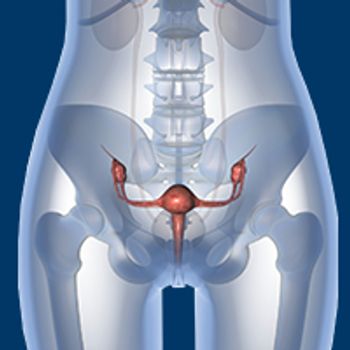
Many endometrioid cancers express high RNA levels for multiple immune checkpoints, and this may allow physicians to treat these patients with combination immune therapies.

Kathleen N. Moore, MD, assistant professor, The Stephenson Cancer Center, The University of Oklahoma, discusses combinations of immunotherapy with PARP inhibitors for patients with BRCA-mutated ovarian cancer.

Lindsay West, MD, gynecologic oncologist, UNC Department of Obstetrics and Gynecology, UNC School of Medicine, discusses the challenges with quality of life for patients with gynecologic cancer.
Guru Sonpavde, MD, director of Bladder Cancer at Dana-Farber Cancer Institute, discusses a phase IIIb safety study of fixed-dose durvalumab (Imfinzi) and tremelimumab in patients with advanced urothelial carcinoma.
Adjuvant therapy, regardless of the treatment modality, did not improve overall survival compared with observation for women with early stage, uterine-confined leiomyosarcoma.
The administration of stereotactic body radiation therapy through the use of CyberKnife therapy appears to be a safe and effective salvage treatment for women with previously irradiated, locally recurrent gynecologic cancer.
Kathleen Moore, MD, discusses combination strategies with immunotherapy for patients with ovarian cancer.
Data from the first 13 evaluable patients enrolled in a phase II study of SM-88 showed a reduction in circulating tumor cells, a slowing of prostate-specific antigen increase, and delayed radiographic progression of disease in nonmetastatic prostate cancer.

An analysis of black women of Caribbean descent with type I or type II endometrial cancer showed that this population expressed significant differences in genetic variations compared with a nationwide population of patients with endometrial cancer.

The PARP inhibitor olaparib appeared to complement the antitumor activity of the PD-L1 inhibitor durvalumab in unselected men with metastatic castrate-resistant prostate cancer, according to findings from a phase II study presented at the 2018 Genitourinary Cancers Symposium.
Elizabeth Plimack, MD, director of Genitourinary Clinical Research at Fox Chase Cancer Center, discusses 2 studies reported at the 2018 Genitourinary Cancers Symposium in patients with nonmetastatic M0 castration-resistant prostate cancer (CRPC).

Ahmed N. Al-Niaimi, MD, assistant professor of obstetrics and gynecology, University of Wisconsin School of Medicine and Public Health, discusses the future role for cytoreductive surgery for the treatment of patients with ovarian cancer.

Erin K. Crane, MD, MPH, gynecologic oncologist, Levine Cancer Institute, Carolinas HealthCare System, discusses the impact of PARP inhibitors for patients with ovarian cancer.

Monika Joshi, MD, assistant professor, Penn State Hershey Medical Center, discusses a phase Ib study of durvalumab (Imfinzi) and radiation therapy (DUART) followed by adjuvant durvalumab in patients with urothelial carcinoma.

A new model based on 6 clinical factors may be able to predict overall survival for patients with advanced urothelial cancers being treated with the PD-L1 inhibitor atezolizumab.

The addition of docetaxel (Taxotere) to frontline long-term hormone therapy for advanced prostate cancer improved quality of life and reduced the need for subsequent therapy, contributing to lower overall costs in the nonmetastatic setting.

Apalutamide (ARN-509) reduced the risk of metastasis or death by 72% in patients with nonmetastatic castration-resistant prostate cancer, according to findings from the phase III SPARTAN trial.

The combination of atezolizumab and bevacizumab reduced the risk of progression or death by 26% compared with sunitinib for patients with untreated PD-L1–positive metastatic renal cell carcinoma.

Treatment with the combination of enzalutamide and androgen deprivation therapy reduced the risk of metastases or death by 71% compared with ADT alone in patients with nonmetastatic castration-resistant prostate cancer.

Treatment with the PD-1 inhibitor pembrolizumab elicited promising progression-free survival and overall survival results in patients with advanced hepatocellular carcinoma who received previous treatment with sorafenib.

Sequencing regorafenib before cetuximab showed superior overall survival compared with the reverse sequence in patients with metastatic colorectal cancer following failure of standard chemotherapy.

Michael J. Overman, MD, associate professor, department of Gastrointestinal Medical Oncology, The University of Texas MD Anderson Cancer Center, discusses the updated findings from CheckMate-142 in metastatic colorectal cancer during the 2018 Gastrointestinal Cancers Symposium.

Ghassan K. Abou-Alfa, MD, medical oncologist, Memorial Sloan Kettering Cancer Center, discusses the results of the CELESTIAL trial in advanced hepatocellular carcinoma during the 2018 Gastrointestinal Cancers Symposium.

Induction treatment with nab-paclitaxel plus gemcitabine demonstrated a time to treatment failure of 8.8 months for patients with newly diagnosed locally advanced pancreatic cancer.
Tanios Bekaii-Saab, MD, discusses the results and significance of the ReDOS study in metastatic colorectal cancer, as well as shared some insight on the Reverce trial.