
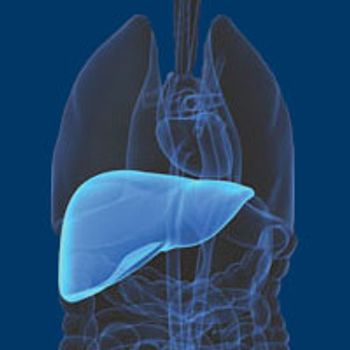
MicroRNA-34a, one of the most documented tumor suppressor microRNAs, is being evaluated as a potential therapeutic target in hepatocellular carcinoma.

Your AI-Trained Oncology Knowledge Connection!
MicroRNA-34a, one of the most documented tumor suppressor microRNAs, is being evaluated as a potential therapeutic target in hepatocellular carcinoma.
Higher levels of hepatocytes positive for pERK immunostaining and greater microvascular invasion have emerged as independent prognostic factors of recurrence in patients following sorafenib (Nexavar) treatment for hepatocellular carcinoma.
Nadine Abi-Jaoudeh, MD, associate professor, Department of Radiological Sciences, director, Research of Interventional Radiology in the Department of Radiological Sciences, University of California Irvine School of Medicine, discusses the potential for immunotherapy in advanced hepatocellular carcinoma.
Amira Abdelhamid, assistant lecturer, German University in Cairo, discusses microRNA-34a and natural killer (NK) cells in hepatocellular carcinoma (HCC).
A meta-analysis found that patients were at no elevated risk of developing hepatocellular carcinoma after achieving sustained virologic response following treatment with direct-acting antiviral therapy for hepatitis C compared to interferon therapy.
Martin Dreyling, MD, associate professor, University of Munich, discusses primary results of the pivotal CHRONOS-1 study, which looked at copanlisib in patients with relapsed or refractory indolent B-cell lymphoma, during the AACR Annual Meeting.
Jedd D. Wolchok, MD, PhD, chief, Melanoma and Immunotherapeutics Service, Memorial Sloan Kettering Cancer Center, discusses weighing the overall survival (OS) benefit with the increased risk of toxicities seen with the combination of nivolumab (Opdivo) and ipilimumab (Yervoy) in treatment-naïve patients with advanced melanoma.
Adding the IDO inhibitor indoximod to pembrolizumab led to an overall response rate of 52% in patients with advanced melanoma, according to findings from a phase II trial reported at the 2017 AACR Annual Meeting.

The IDO1 inhibitor BMS-986205 had "best-in-class" activity as demonstrated by kynurenine reductions and IDO1 inhibition for patients with advanced malignancies in a phase I/IIa study, according to lead investigator Lillian L. Siu, MD, at the 2017 AACR Annual Meeting.
Adding a formulation of the Coxsackievirus A21 (CAVATAK®) to ipilimumab (Yervoy) yielded an overall response rate of 50% and was well-tolerated in immunotherapy-naïve and pretreated patients with advanced melanoma.
A phase II basket trial has been announced to test that mutations in isocitrate dehydrogenase 1 and 2 are not driver mutations that should be targeted with direct IDH inhibitors, but instead they create vulnerabilities that can be exploited through treatment with PARP inhibitors.
Treatment with the RAF dimer inhibitor BGB-283 led to clinical benefit for patients with BRAF V600-mutated melanoma, papillary thyroid cancer, and ovarian cancer.
Results of a phase II trial showed that more than 80% of patients with refractory non-Hodgkin lymphoma achieved objective responses to treatment with the chimeric antigen receptor (CAR) T-cell therapy axicabtagene ciloleucel.
Julie R. Brahmer, MD, associate professor of Oncology, Bloomberg Kimmel Institute for Cancer Immunotherapy at Johns Hopkins, discusses 5-year follow-up data from the CA209-003 study of nivolumab in previously treated advanced non-small cell lung cancer (NSCLC).
Jacob Gersh, PhD, lead physicist at the Gibbs Cancer Center & Research Institute, discusses the CyberKnife.
Kavita Patel, MD, MS, policy analyst, Brookings Institution, discusses the Cancer Drug Coverage Parity Act.
Jason J. Luke, MD, assistant professor of Medicine, The University of Chicago Medicine, discusses the controversy surrounding the combination of nivolumab (Opdivo) and ipilimumab (Yervoy) in treatment-naïve patients with advanced melanoma, which was explored in the CheckMate-067 trial, during the AACR Annual Meeting.
Long-term survival in patients with metastatic non–small cell lung cancer who received the immune checkpoint inhibitor nivolumab (Opdivo) has proven to be much higher than expected, with 16% of these patients surviving after 5 years, equivalent to about 4 times what would be expected with chemotherapy.

The PD-1 and CTLA-4 inhibitor combination of nivolumab (Opdivo) and ipilimumab (Yervoy) was associated with a 12% reduction in the risk of death versus nivolumab monotherapy in patients with treatment-naïve advanced melanoma.
Treatment with the PD-L1 inhibitor avelumab induced an objective response rate of 33% in patients with advanced Merkel cell carcinoma in the phase II JAVELIN Merkel 200 study, including 2 additional complete responses since the primary analysis.
According to results presented at the 2017 AACR Annual Meeting, 10% of patients showed impressive long-term survival in a phase I study of single agent anti-PD-L1 atezolizumab (Tecentriq) in patients with metastatic triple-negative breast cancer.
Tumor treating fields reduced the risk of death by 37% and overall survival was extended by a median of 5 months for patients with glioblastoma multiforme, in a landmark analysis of the EF-14 trial.
A dual attack on HER2 expression resulted in a 30% objective response rate in heavily pretreated patients with HER2-positive metastatic colorectal cancer.
The irreversible pan-HER tyrosine kinase inhibitor neratinib showed single-agent activity across cohorts of patients with HER2-mutant advanced cancers.

Roger Stupp, MD, professor, Neurological Surgery, and associate director, Strategic Initiatives, Robert H. Lurie Comprehensive Cancer Center, Northwestern University, discusses final results of a randomized, multi-center, phase III trial investigating tumor treating fields (TTFields) added to standard chemotherapy in newly diagnosed glioblastoma during the AACR Annual Meeting.
Sattva S. Neelapu, MD, associate professor, The University of Texas MD Anderson Cancer Center, discusses primary results of the ZUMA-1 trial investigating axicabtagene ciloleucel (KTE-C19) in patients with refractory aggressive non-Hodgkin lymphoma.
Jessica Turgon, MBA, of ECG Management Consultants says that changes in 340B Drug Pricing Program rules and the CMS physician payment formula are possible.
Tricia Strusowski, MS, RN, discusses the role of the oncology nurse navigator and how these staffers can help meet outcome and quality standards set by the CMS's OCM.
The outgoing president of the Association of Community Cancer Centers, Jennie Crews, MD, MMM, FACP reflects on her time as president and the achievements the ACCC made.

While at the annual CANCERSCAPE meeting of ACCC, Kavita Patel, MD, MS, comments on uncertainy in the healthcare environment and key policy to be aware of.