

Palbociclib may have antiproliferative effects when used as a neoadjuvant therapy for women with early stage breast cancer.

Your AI-Trained Oncology Knowledge Connection!
Palbociclib may have antiproliferative effects when used as a neoadjuvant therapy for women with early stage breast cancer.
A 70-gene signature (MammaPrint) demonstrated a high level of accuracy at identifying a large subset of women with clinically high-risk early stage breast cancer for whom adjuvant chemotherapy was unlikely to produce benefit.
Michael Postow, MD, medical oncologist, Memorial Sloan Kettering Cancer Center, discusses the overall survival (OS) results of the CheckMate-069 study, which investigated the combination of nivolumab (Opdivo) and ipilimumab (Yervoy) for the treatment of patients with melanoma.
The combination of ipilimumab (Yervoy) and nivolumab (Opdivo) showed a 42% improvement in overall survival compared with ipilimumab monotherapy for patients with advanced melanoma in a 2-year assessment of the phase II CheckMate-069 trial.
Yong-Chen William Lu, PhD, a fellow in the Surgery Branch of the National Cancer Institute, discusses a CD4 T-cell immunotherapy targeting MAGE-A3 that is showing early clinical responses in patients with metastatic cancer.
Rose K. Lai, MD, clinical associate professor of Neurology, University of Southern California, discusses results of the Glioma International Case Control study.

Treatment with the novel multikinase inhibitor entrectinib achieved objective responses in 79% of patients with solid tumors associated with NTRK, ROS-1, or ALK rearrangements.
A form of immunotherapy that harnesses the power of CD4 T-cells was shown to be safe and effective in patients with various types of metastatic cancers.
F. Stephen Hodi, MD, director of the Melanoma Center at Dana-Farber Cancer Institute, discusses the results of the longest follow-up survival study of patients with advanced melanoma who were treated with single-agent nivolumab (Opdivo).

Single-agent nivolumab demonstrated a robust 5-year overall survival rate of 34% for heavily pretreated patients with metastatic melanoma who had not received prior ipilimumab.
Nicola Normanno, MD, chief of the Cell Biology and Biotherapy Unit, INT-Fondazione Pascale, Naples, Italy, discusses the benefit of plasma genotyping to predict response to EGFR-targeted therapy in patients with non-small cell lung cancer (NSCLC).

Plasma-based genetic testing can effectively be used to determine whether a tissue biopsy is necessary for EGFR mutation analysis in patients with non–small cell lung cancer.
Raffaele Califano, MD, consultant in medical oncology at the Christie NHS Foundation Trust and University Hospital of South Manchester, discuses the potential for immunotherapy in small-cell lung cancer (SCLC).
Efficacy and safety remained strong 2 years following treatment with nivolumab for patients with advanced, refractory, squamous non-small–cell lung cancer, with an indication that cytokine levels could predict long-term outcomes.

Plasma genotyping can, in most cases, identify T790M-positivity in non-small cell lung cancer, which gives patients the option of receiving the targeted therapy osimertinib without the need for a tumor biopsy, according Geoffrey R. Oxnard, MD.
Members of the Community Oncology Alliance have issued a call to arms to spur a greater lobbying effort to stop a plan by The Centers for Medicare & Medicare Centers to implement a drug reimbursement change under Medicare Part B.
The first analysis of a trial investigating durvalumab in combination with gefitinib (Iressa) showed encouraging anti-tumor activity and tolerability in patients with non–small cell lung cancer and EGFR mutations that were tyrosine-kinase inhibitor-naïve.

Luis Paz-Ares, MD, PhD, Professor of Medicine at Hospital Universitario 12 de Octubre in Madrid, Spain, discusses a subgroup analysis of patients with EGFR-expressing tumors from the SQUIRE trial, a phase III study of gemcitabine–cisplatin plus necitumumab versus gemcitabine–cisplatin alone as first-line treatment for patients with stage IV squamous non-small cell lung cancer (NSCLC).
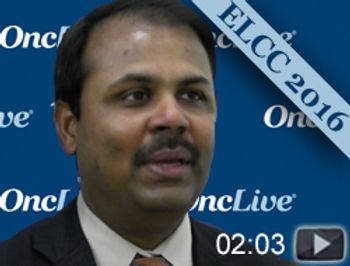
Suresh Ramalingam, MD, professor of Hematology and Medical Oncology at Emory School of Medicine and deputy director of Winship Cancer Institute, discusses first-line treatment with single-agent osimertinib in patients with EGFR-mutated non–small cell lung cancer (NSCLC).

Adding necitumumab to conventional chemotherapy improved outcomes in patients with metastatic squamous non–small cell lung cancer in the phase III SQUIRE trial, but the greatest benefit was derived by patients with EGFR-expressing tumors.

The first report of results from a phase Ib clinical trial evaluating CRS-207, a live, attenuated, double-deleted Listeria monocytogenes vaccine, in combination with pemetrexed and cisplatin, demonstrated the effectiveness of this approach for patients with malignant pleural mesothelioma.

A new generation of EGFR-targeted TKIs are poised to displace traditional agents as frontline therapies for patients with lung cancer.

John Haanen, MD PhD, epartment of Medical Oncology, The Netherlands Cancer Institute, Antoni van Leeuwenhoek Hospital, discussed the role of PD-L1 as a biomarker in lung cancer.
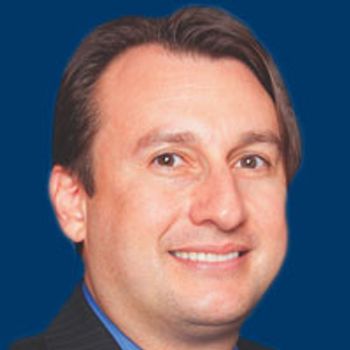
Aligning physician compensation to performance can be a dicey matter, as it is difficult to reach a consensus on how to measure physician success. However, a number of oncology practices have been developing systems for doing this and achieving success.
First-line treatment with single-agent osimertinib (Tagrisso) induced a response rate of 77% in patients with EGFR-mutated non–small cell lung cancer.
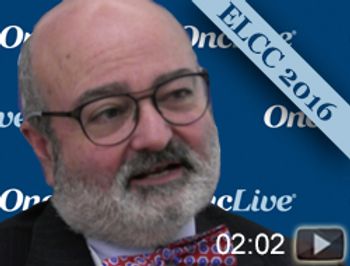
Thierry Jahan, MD, professor of medicine at the UCSF Helen Diller Family Comprehensive Cancer Center in San Francisco, discusses CRS-20, a live, attenuated Listeria monocytogenes bacterium which is being investigated with chemotherapy in malignant pleural mesothelioma (MPM).

Patients with non-small cell lung cancer who had ceased to respond to EGFR TKI therapy demonstrated a rapid and robust response to the investigational agent BI-1482694 (HM61713).

William Gradishar, MD, Betsy Bramsen Professorship of Breast Oncology, Professor in Medicine-Hematology/Oncology, Northwestern University Feinberg School of Medicine, discusses changes to the NCCN Breast Cancer Guidelines.
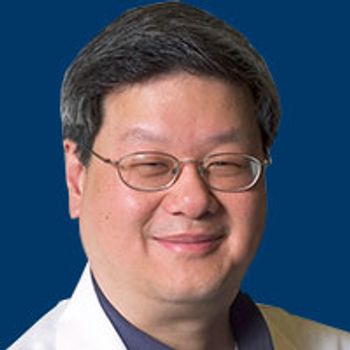
A new NCCN guideline for the management of vulvar cancer outlines the use of resection, radiation therapy, and chemotherapy based on disease site and stage, recognizing that only 2 randomized treatment trials have been completed.
Jeffrey Jones, MD, MPH, assistant professor of Internal Medicine, Division of Hematology, Department of Internal Medicine, Ohio State University Wexner Medical Center, discusses NCCN recommendations for treatment of relapsed patients with chronic lymphocytic leukemia (CLL).