
Dr. Renato G. Martins talks about the impact of nivolumab, an anti–PD-1, and ipilimumab, an anti CTLA-4, in the treatment of lung cancer.

Your AI-Trained Oncology Knowledge Connection!
Dr. Renato G. Martins talks about the impact of nivolumab, an anti–PD-1, and ipilimumab, an anti CTLA-4, in the treatment of lung cancer.
With the emergence of the novel treatments abiraterone acetate (Zytiga) and enzalutamide (Xtandi), urology groups are beginning to offer in-office dispensing to their metastatic castration-resistant prostate cancer patients.

The keynote address at the 2015 LUGPA Annual Meeting urged physicians to band together and create an offensive strategy when it comes to the nation's healthcare system.
Deepak A. Kapoor, MD, chairman and CEO of Integrated Medical Professionals and Large Urology Group Practice Association's (LUGPA's) chairman of health policy, discusses LUGPA's legislative advocacy efforts.

Hormone therapies for prostate cancer aimed at reducing serum androgens are trained on the wrong target: the testes and the adrenal glands. Rather, they should attack the prostate cancer cells themselves.
Raoul S. Concepcion, MD, FACS, director of Advanced Therapeutics at Urology Associates, PC, discusses healthcare's movement away from fee-for-service reimbursements.
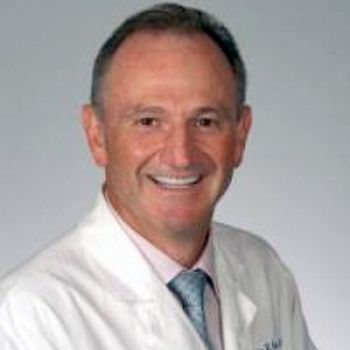
Thomas E. Keane, MD, ChB, discussed combination approaches in treatment-resistant mCRPC at the 2015 LUGPA Annual Meeting.

Adding the MEK inhibitor trametinib to the BRAF inhibitor dabrafenib significantly improves long-term outcomes while lowering certain adverse events associated with either agent alone for patients with BRAF-mutated metastatic melanoma.

E. David Crawford, MD, discussed issues with FDA standards for ADT agents and current treatment approaches to androgen deprivation in prostate cancer at the 2015 LUGPA Annual Meeting.
Jeffrey S. Weber, MD, PhD, deputy director, Laura and Isaac Perlmutter Cancer Center, co-director of its Melanoma Program and Head of Experimental Therapeutics, NYU Langone Medical Center, discusses the significance of the FDA approval of the combination of dabrafenib and trametinib for patients with unresectable or metastatic melanoma who harbor a BRAF V600E or V600K mutation.
Kimberly L. Blackwell, MD, medical oncologist, Duke Cancer Institute, discusses emerging therapies for patients with triple-negative breast cancer.
Tony Philip, MD, medical oncologist, Monter Cancer Center of the North Shore-LIJ Cancer Institute, assistant professor of Medicine, Hofstra-North Shore LIJ School of Medicine and NYIT College of Osteopathic Medicine, discusses approved and emerging agents for soft tissue sarcomas.
Evan R. Goldfischer, MD, MBA, FACS, director of the Research Department at Premier Medical Group of the Hudson Valley, discusses the benefits of integrated medical groups.
The kinase inhibitors sorafenib and lenvatinib have significantly altered the treatment paradigm for patients with advanced radioactive iodine-refractory differentiated thyroid cancer in both older and younger populations.
Patrick I. Borgen, MD, chair, Department of Surgery, head, Brooklyn Cancer Center, Maimonides Medical Center, compares the efficacy of surgical versus medical treatment of patients with breast cancer.
While the prognosis remains good for individuals with HPV-positive oropharyngeal cancers, the incidence of these cancers continues to rise, and researchers are currently seeking less intense treatment options that are equally effective but not as toxic for patients.

The use of neoadjuvant chemotherapy in advanced ovarian cancer continues to increase, even though the practice has not been shown to improve survival versus primary cytoreduction.
Franco Muggia, MD, professor of Medicine, NYU Langone Medical Center, discusses the current status of intraperitoneal therapy for patients with gynecologic malignancies.

Early promising responses seen with immune checkpoint inhibitors for patients with ovarian cancer still need to be validated in larger randomized trials before a conclusion is made regarding their true efficacy.
Jennifer Wu, MD, assistant professor of Medicine, Department of Medicine, Perlmutter Cancer Center, NYU Langone Medical Center, discusses the efficacy of regorafenib and TAS-102 for the treatment of patients with colorectal cancer.

Monoclonal antibodies are poised to revolutionize the treatment of adult patients with relapsed acute lymphoblastic leukemia, specifically blinatumomab and inotuzumab ozogamicin.

Optimizing outcomes with novel antibodies in multiple myeloma will involve combination regimens with established agents.
The landscape for the diagnosis and treatment of polycythemia vera (PV) is changing, and that's good news for patients and practitioners who can look to improvements ahead.
C. Ola Landgren, MD, PhD, hematologic oncologist, chief, Myeloma Service, Memorial Sloan Kettering Cancer Center, discusses minimal residual disease detection for progression-free survival and overall survival for patients with multiple myeloma.

B-cell pathway inhibitors have shown impressive survival benefits for patients with chronic lymphocytic leukemia, but require careful monitoring and possible suspension to control adverse events.

Independent urology practices are at a crossroads as they face substantial Medicare payment change, shifts in physician employment and autonomy, and cutting edge developments in clinical care.
John Copland, PhD, faculty member in the department of cancer biology, Mayo Clinic, explains his research on patient-derived xenograft (PDX) models in anaplastic thyroid cancer.

The oral corticosteroid dexamethasone significantly decreased flares of bone pain when added to radiation therapy in patients with metastatic cancer.
Rates of overall survival, disease-free survival, and local control were found to be comparable in select patients with early-stage breast cancer who underwent accelerated partial breast irradiation using multicatheter brachytherapy versus conventional whole breast irradiation.

The additon of hormonal therapy to salvage radiotherapy demonstrated a significant survival benefit in patients with prostate cancer recurrence after radical prostatectomy, according to long-term follow-up data from a randomized trial.