
The FDA has approved mosunetuzumab-axgb (Lunsumio) for the treatment of adult patients with relapsed or refractory follicular lymphoma after 2 or more lines of systemic therapy.
The FDA has approved mosunetuzumab-axgb (Lunsumio) for the treatment of adult patients with relapsed or refractory follicular lymphoma after 2 or more lines of systemic therapy.

The combination of domvanalimab plus zimberelimab with or without etrumadenant generated an improvement in overall response rate and progression-free survival compared with zimberelimab alone in patients with PD-L1–high metastatic non–small cell lung cancer, according to findings from the phase 2 ARC-7 trial.

Lauren Ritterhouse, MD, PhD, discusses next-generation sequencing testing platforms and the importance of establishing processes for tissue collection in non–small cell lung cancer.
The FDA’s accelerated approval of adagrasib for adult patients with KRAS G12C–mutated locally advanced or metastatic non–small cell lung cancer who have received at least 1 prior systemic therapy has provided a second KRAS G12C inhibitor option for patients.
Edward J. Pearson, MD, and colleagues, discuss the expanded role of targeted therapies in the treatment of patients with hematologic malignancies.
Press Release
As patients with cancer increasingly receive treatment in community hospitals and clinics and many such centers experience a shortage of oncologists, a group of physicians at Dana-Farber Cancer Institute, Beth Israel Deaconess Medical Center, and Harvard Medical School has proposed the first-ever training blueprint for oncologists planning careers in a community or academic-community setting.
The FDA has granted a breakthrough therapy designation to adagrasib plus cetuximab in patients with KRAS G12C–mutated, advanced colorectal cancer whose cancer has progressed following prior treatment with chemotherapy and an anti-VEGF therapy.

Clinical trials demand extreme rigor. A mistake in trial design, like a bookkeeping error, can lead regulators to reject a potentially valuable drug. Many researchers dislike this intense focus on dotting i’s and crossing t’s. Omid Hamid, MD, enjoys the challenge.

R. Lor Randall, MD, FACS, discusses the significance of addition of surgery to radiation therapy led to improved local control compared with radiation therapy alone in patients with localized pelvic Ewing Sarcoma.
The regimen of lenalidomide in combination with rituximab with bendamustine are effective therapies for relapsed/refractory follicular lymphoma, with high rates of overall and complete metabolic response by PET, according to data from the randomized phase 2 HOVON110/Rebel trial.

Updated results from the phase 3 GIM 2 study confirm previous findings showing that fluorouracil should not be a part of adjuvant chemotherapy for patients with high-risk early breast cancer.

In a new study, scientists reveal for the first time the genomic differences between chronic lymphocytic leukemia and Richter's, the molecular pathways by which Richter's emerges, and the existence of multiple subtypes of the disease.

The European Commission has approved the combination of olaparib plus abiraterone acetate and prednisone or prednisolone for the treatment of adult patients with metastatic castration-resistant prostate cancer in whom chemotherapy is not clinically indicated.
The FDA has approved the FoundationOne® Liquid CDx as a companion diagnostic to identify patients with non–small cell lung cancer whose tumors have EGFR exon 19 deletions or exon 21 L858R substitutions.

Overall survival is a critically relevant end point in randomized oncology clinical trials, but its interpretation is often not as straightforward as some may wish to acknowledge.

Virginia G. Kaklamani, MD, discusses the ongoing investigation of novel oral SERDs in patients with ER-positive/HER2-negative breast cancer, the remaining unmet needs for this patient population, and ongoing trials aiming to further understand the optimal use of oral SERDs.
The FDA has approved an additional indication for pemetrexed by injection, an alternative to standard pemetrexed, in combination with pembrolizumab and platinum-based chemotherapy for the initial treatment of patients with metastatic, nonsquamous non–small cell lung cancer without EGFR or ALK genomic tumor aberrations.
Obecabtagene autoleucel elicited an overall remission rate of 70% in 50 efficacy-evaluable adult patients with relapsed or refractory B-cell acute lymphoblastic leukemia, meeting the primary end point of the phase 2 FELIX trial.
The FDA has granted a priority review to a supplemental biologics license applications for enfortumab vedotin and pembrolizumab used in combination for the treatment of patients with locally advanced or metastatic urothelial cancer who are not eligible to receive cisplatin-containing chemotherapy.
Melissa A. Lumish, MD, discusses emerging treatment strategies that could lead to more individualized treatment plans for patients with rectal cancer.
The United Kingdom’s National Institute for Health and Care Excellence has endorsed trastuzumab deruxtecan for use within the Cancer Drugs Fund for adult patients with HER2-positive, unresectable or metastatic breast cancer following at least 1 anti-HER2 treatment.
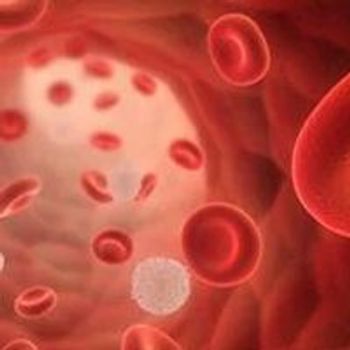
Glofitamab, an investigational CD20xCD3 T-cell engaging bispecific antibody, demonstrated promising results in patients with relapsed/refractory diffuse large B-cell lymphoma who received at least 2 prior lines of therapy.

Zanidatamab monotherapy produced responses in previously treated patients with HER2-amplified and -expressing biliary tract cancers.
Jeanne M. Palmer, MD, discusses a retrospective analysis of the PERSIST-1 and PAC203 trials, the symptoms that were analyzed across patient populations, and what the findings from this research indicate about the relationship between low platelet counts and symptoms such as fatigue in myelofibrosis.

Durvalumab monotherapy failed to elicit a statistically significant improvement in overall survival vs platinum-based chemotherapy as frontline treatment in patients with stage IV non–small cell lung cancer with at least 25% positivity of PD-L1 on tumor cells, or in a subgroup of patients at low risk of early mortality.
The United Kingdom’s Medicines and Healthcare Products Regulatory Agency has accepted a marketing authorization application seeking approval for sugemalimab plus chemotherapy as first-line treatment for patients with metastatic non–small cell lung cancer.

COM701 plus nivolumab demonstrated modest antitumor activity but a favorable safety profile in patients with metastatic microsatellite stable colorectal cancer.

Billy Truong, a doctoral candidate at Fox Chase Cancer Center, was awarded the American Society of Hematology Abstract Achievement Award for a poster that he presented at the 64th ASH Annual Meeting and Exposition.

The European Commission has approved fam-trastuzumab deruxtecan-nxki as monotherapy for the treatment of patients with advanced HER2-positive gastric or gastroesophageal junction adenocarcinoma who have received a prior trastuzumab-based regimen.

Press Release
Top epigenetics researchers from around the world gathered in South Beach for the Fifth Biennial Miami Epigenetics and Cancer Symposium, hosted by Sylvester Comprehensive Cancer Center at the University of Miami Miller School of Medicine.