

Multicancer early detection tests yielded high specificity and accuracy in predicting cancer signal origin and identified cancer signals in multiple tumor types.
Multicancer early detection tests yielded high specificity and accuracy in predicting cancer signal origin and identified cancer signals in multiple tumor types.

The CAR T-cell product tisagenlecleucel has been shown to elicit durable responses in adult patients with relapsed/refractory follicular lymphoma with a safety profile that compares favorably with other available products.
Brain imaging should be considered for patients with advanced or metastatic renal cell carcinoma who have a high metastatic burden and who have progressed after treatment with first-line therapies.

Heterogeneity in the cellular and molecular features of CAR T-cell products contributes to variation in efficacy and toxicity follow treatment with axicabtagene ciloleucel in patients with large B-cell lymphoma, and molecular response at day 7 might represent an early predictor of efficacy with this modality.

Rodolfo Gutierrez, MD, discusses racial disparities in cancer care and interventions to encourage increased participation of the Hispanic and Latinx community on clinical trials.

During the past 12 months, the treatment landscape for patients with non–small cell lung cancer has expanded dramatically with FDA approvals of the first drugs directed at KRAS G12C and EGFR exon 20 mutations as well as continued progress in developing new therapies for subsets of patients with other molecularly targetable alterations and with PD-L1–high disease.

Raajit K. Rampal, MD, PhD, discusses symptom management in patients with myelofibrosis, defining disease progression, and key considerations for starting or delaying treatment.

Data presented during the 2021 ASCO Annual Meeting offered insight into the optimization of BTK inhibitors, induction therapy, consolidative therapy, and radiation therapy for patients across the paradigm of hematologic malignancies.
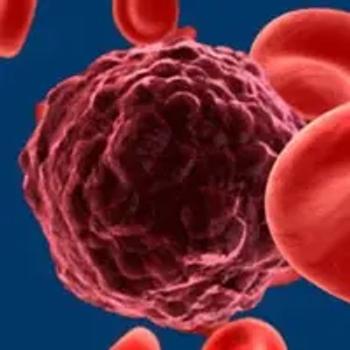
Dose-dependent engraftment of the investigative CAR T-cell therapy CYAD-211 was demonstrated in the first patient with relapsed/refractory multiple myeloma to receive this dose in the phase 1 IMMUNICY-1 trial, and no graft-versus-host disease has been reported to date.

The addition of venetoclax to lenalidomide and rituximab resulted in a high response rate and encouraging minimal residual disease undetectability in patients with newly diagnosed mantle cell lymphoma—even in those with high-risk features.
R. Lor Randall, MD, FACS, discusses the advantages of rotationplasty for oncologic and non-oncologic indications in children and young adults.

A new prognostic tool, the nomogram, has demonstrated the ability to predict outcomes following treatment with lutetium-177 prostate-specific membrane antigen in patients with metastatic castration-resistant prostate cancer, and could potentially be used to inform future trial designs and clinical decisions.

Completion of treatment options such as surgery, chemotherapy, and radiation within 38 weeks from a diagnosis with breast cancer was associated with improved survival in this population.

Mark E. Sherman, MD, discusses research efforts evaluating immune responses and risk of TNBC and implications for higher rates of disease among African American women.
An expert of panelists provide an overview of TA-TMA, including findings that raise suspicion of this complication, strategies they use for making the diagnosis, and how they intervene given limited treatment options.

The FDA has granted a regular approval to pembrolizumab plus lenvatinib for the treatment of patients with advanced endometrial carcinoma that is not microsatellite instability high or mismatch repair deficient, who have disease progression after previous systemic therapy in any setting, and who are not candidates for curative surgery or radiation.

Mitchell R. Smith, MD, PhD, discusses the results of the ECOG-ACRIN E1411 trial examining BR-based induction treatment in patients with mantle cell lymphoma and next steps for research.

Repetitive locoregional infusion of HER2-specific CAR T cells did not induce any dose-limiting toxicities.

The FDA has granted an orphan drug designation to alrizomadlin as a potential therapeutic option for patients with stage IIB-IV melanoma.

The safety and efficacy of the oral MDM2 inhibitor milademetan is under investigation vs trabectedin, a current standard of care, in the treatment of patients with dedifferentiated liposarcoma as part of the recently initiated phase 3 MANTRA trial.

The FDA has granted a breakthrough therapy designation to the combination of venetoclax plus azacitidine for use in the treatment of adult patients with previously untreated, intermediate-, high-, and very high–risk myelodysplastic syndromes based on the revised International Prognostic Scoring System.

The investigational therapy ficlatuzumab in combination with cytarabine demonstrated encouraging clinical efficacy with favorable tolerability when used as a treatment in patients with high-risk acute myeloid leukemia.

Patients with non-small cell lung cancer harboring KRAS mutations have been an underserved population with few treatment options, specifically those with G12V mutations.

Nivolumab plus chemotherapy or ipilimumab showcased superior overall survival over chemotherapy alone in previously untreated patients with advanced esophageal squamous cell carcinoma.

A new experimental treatment arm examining pamrevlumab in combination with gemcitabine and nab-paclitaxel as a first- or second-line treatment for patients with metastatic pancreatic cancer has been added to the novel clinical trial platform Precision Promise, which is being conducted by the Pancreatic Cancer Action Network.

Thomas G. Martin, MD, discusses the latest news in frontline, early relapsed, and heavily pretreated multiple myeloma, including the growing promise of quadruplets, emerging targets beyond BCMA, and the potential emergence of quadruplets, venetoclax, and antiviral therapy in amyloidosis.

Shannon Westin, MD, MPH, discusses the key takeaways from the EFFORT trial, future research directions with adavosertib, and the characteristics of PARP inhibitor resistance in patients with ovarian cancer.

The CCR5 antagonist leronlimab plus carboplatin was shown to result in a 72% decrease in cancer-associated macrophage-like cells, which was linked with an approximate 450% increase in overall survival in 30 patients with metastatic triple-negative breast cancer.

The novel gene-mediated immunotherapy GEN-1 showcased satisfactory safety with an acceptable risk/benefit profile when given over a 6-month period with up to 17 doses in newly diagnosed patients with stage III/IV ovarian cancer.

Homogeneous trials present a missed opportunity to discover treatments that might be highly successful in a particular subset of patients.