

By adapting adjuvant therapy based on responses to preoperative therapy, investigators may be able to change long term outcomes for patients with HER2-positive breast cancer, creating a paradigm shift in the space.

Your AI-Trained Oncology Knowledge Connection!
By adapting adjuvant therapy based on responses to preoperative therapy, investigators may be able to change long term outcomes for patients with HER2-positive breast cancer, creating a paradigm shift in the space.
Kevin Kalinsky, MD, MS, discusses treatment options beyond chemotherapy in patients with high-risk breast cancer.

The FDA has approved belumosudil for the treatment of adult and pediatric patients 12 years and older with chronic graft-versus-host disease following failure of at least 2 prior lines of systemic therapy.
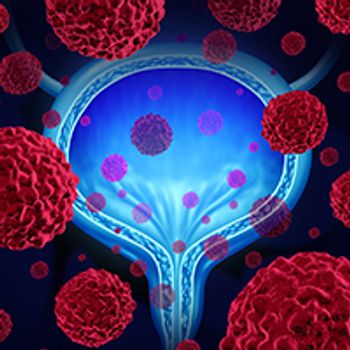
A Late-Cycle Meeting was held to discuss the biologics license application for Vicineum as a potential option for patients with Bacillus Calmette-Guérin–unresponsive non-muscle invasive bladder cancer.
Daniel Pollyea, MD, MS, discusses the current management of patients with higher-risk myelodysplastic syndrome, the data noted so far with pevonedistat in this paradigm, and other therapies positioned to improve outcomes for this patient population.
Nivolumab plus ipilimumab did not significantly improve overall survival over the EXTREME regimen in the frontline treatment of patients with recurrent or metastatic squamous cell carcinoma of the head and neck, missing the primary end points of the phase 3 CheckMate-651 trial.
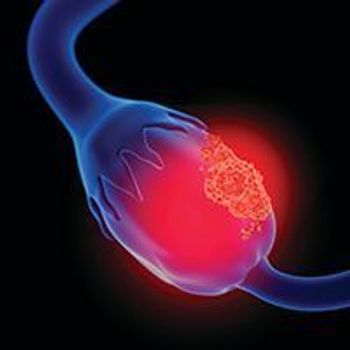
The lead novel candidate, the WEE1 inhibitor adavosertib, has been tested in more than 50 completed or ongoing clinical studies but has yet to proceed to a phase 3 trial despite showing promising safety and efficacy as monotherapy and in combination with a range of other cancer therapies.

Cellular medicine could represent the next frontier in the treatment of patients with cancer and many other diseases with a high unmet need.
Neoadjuvant pembrolizumab plus chemotherapy followed by adjuvant single-agent pembrolizumab was found to significantly improve event-free survival over neoadjuvant chemotherapy followed by adjuvant placebo in patients with high-risk, early-stage triple-negative breast cancer.
Jaffar A. Ajani, MD, and Zev A. Wainberg, MD, discuss FDA updates regarding the dosing schedule of cetuximab for metastatic colorectal cancer and the value of real-word data on clinical practice patterns in the community when administering this drug.

Delays between biopsy and the start of induction chemotherapy, induction chemotherapy and surgery, and surgery and consolidation chemotherapy were associated with a poor prognosis in patients with localized Ewing sarcoma.

The combination of atezolizumab plus bevacizumab elicited encouraging, durable responses in patients with advanced malignant peritoneal mesothelioma, irrespective of tumor mutational burden and PD-L1 expression status.
The combination of ceralasertib and olaparib induced clinical activity and was well tolerated in patients with homologous recombination deficient, recurrent platinum-sensitive, PARP inhibitor–resistant ovarian cancer.

Among a plethora of novel immunotherapeutic and targeted agents, the treatment landscapes for small cell lung cancer and non–small cell lung cancer have witnessed a rapid expansion that has led to improved survival and quality of life for patients, including a wider range of patients who harbor molecular abnormalities.
David Sallman, MD, discusses the role of hypomethylating agents in the treatment of patients with higher-risk myelodysplastic syndrome, the promise of pevonedistat in this population, the hunt for biomarkers of response to treatment, and remaining areas of unmet need to address with future efforts.
Neal Shore, MD, FACS, discusses the impact of crossover from placebo to darolutamide on OS benefit in patients with nmCRPC enrolled to the ARAMIS trial, and next steps for the androgen receptor inhibitor.
Amivantamab ushers in a new era of targeted treatment for patients with locally advanced or metastatic non–small cell lung cancer with EGFR exon 20 insertion mutations.

The FDA has lifted a partial clinical hold that was placed on a first-in-human, phase 1b trial evaluating RVU120 in patients with relapsed/refractory acute myeloid leukemia and high-risk myelodysplastic syndrome.

The addition of a focal boost to the intraprostatic lesion was found to improve biochemical disease-free survival in patients undergoing treatment with external beam radiotherapy for localized intermediate- and high-risk prostate cancer.
Patients with mismatch repair–deficient recurrent or advanced endometrial cancer gained an efficacious and safe treatment option with the addition of dostarlimab-gxly.
The combination of bempegaldesleukin plus nivolumab continued to produce promising antitumor activity with favorable tolerability when used in the frontline treatment of patients with metastatic melanoma, according to findings from a phase 2 cohort of the phase 1/2 PIVOT-2 trial.
Zev A. Wainberg, MD, and Jaffer A. Ajani, MD, discuss how to best utilize information provided to inform treatment decisions, treatment approaches for patients with newly diagnosed RAS wild-type mCRC, and factors that affect influence selecting a 2- vs 3-drug chemotherapy regimen.
Within the hierarchy of clinical trials, phase 3 randomized studies remain the gold standard, though some argue that appropriately designed meta-analysis of multiple studies provides even more definitive and meaningful insight.
Marwan Fakih, MD, discusses the efficacy of regorafenib plus nivolumab in patients with pMMR/MSS CRC, the potential for VEGFR/PD-1 inhibitor combination regimens in this population, and future directions for research.
Despite the failure of several strategies to improve the outcomes of patients with newly diagnosed diffuse large B-cell lymphoma, there appears to be substantial and growing progress in the treatment of relapsed disease.
Prithviraj Bose, MD, discusses data with pelabresib from the MANIFEST trial and future research directions for BET inhibition in patients with myelofibrosis.
The combination of eprenetapopt and azacitidine demonstrated a promising safety profile as well as encouraging clinical activity in a high-risk population of patients with TP53-mutated myelodysplastic syndrome and acute myeloid leukemia.
Richard Gorlick, MD, expands on the process of identifying these novel targets in osteosarcoma and the clinical implications of this research for these patients.
The FDA has granted a fast track designation to berubicin as a potential therapeutic option for patients with recurrent glioblastoma multiforme.
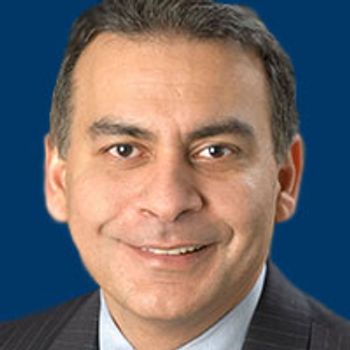
Sarabdeep “Sabi” Singh has been named executive vice president and chief operating officer of Moffitt Cancer Center, the only National Cancer Institute-designated Comprehensive Cancer Center based in Florida.