

The FDA has approved nivolumab combined with ipilimumab and chemotherapy for use as a frontline treatment for patients with metastatic or recurrent non–small cell lung cancer.

Your AI-Trained Oncology Knowledge Connection!
The FDA has approved nivolumab combined with ipilimumab and chemotherapy for use as a frontline treatment for patients with metastatic or recurrent non–small cell lung cancer.
Gilberto de Lima Lopes, MD, discusses the appropriate duration of immunotherapy in lung cancer, treatment-related adverse events, and remaining challenges faced in the space.
The FDA has granted a Fast Track designation to CLR 131 for use as a treatment for patients with lymphoplasmacytic lymphoma/Waldenstrom macroglobulinemia.
R. Lor Randall, MD, FACS, discusses the cautions medical oncologists should take for their patients with bone sarcomas who undergo limb preservation with osteointegration, and the importance of keeping orthopedic oncologists in the loop.

Raymond Liu, MD, shed light on the benefits and challenges of utilizing telehealth in oncology and shared advice on how to implement this approach in practice.
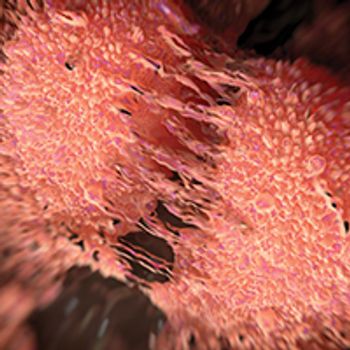
Decreases in local-stage and increases in distant- and regional-stage prostate cancer incidence may be the result of a recommendation by the US Preventive Services Task Force against PSA–based screenings.

The UK's National Institute for Health and Care Excellence has recommended the combination of atezolizumab and nab-paclitaxel as a treatment for patients with unresectable, locally advanced, or metastatic triple-negative breast cancer whose tumors express PD-L1 at a level of 1% or more and have not had prior chemotherapy for metastatic disease.

The combination of entinostat and exemestane did not show a statistically significant improvement in overall survival compared with exemestane alone in patients with advanced hormone receptor—positive, HER2-negative breast cancer who have progressed on a nonsteroidal aromatase inhibitor, missing the primary endpoint of the phase 3 E2112 trial.
The FDA has approved brigatinib for the first-line treatment of patients with ALK-positive metastatic non–small cell lung cancer, as detected by an FDA-approved test.
Lajos Pusztai, MD, DPhil, discusses the results from the I-SPY 2 trial, as well as the clinical implications of the findings.

Ivy P. Altomare, MD, the prognosis of patients with immune thrombocythemia, available treatment options, and emerging treatment modalities on the horizon.

Tisagenlecleucel led to clinically meaningful and durable improvements in health-related quality of life in patients with relapsed/refractory diffuse large B-cell lymphoma who achieved a complete or partial response to the CD19-directed CAR T-cell therapy in the phase 2 JULIET trial.

The European Medicines Agency has validated a Marketing Authorization for the combination of tafasitamab and lenalidomide, followed by single-agent lenalidomide, for the treatment of adult patients with relapsed/refractory diffuse large B-cell lymphoma, including DLBCL arising from low-grade lymphoma, who are ineligible for autologous stem cell transplant.

Sandra Cuellar, PharmD, BCOP, discusses the benefits of using biosimilars in oncology, the approval process for these agents, and the reasons why biosimilars have been met with reluctance in the medical community.

The FDA has granted an orphan drug designation to fam-trastuzumab deruxtecan-nxki for the treatment of patients with gastric cancer, including gastroesophageal junction cancer.
Concurrent frontline therapy with cladribine and rituximab led to a significant improvement in minimal residual disease–free complete responses versus cladribine followed by delayed rituximab in patients with hairy cell leukemia.

Belumosudil (KD025) continued to show high levels of clinical activity in patients with previously treated chronic graft-versus-host disease.
Rana R. McKay, MD, sheds light on the impact of age and gender on the outcomes of patients with RCC, the implications of clinical determinants on toxicity, and where future research efforts will focus.
Alan H. Bryce, MD, discusses the recent regulatory approval of rucaparib in metastatic castration-resistant prostate cancer and explains how the approval has underscored the importance of genetic testing in the field.
Mario Sznol, MD, discusses the current immunotherapy paradigm in melanoma and promising agents that are in development.

Alan H. Bryce, MD, discusses the recent regulatory approval of rucaparib in metastatic castration-resistant prostate cancer and explains how the approval has underscored the importance of genetic testing in the field.

A supplemental New Drug Application has been submitted to the FDA for the use of selinexor as a treatment for patients with multiple myeloma following at least 1 line of prior therapy.

Neeraj Agarwal, MD, provides insight into olaparib, further discussed the data that led to the regulatory approval, and shared the implications of this approval in metastatic castration-resistant prostate cancer.
The FDA has approved two companion diagnostics to identify patients with metastatic castration-resistant prostate cancer with homologous recombination repair mutations, making them eligible for treatment with olaparib.
Brian M. Slomovitz, MD, explaines the need to determine optimal sequencing strategies in endometrial cancer.
Brian I. Rini, MD, speaks about the TIVO-3 trial and how its results could provide patients with another “weapon in this disease.”
The FDA has approved olaparib for the treatment of adult patients with deleterious or suspected deleterious germline or somatic homologous recombination repair gene–mutated metastatic castration-resistant prostate cancer who have progressed following prior treatment with enzalutamide or abiraterone acetate.

Low-intensity surveillance may be comparable to high-intensity surveillance for cancer control in patients with high-risk non-muscle invasive bladder cancer.
Pembrolizumab combined with trastuzumab and chemotherapy demonstrated promising clinical activity in patients with HER2-positive metastatic esophagogastric cancer.

Preetesh Jain, MD, PhD, evaluates mechanisms of resistance to venetoclax in patients with heavily pretreated mantle cell lymphoma and the next phase of this research.