
The triplet regimen of atezolizumab, cobimetinib, and vemurafenib was found to improve progression-free survival compared with cobimetinib/vemurafenib plus placebo in patients with previously untreated BRAF V600 mutation–positive advanced melanoma.

Your AI-Trained Oncology Knowledge Connection!
The triplet regimen of atezolizumab, cobimetinib, and vemurafenib was found to improve progression-free survival compared with cobimetinib/vemurafenib plus placebo in patients with previously untreated BRAF V600 mutation–positive advanced melanoma.

A biologics license application has been submitted to the FDA for the investigational CAR T-cell therapy KTE-X19 as a treatment for adult patients with relapsed/refractory mantle cell lymphoma.
The FDA has approved 2 abbreviated new drug applications for everolimus (Afinitor) tablets for the treatment of patients with select malignancies.

Top researchers will present abstracts on latest clinical research advancing cancer treatment options.

Treatment with the BCMA-targeted CAR T-cell therapy idecabtagene vicleucel was associated with a 73.4% overall response rate in patients with relapsed/refractory multiple myeloma, meeting the primary endpoint of the pivotal phase II KarMMA trial.

Daniel Stover, MD, discusses unmet needs in patients with ESR1-mutant breast cancer, his hopes for lasofoxifene in that setting, and ongoing research efforts examining novel agents and approaches in the pipeline.
The investigational gene therapy nadofaragene firadenovec demonstrated a 3-month complete response rate of 53% in patients with high-grade, Bacillus Calmette-Guérin–unresponsive, non-muscle invasive bladder cancer with carcinoma in-situ with or without concomitant high-grade Ta or T1 papillary disease, meeting the primary endpoint of a phase III trial.
The FDA’s Oncologic Drugs Advisory Committee will not be reviewing an sBLA for luspatercept-aamt for use as a treatment for patients with myelodysplastic syndromes.

Eytan M. Stein, MD, discusses the introduction of novel agents, the relevancy of chemotherapy, and assessing minimal residual disease in acute myeloid leukemia.

Hope S. Rugo, MD, FASCO, discusses the research being done to develop more effective therapies for patients with advanced hormone receptor–positive, HER2-negative breast cancer who harbor an ESR1 mutation.
The FDA has scheduled an Oncologic Drugs Advisory Committee hearing for December 17, 2019, to discuss a supplemental new drug application for olaparib tablets as a maintenance treatment of adult patients with deleterious or suspected deleterious BRCA-mutant metastatic pancreatic adenocarcinoma whose disease has not progressed on frontline platinum-based chemotherapy.

Kelvin Alexander Moses, MD, PhD, discusses relevant data and treatment decisions in metastatic hormone-sensitive prostate cancer, as well as the role of cytoreductive nephrectomy in RCC. 

Jae H. Park, MD, discusses how emerging agents across several treatment modalities are demonstrating great potential in acute lymphoblastic leukemia.

Sagar Lonial, MD, FACP, discusses important additions to the treatment arsenal in relapsed/refractory multiple myeloma.
China’s National Medical Products Administration has granted marketing authorization for olaparib as a first-line maintenance treatment for adult patients with newly diagnosed advanced germline or somatic BRCA-mutated epithelial ovarian, fallopian tube, or primary peritoneal cancer who are in complete or partial response to frontline platinum-based chemotherapy.

Mark E. Robson, MD, provides a snapshot of the precision focus in breast cancer, as well as the emergence of biosimilars in the field.

Select DNA variants leading to methylation dysregulation within the germline DNA of men with localized prostate cancer were found to be predictive of disease biology, suggesting the prognostic capacity of inherited elements of a patient’s genome, according to data published in Nature Medicine.
The FDA has granted a breakthrough therapy designation for abatacept for the prevention of moderate-to-severe acute graft-versus-host disease in patients who have undergone hematopoietic stem cell transplants from unrelated donors.
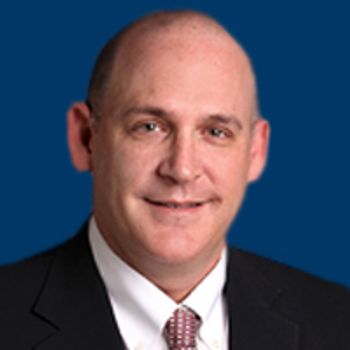
David F. Penson, MD, MPH, MMHC, discusses the current armamentarium and ongoing research in prostate cancer.
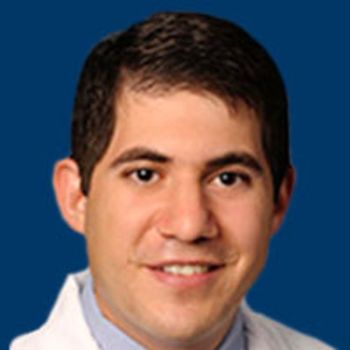
Jonathon B. Cohen, MD, MS, discusses the integration of novel agents into clinical practice and the changing role of chemoimmunotherapy in chronic lymphocytic leukemia.
The FDA has approved atezolizumab in combination with carboplatin and nab-paclitaxel for the first-line treatment of adult patients with metastatic nonsquamous non–small cell lung cancer who do not harbor EGFR or ALK molecular aberrations.

Alison J. Moskowitz, MD, discusses pivotal data for brentuximab vedotin in Hodgkin and T-Cell Lymphoma, as well as other ongoing developments in these paradigms.

Immunomedics has resubmitted its biologics license application to the FDA for sacituzumab govitecan for the treatment of patients with metastatic triple-negative breast cancer who have received ≥2 prior therapies for metastatic disease.
The trastuzumab biosimilar Ogivri (MYL-1401O; trastuzumab-dkst) has been launched in the United States for all indications of the reference product, including the treatment of patients with HER2-overexpressing breast cancer and metastatic gastric or gastroesophageal junction adenocarcinoma.
The FDA’s Oncologic Drugs Advisory Committee has scheduled a hearing to review a supplemental Biologics License Application for luspatercept-aamt for use as a treatment for patients with myelodysplastic syndromes.

The UK’s National Institute for Health and Care Excellence has approved olaparib for the maintenance treatment of adult patients with relapsed, platinum-sensitive, high-grade epithelial ovarian, fallopian tube, or primary peritoneal cancer whose disease responded to platinum-based chemotherapy and harbor BRCA1/2 mutations.

Miguel-Angel Perales, MD, discusses the evolving role of CAR T-cell therapy in diffuse large B-cell lymphoma and follicular lymphoma.
The FDA has scheduled an Oncology Drugs Advisory Committee hearing for December 18, 2019, to discuss data supporting a new drug application for tazemetostat as a treatment for patients with metastatic or locally advanced epithelioid sarcoma that is ineligible for curative surgery.
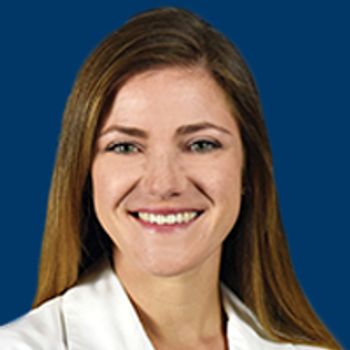
Sarah Crafton, MD, discusses the role of secondary surgical cytoreduction in recurrent ovarian cancer.

The UK National Institute for Health and Care Excellence has approved palbociclib in combination with fulvestrant for the treatment of female patients with hormone receptor–positive, HER2-negative locally advanced or metastatic breast cancer who have received prior endocrine therapy.