

Compared with standard-of-care chemotherapy, adagrasib significantly improved PFS and tumor responses in KRASG12C-mutated locally advanced or metastatic NSCLC.
Compared with standard-of-care chemotherapy, adagrasib significantly improved PFS and tumor responses in KRASG12C-mutated locally advanced or metastatic NSCLC.

The small molecule inhibitor DFF332 elicited clinical activity and had a tolerable safety profile in patients with advanced clear cell renal cell carcinoma.

Neoadjuvant sacituzumab govitecan demonstrated efficacy in patients with muscle-invasive bladder cancer, but its future role in the space is uncertain.
Subcutaneous amivantamab was displayed noninferiority in terms of ORR vs intravenous administration in EGFR-mutated non–small cell lung cancer.

Induction encorafenib/binimetinib before nivolumab/ipilimumab did not improve PFS in unresectable or metastatic BRAF V600E/K–positive melanoma.

Amivantamab plus lazertinib improved progression-free survival vs osimertinib as frontline therapy in patients with high-risk, EGFR-mutant advanced NSCLC.

Four-year progression-free survival outcomes revealed the BrECADD regimen was superior to the eBEACOPP regimen, and BrECADD had a promising benefit-risk profile.
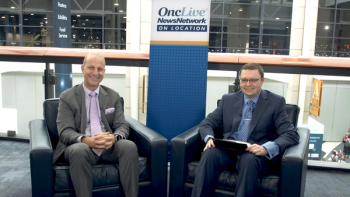
OncLive® will be LIVE with OncLive® News Network: On Location at the 2024 ASCO Annual Meeting. Each day, we will broadcast a series of interviews with top thought leaders, to learn their thoughts and reactions to data presented across oncology during the conference.
The addition of pelabresib and ruxolitinib (Jakafi) led to a significant and durable reduction in splenomegaly, among other improvements, vs ruxolitinib alone in JAK inhibitor–naive patients with myelofibrosis.

Ponatinib generated long-term efficacy and displayed manageable safety in chronic-phase chronic myeloid leukemia harboring a T315I mutation.

The COMBI-AD dataset is the longest follow-up to date of adjuvant treatment for patients with stage III melanoma.
Here is your guide to important regulatory approvals made by the FDA in May 2024.

A new study may open life-saving opportunities for Hispanic patients, who are one-third less likely to find a fully matched donor from the national registry than white patients.

Ivonescimab monotherapy improved PFS vs pembrolizumab in the first-line treatment of PD-L1–positive NSCLC in China.

The FDA accepted the resubmission of the BLA for first-line zolbetuximab in CLDN18.2-positive, HER2-negative, advanced gastric or GEJ adenocarcinoma.
Treatment with asciminib led to a superior 48-week major molecular response rate vs investigator-selected TKIs in patients with Ph-positive chronic phase chronic myeloid leukemia.

Lorlatinib extended PFS and improved time to intracranial progression vs crizotinib in patients with ALK-positive non–small cell lung cancer.

Pitavastatin, an FDA-approved statin, may inhibit pathways that contribute to IL-33 production, which has been shown to contribute to cancer development.

Daniel M. Halperin, MD, discusses the FDA approval of lutetium Lu 177 dotatate for pediatric patients with SSTR-positive GEP-NETs.
Jeremy Allred, MD, details current and emerging treatments for patients with myelodysplastic syndrome, highlighting recent key data updates.
In case you missed any, below is a recap of every OncLive On Air episode that aired in May 2024.

AGuIX has been granted FDA fast track designation in malignant gliomas and glioblastoma.

Frontline rivoceranib plus camrelizumab continued to show a significant improvement in OS vs sorafenib in advanced unresectable hepatocellular carcinoma.
The FDA approved liso-cel for the treatment of adult patients with relapsed/refractory mantle cell lymphoma after at least 2 prior lines of therapy, including a BTK inhibitor.

Daniel M. Geynisman, MD, of Fox Chase Cancer Center, has been appointed editor-in-chief for Journal of the National Comprehensive Cancer Network.

Adding atezolizumab to neoadjuvant pertuzumab, trastuzumab, and chemotherapy produced improved EFS and DFS rates in HER2-positive early breast cancer.
PSMA response was associated with improved metastasis-free survival in oligometastatic castration-sensitive prostate cancer.

A medical team at AHN tested two courses of neoadjuvant immunotherapy for advanced gastroesophageal cancer — a relatively rare disease.
The FDA has granted accelerated approval to selpercatinib for pediatric patients with select RET-altered metastatic thyroid cancers or solid tumors.
The FDA granted fast track designation AFM24 plus atezolizumab for advanced EGFR wild-type non–small cell lung cancer.