

Most women who attempted to conceive following treatment for stage I to III breast cancer were able to become pregnant at least once.
Most women who attempted to conceive following treatment for stage I to III breast cancer were able to become pregnant at least once.
Patients under the age of 40 who received HPV vaccines were associated with lower rates of HPV-related cancer vs unvaccinated patients.

An artificial intelligence-based navigation tool may be used to call patients who previously missed their colonoscopy appointment with the goal that they will reschedule and attend the new appointment.

Treatment with CEE alone was associated with increased ovarian cancer incidence and mortality rates in postmenopausal women who had undergone hysterectomy.

Vikram M. Narayan, MD, highlights takeaways from 5-year follow-up data examining the gene therapy nadofaragene firadenovec and details promising emerging therapies for bladder cancer.

Press Release
Roswell Park Comprehensive Cancer Center earned top score of 100 on Human Rights Campaign Foundation survey.

VCN-01 plus gemcitabine and nab-paclitaxel has received fast track designation from the FDA in metastatic pancreatic adenocarcinoma.
Joyce F. Liu, MD, MPH, provides insights on WEE1 which has emerged as a potentially targetable pathway in high-grade serous ovarian cancer.

Petros Grivas, MD, PhD, expands on key updates in the second-line management of urothelial cancer.

Hideho Okada, MD, PhD, discusses cancer immunoprevention through the lens of vaccine approaches in patients with low-grade glioma.

Patrick Ott, MD, PhD, discusses the investigation of cancer vaccines, highlighting the clinical implications of this treatment modality in melanoma.

Ashwin Kishtagari, MD, discusses the investigation of JAK inhibitor–based combinations in myelofibrosis.

Peter H. O’Donnell, MD, provides insights on key developments in bladder cancer management and how they have generated optimism within the field.

Press Release
Mitchell Fane, PhD, has received a grant to investigate the role of aging in immune-regulated reactivation from metastatic melanoma.

Guardant360 CDx received In Vitro Diagnostic Regulation certification for tumor mutation profiling in solid tumors and for companion diagnostic indications in NSCLC and breast cancer.

Two biosimilars for reference denosumab have received marketing authorization from the European Commission.

Craig Eckfeldt, MD, PhD, discusses key updates in the MDS treatment paradigm and the implications of MRD testing, as well as next steps in the field of AML.

Carrie L. Kitko, MD, discusses the current standing of cellular therapies in adult and pediatric ALL and looks toward future developments.

Sattva S. Neelapu, MD, discusses mechanisms of resistance to CAR T-cell therapies in lymphoma and how these areas of need may be addressed.

Eliezer Van Allen, MD, discusses immuno-oncology in relation to precision cancer medicine.

Ashwin Kishtagari, MD, discusses the treatment of patients with myelofibrosis following progression on ruxolitinib.
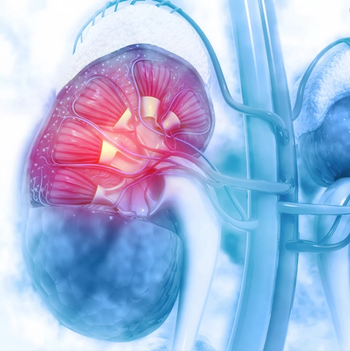
Tumor-infiltrating B lymphocytes were associated with worse outcomes in patients with metastatic ccRCC treated with axitinib plus anti–PD-1 therapy.

According to a study published in Blood Neoplasia, standard-of-care treatment for acute myeloid leukemia is safe and effective for adults over 80.
Haeseong Park, MD, MPH, discusses findings from a phase 1 study of epacadostat with preoperative chemoradiation in locally advanced rectal cancer.
Inavolisib/palbociclib/fulvestrant was granted FDA granted breakthrough therapy designation for PIK3CA-mutated, HR-positive/HER2-negative breast cancer.
The FDA has granted orphan drug designation to azeliragon as a potential therapeutic option for patients with pancreatic cancer.
The FDA has updated the PDUFA target action date for the BLA for subcutaneous nivolumab in advanced or metastatic solid tumors.
Timothy Yap, MBBS, PhD, FRCP, discusses encouraging data seen with the first-in-class PARP1 selective inhibitor saruparib in solid tumors and how the agent is being further investigated.

Jameel Muzaffar, MD, discusses findings from the phase 2 portion of the FLX475-02 study examining tivumecirnon plus pembrolizumab in HNSCC.
The addition of ibrutinib to chemoimmunotherapy induction with ASCT improved rates of failure-free survival in younger patients with mantle cell lymphoma.