
The FDA has granted accelerated approval to lisocabtagene maraleucel for the treatment of select adult patients with relapsed or refractory follicular lymphoma.
The FDA has granted accelerated approval to lisocabtagene maraleucel for the treatment of select adult patients with relapsed or refractory follicular lymphoma.
Pertuzumab plus trastuzumab produced antitumor activity and a mild adverse effect profile in patients with pretreated biliary tract cancer with ERBB2/3 alterations.

First-line atezolizumab plus sacituzumab govitecan led to responses in PD-L1–positive locally advanced or metastatic triple-negative breast cancer.

Samilia Obeng-Gyasi, MD, MPH, highlights a study on the association between neighborhood opportunity with all-cause mortality in patients with breast cancer.
Capecitabine or XELOX failed to improve OS at 2 years vs fluorouracil/cisplatin as DCRT in inoperable locally advanced esophageal squamous cell carcinoma.
The FDA has approved one of the first HPV self-collection solutions, which can be used to identify women who are at risk of developing cervical cancer.
The National Cancer Institute has awarded “comprehensive cancer center” status to Georgetown University‘s Lombardi Comprehensive Cancer Center.

As investigators parse out the mechanism of action of nadofaragene firadenovec, additional gene therapies are under development in BCG-unresponsive NMIBC.
Petros Grivas, MD, PhD, discusses the significance of the phase 3 JAVELIN Bladder 100, EV-302, and CheckMate 901 trials in urothelial cancer.
R. Lor Randall, MD, FACS, detailed research into the relationship between guideline-concordant care and survival outcomes in patients with osteosarcoma in California.
Samilia Obeng-Gyasi, MD, MPH, expands on the impact of social determinants of health on breast cancer care.
In case you missed it, below is your guide to the important regulatory approvals made by the FDA in April 2024.
Jean L. Koff, MD, MS, highlights data for pirtobrutinib in pretreated CLL/SLL and how the agent altered later-line care for these patients.

Relatlimab plus nivolumab and chemotherapy did not improve responses in untreated advanced gastric or GEJ cancer with a LAG-3 expression of at least 1%.

CAR T-cell therapy is effective and tolerable in patients with mantle cell lymphoma with secondary central nervous system involvement.
Sylvester Comprehensive Cancer Center at the University of Miami Miller School of Medicine announced the formation of the Sylvester Brain Tumor Institute.
Anne Chiang, MD, PhD, discusses understanding the heterogeneity of SCLC to determine which patients will respond to targeted therapy.
Jean L. Koff, MD, MS, discusses key considerations in the choice of BTK inhibitors for frontline and maintenance treatment in MCL.
Axel Hauschild, MD, elucidates the varying role of treatment for both cutaneous cell carcinoma and basal cell carcinoma that are seen globally.
In case you missed any, below is a recap of every episode of OncLive On Air that aired in April 2024.
Press Release
Melanoma is often detected later in people with darker skin complexions and the consequences can be devastating, a Mayo Clinic study reveals.

The phase 3 KeyVibe-010 trial of adjuvant vibostolimab plus pembrolizumab in patients with resected high-risk melanoma has been discontinued.
The FDA has granted breakthrough therapy designation to petosemtamab in recurrent or metastatic head and neck squamous cell carcinoma.
Repotrectinib has been approved by China’s National Medical Products Administration for the treatment of patients with ROS1-positive NSCLC.
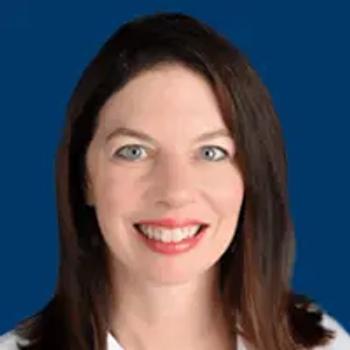
Jubilee Brown, MD, highlights the RAS/MAPK pathway in low-grade serous ovarian cancer and research with avutometinib/defactinib that prompted RAMP 301.
Following the consensus that the risk-benefit assessments for the proposed indications for cilta-cel and ide-cel were favorable during the March 15, 2024, FDA ODAC meeting, both BCMA-targeted CAR T-cell therapies received approvals moving them up in the treatment paradigm for relapsed or refractory multiple myeloma.
Mohamad Mohty, MD, PhD, discusses unmet needs for patients with chronic or acute GVHD, for whom standard-of-care therapies often fall short.
Salvage treatment with nivolumab plus ipilimumab following progression on nivolumab alone led to significant treatment-free survival in advanced ccRCC.
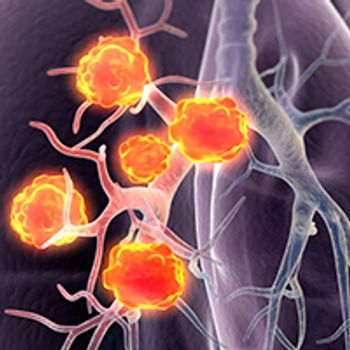
Nivolumab plus concurrent chemoradiotherapy, followed by nivolumab plus ipilimumab, did not improve PFS in unresectable stage III NSCLC.
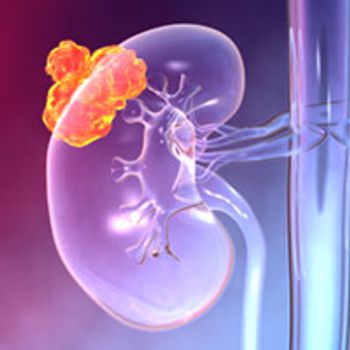
A retrospective analysis showed that metastasectomy plus radical nephrectomy could improve survival in patients with metastatic non–clear cell RCC.