

Kiara Ellis, MSW, details community outreach and engagement conversations centered around key matters affecting NCI-designated cancer centers.
Kiara Ellis, MSW, details community outreach and engagement conversations centered around key matters affecting NCI-designated cancer centers.

Real-world recurrence and prognosis was determined through the identification of morphologic RCC types and tumor stages.

Subcutaneous nivolumab coformulated with rHuPH20 demonstrated noninferiority of PK exposures vs intravenous nivolumab in metastatic ccRCC.

Adjuvant nivolumab monotherapy did not yield a disease-free survival benefit vs placebo in patients with localized renal cell carcinoma.
Treatment with adjuvant pembrolizumab significantly improved overall survival vs placebo in patients with clear cell renal cell carcinoma.

Frontline pembrolizumab plus lenvatinib continues to show benefit vs historical controls in advanced non–clear cell renal cell carcinoma.
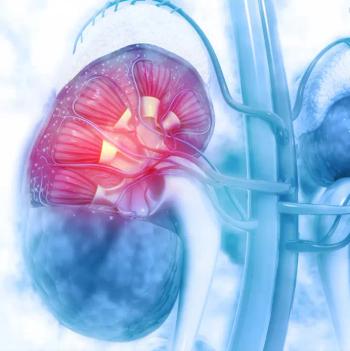
Lenvatinib/pembrolizumab shows a trend of improved PFS and overall response rate vs standard immunotherapies in advanced renal cell carcinoma.

Belzutifan treatment led to improved quality of life outcomes vs treatment with everolimus in patients with advanced renal cell carcinoma.

Adjuvant pembrolizumab generated a disease-free survival benefit vs observation in patients with muscle-invasive and locally advanced urothelial carcinoma.

Enfortumab vedotin plus pembrolizumab showed consistent overall survival and progression-free survival benefit in all patients enrolled in EV-302.
Nikita Sinha, MD, discusses the effects of onvansertib on cellular proliferation, adhesion, apoptosis, and stress in endometrial cancer cells.

Pembrolizumab plus cabozantinib was efficacious in the first-line treatment of patients with cisplatin-ineligible urothelial carcinoma.

Ritu Salani, MD, provides an overview of the variety of sessions presented at the 2024 SGO Winter Meeting.

Assessment of urinary MRD status identified and enabled quantification of molecular responses with nadofaragene firadenovec in BCG-unresponsive NMIBC.

The EMA's CHMP has recommended the approval of idecabtagene vicleucel in patients with multiple myeloma who received at least 2 prior therapies.

Gabriella Smith, MD, discusses the potential impact of CA-125 KELIM score for patients with epithelial ovarian cancer undergoing HIPEC during surgery.

Danielle Krause, MD, discusses preclinical findings from mouse models evaluating GLP-1 agonists with and without progesterone in endometrial cancer.

Paulina J. Haight, MD, discusses the association between the occurrence of toxicities with response to treatment with lenvatinib and pembrolizumab.

Susan Marie Lang, MD, discusses real-world data on the incidence of ocular toxicities in patients with ovarian cancer receiving mirvetuximab soravtansine.

Press Release
Dana-Farber Cancer Institute researchers are the recipients of the Outstanding Investigator Award from the NCI, part of the National Institutes of Health.

A post-hoc analysis of censored patients with mHSPC showed benefit with darolutamide, ADT, and docetaxel, supporting primary data from the ARASENS trial.

Patients with HRR gene–mutated mCRPC treated with olaparib have an unmet need for early and consistent genetic testing to optimize treatment outcomes.
Olaparib plus abiraterone acetate delayed disease progression and improved outcomes in patients with BRCA-, ATM- and CDK12-mutated mCRPC.

The FDA has called to add a class-wide boxed warning for CAR T-cell therapies to alert patients of the risk of developing secondary T-cell malignancies.

Long-term androgen deprivation therapy plus radiation therapy led to survival benefits without increased toxicity in high-risk prostate cancer.

Neoadjuvant darolutamide with ADT followed by radical prostatectomy is safe and effective in patients with prostate cancer.

Abiraterone acetate/prednisone/apalutamide after radical prostatectomy did not lead to quality of life differences vs bicalutamide in prostate cancer.

A significant progression-free survival improvement was achieved with cabozantinib plus atezolizumab vs second-line novel hormonal therapy in mCRPC.

Frontline treatment with olaparib plus abiraterone/prednisone led to a PFS benefit vs olaparib or abiraterone/prednisone alone in BRCA1/2– or ATM–altered mCRPC.
Sub-optimal integration of HRR mutation testing into clinical practice leads to a negative impact on treatment selection and outcomes in mCRPC.