
Identifying biomarkers and the mechanism of action of antibody-drug conjugates may optimize benefits with these agents in non–small cell lung cancer.
Identifying biomarkers and the mechanism of action of antibody-drug conjugates may optimize benefits with these agents in non–small cell lung cancer.

Survival outcomes following curative resection in resectable NSCLC have been poor and, until recently, the main tool oncologists had at their disposal was neoadjuvant or adjuvant chemotherapy.
Balazs Halmos, MD, discusses the FLAURA2 and MARIPOSA trials of EGFR TKIs plus chemotherapy in EGFR-mutated non–small cell lung cancer.

Press Release
Huntsman Cancer Institute introduces the first and only single-port robot in the Mountain West for head and neck surgical oncology patients.

The FDA and EMA have accepted applications seeking the approval of neoadjuvant nivolumab/chemotherapy followed by surgery and adjuvant nivolumab in NSCLC.

Edgardo S. Santos Castillero, MD, FACP, spotlights some impactful trials in lung cancer that were discussed in 2023, including the phase 3 MARIPOSA-2 trial, and more.

The University of Hawaii Cancer Center hopes to address treatment needs through its planned Early Phase Clinical Research Center.

Belantamab mafodotin plus bortezomib and dexamethasone improved PFS vs daratumumab plus bortezomib and dexamethasone in relapsed/refractory myeloma.

Fruquintinib/paclitaxel significantly improved PFS but not OS vs paclitaxel alone in the second-line treatment in patients with advanced gastric cancer.

Thomas J. Lynch Jr, MD, details how treatments are evolving for patients with EGFR-mutated advanced non–small cell lung cancer.

Corey J. Langer, MD, FACP, discusses findings from the IMpower010 and KEYNOTE-091 studies, which examined immunotherapy in NSCLC.
Vepdegestrant has received FDA fast track designation for select patients with ER-positive/HER2-negative locally advanced or metastatic breast cancer.

The National Accreditation Program for Breast Centers has granted the Florida Cancer Specialists & Research Institute breast cancer program a 3-year accreditation.

Investigators evaluated risk factor–based guidelines and risk model–based strategies for lung cancer screening in World Trade Center–exposed responders.
Edgardo S. Santos Castillero, MD, FACP, expands on outcomes from pivotal phase 3 trials such as ADAURA and FLAURA2 in patients with EGFR-mutant NSCLC.

FDA grants fast-track status to BNT325/DB-1305 for patients with platinum-resistant ovarian epithelial, fallopian tube, or primary peritoneal cancer.
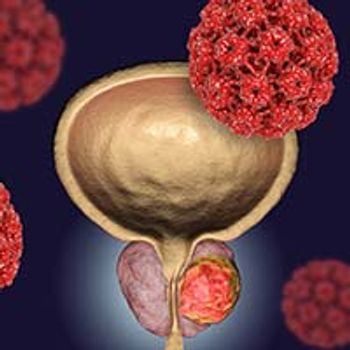
Tinengotinib elicited responses with a manageable safety profile in heavily pretreated patients with metastatic castration-resistant prostate cancer.

Frontline nivolumab plus cabozantinib continued to demonstrate long-term efficacy and safety vs sunitinib in patients with untreated RCC.
Health Canada will review the new drug submission seeking the approval of momelotinib in patients with myelofibrosis.

Christos Kyriakopoulos, MD, discusses key phase 1 results from the ongoing evaluation of masofaniten and enzalutamide in patients with mCRPC.
The UV1 cancer vaccine received fast track designation for use in combination with ipilimumab and nivolumab for patients with unresectable malignant pleural mesothelioma.
Press Release
Non-small cell lung cancer, with an EGFR mutation, tends not to respond well to immunotherapy treatments, including durvalumab.

The combination of the first-in-class inhibitor enasidenib plus venetoclax has generated excitement targeting IDH2 mutations in relapsed/refractory AML.

World Cancer Day is held every year on February 4th, prompting individuals across the globe to expand awareness within cancer care.

Hans Lee, MD, discusses updated data from the LINKER-MM1 study in heavily pretreated relapsed/refractory multiple myeloma.

Jonathon B. Cohen, MD, MS, expands on updated data from the BRUIN trial of pirtobrutinib in patients with relapsed BTK-exposed mantle cell lymphoma.

The MAA seeking the approval of tisotumab vedotin in select patients with recurrent or metastatic cervical cancer has been validated by the EMA.
Efineptakin alfa received an orphan drug designation from the FDA for use as a potential therapeutic option in patients with pancreatic cancer.

Investigators have developed a machine learning algorithm that could eventually facilitate earlier cancer detection via smaller blood draws.
The EMA has accepted for review an MAA seeking the approval of linvoseltamab for use in select patients with relapsed/refractory multiple myeloma.