
Prior EBRT Shows No Correlation With Hematologic Toxicity in Patients With mCRPC Treated With Ra-223
Patients with mCRPC who received Ra-223 were not found to be at a higher relative risk of hematological toxicity if they had received prior EBRT.
Patients with mCRPC who received Ra-223 were not found to be at a higher relative risk of hematological toxicity if they had received prior EBRT.

Darolutamide plus docetaxel/ADT was associated with a lower rate of hospitalization compared with placebo in metastatic hormone-sensitive prostate cancer.

A program developed at Florida Cancer Specialists & Research Institute improves outcomes for patients prescribed selinexor for multiple myeloma.

William Pearse, MD, discusses how the FDA approval of pirtobrutinib for relapsed/refractory mantle cell lymphoma has advanced BTK inhibitor treatment.
Benjamin Garmezy, MD, discusses challenges associated with navigating the current frontline armamentarium in both clear cell and variant RCC, the impact of frontline IO doublets and IO/TKI regimens on patient outcomes, and the importance of ongoing combination studies for patients with variant RCC.

Talha Badar, MBBS, MD, discusses myelodysplastic syndrome risk stratification and the FDA approval of luspatercept for patients with this disease.
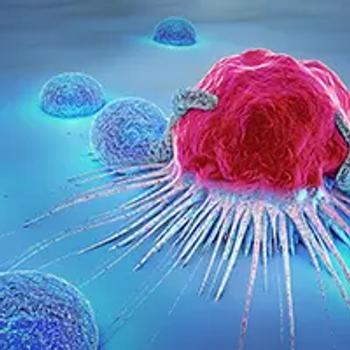
KVA12123 demonstrated early signals of on-target activity and tolerability at all dose levels examined to date in patients with advanced solid tumors.
Sarah Crafton, MD, discusses the ongoing development of agents targeting key biomarkers in ovarian cancer, such as FRα and HER2; expands on the integration of mirvetuximab soravtansine into clinical practice and its investigation in earlier lines; and emphasizes the importance of continued patient enrollment onto ongoing or planned ADC trials in ovarian cancer.
As the treatment paradigm in urothelial cancer expands to include agents directed at various targets, NECTIN-4 has emerged as a promising treatment target.

Press Release
More than 125 Dana-Farber affiliated doctors have been included in Boston magazine's annual "Top Doctors" guide.

The field of hematology is experiencing significant advancements as promising new therapies for malignancies and GVHD continue to emerge.
William Pearse, MD, discusses the roles of acalabrutinib and zanubrutinib in mantle cell lymphoma, as well as the adverse effect profiles of each agent.

Oncologists reviewed data from clinical trials in the field of melanoma that could add clarity to treatment standards and lead to improved patient care.

The phase 3 EVOKE-01 trial did not meet its primary end point of significantly improved OS with sacituzumab govitecan vs docetaxel in pretreated NSCLC.
The FDA has accepted for review the BLA for obecabtagene autoleucel's use in patients with relapsed or refractory B-cell acute lymphoblastic leukemia.

Petros Grivas, MD, PhD, spotlights key advancements and research in urothelial cancer reported at the 2023 ESMO Congress, detailing findings from the phase 3 CheckMate 901, EV-302/KEYNOTE-A39, and THOR trials.

Huntsman Cancer Institute has appointed new roles for Theresa Werner, MD, and Neeraj Agarwal, MD, FASCO.

The absence of clearly articulated definitions and transparency related to how clinical trial outcomes are interpreted and utilized raise concerns.
Guillermo Garcia-Manero, MD, spotlights the evolution of oral azacitidine- and decitabine-based regimens for MDS.

Michael Choi, MD, expands on significant advancements and treatment considerations in hematologic malignancies.
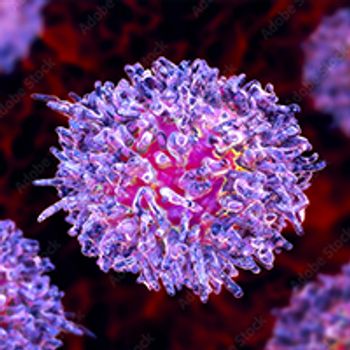
Olverembatinib has been added to the NCCN's latest 2024 guidelines for management of chronic myeloid leukemia.
Jason Porter, MD, discusses the progress in the development of treatment options for patients with KRAS G12C-mutated non–small cell lung cancer.

Clinicians discuss data on the ROS1 TKI taletrectinib in patients with locally advanced or metastatic ROS1-positive non–small cell lung cancer.

NICE has recommended talazoparib for the treatment of patients with advanced or metastatic HER2-negative breast cancer with germline BRCA1/2 mutations.
To understand how fertility concerns affect breast cancer treatment decisions, researchers analyzed data from the Young and Strong study.

Investigators continue to evaluate HER2 expression as well as CDK4/6 inhibitor use for hormone receptor–positive/HER2-negative breast cancer.
Adjuvant chemotherapy did not improve circulating tumor DNA clearance in patients with stage II colon cancer with baseline circulating tumor DNA.

Press Release
Robin Marshall's "most valuable" painting was recently purchased by her oncologist, Alpana Desai, MD, of Florida Cancer Specialists & Research Institute.

Minimal residual disease detection by ctDNA was predictive and prognostic of disease recurrence and response to adjuvant chemotherapy in patients with CRC.

Nivolumab/ipilimumab reduced the risk of disease progression or death vs chemotherapy in previously untreated patients with metastatic colorectal cancer.